




Complete Guide to Mobile Software Development: From Requirements to Delivery
Mobile software development refers to the complete engineering process of customizing native or cross-platform applications for smartphones, tablets, and other mobile devices. In 2026, enterprises choose custom development primarily to achieve deep business alignment and functionality, rather than generic solutions. The correct approach starts with requirements locking, followed by technology selection, iterative development, and testing and launch, with clear delivery standards at each stage.
Business Value of Mobile Software Development
Mobile applications have become the core touchpoint for enterprise-user interaction. Custom development enables brand-specific interfaces, complex business logic, hardware integration, and other needs that standardized products cannot fulfill. For scenarios such as internal management, customer service, and IoT control, custom apps can significantly improve efficiency and data closed-loop capabilities. Taking the popular warehouse management scenario in 2026 as an example, a custom app can integrate PDA scanning and WMS systems to achieve real-time inventory updates.
- Differentiated competition: Enhance user stickiness through unique features and interactions
- Data control: All user behavior and business data stored on owned servers
- Long-term iteration: Continuously update based on business changes, free from third-party platform limitations
Four-Step Implementation Method: From Requirements to Delivery
Adopting a structured process reduces rework risks. The following four steps are common frameworks for project delivery in 2026:
- Requirements Locking and Prototype Validation: Collaborate with stakeholders to define core feature lists, produce interactive prototypes, and confirm before development. This phase must clarify which features will not be implemented to avoid scope creep.
- Technology Selection and Architecture Design: Choose development languages and frameworks based on feature complexity, performance requirements, and team capabilities. For example, prioritize Native when frequent calls to hardware features like camera or Bluetooth are needed; otherwise, cross-platform solutions like Flutter are viable.
- Iterative Development and Testing: Adopt a bi-weekly iteration rhythm, delivering testable builds at the end of each iteration. CI/CD for automated packaging and distribution is recommended to improve testing efficiency. Testing covers functionality, performance, compatibility, and security, with special attention to adaptation across different devices.
- Release and Operations: Prepare app store submission materials as required, submit for review. After launch, monitor crash rates and user feedback, and plan subsequent versions.
Note: Decisions at each step should be documented for traceability. Requirement changes must undergo review, otherwise they will directly impact cost and timeline.
Mainstream Technology Selection Comparison
Technology selection directly affects development efficiency and long-term maintenance. Common options in 2026 include native development, cross-platform frameworks (Flutter, React Native), and hybrid development (H5 + container). Compare from key dimensions:
- Development Cost: Native requires maintaining two codebases, higher cost; cross-platform shares code, reducing cost by 30%-50%; hybrid has the lowest cost but limited performance.
- Performance: Native excels, suitable for gaming, AR, and other high-frame-rate scenarios; cross-platform approaches native but may have differences in complex animations; hybrid feels like a web app, not suitable for heavy interaction.
- Maintenance Updates: Native requires separate updates for iOS and Android; cross-platform updates once for both; hybrid updates via frontend but limited by container capabilities.
- Team Requirements: Native requires engineers familiar with Swift/Kotlin; cross-platform requires Dart/JavaScript; hybrid requires frontend developers.
For most enterprise applications, Flutter or React Native balance cost and experience. If the project has extreme performance demands, native should still be chosen.
Applicable Scenarios and Boundaries
Suitable Scenarios: Business processes with unique customization needs, deep hardware interaction (e.g., barcode scanners, printers), high brand image requirements, and long-term iterative maintenance.
Unsuitable Scenarios: Requirements almost identical to existing SaaS products, very low budget (under 100,000 RMB), temporary display with no subsequent iteration, and very few target users.
Boundary Conditions: When total custom development cost exceeds expected three-year returns, consider purchasing mature solutions. Additionally, if the team lacks mobile development experience, start with an MVP to validate core assumptions before full-scale development.
Common FAQs
How long does mobile development typically take?
Simple apps take 2-3 months, medium complexity 4-6 months, large apps over 8 months, depending on feature scope and team configuration.
Do mobile apps always need to use native languages?
Not necessarily. In 2026, cross-platform frameworks like Flutter and React Native are mature enough for most business scenarios, but native is recommended for high-performance graphics or deep system integration.
How to reasonably control development costs?
The core method is to lock a minimum viable product (MVP), avoid mid-phase changes, and choose an experienced development team to reduce rework cost.
What preparations are needed for app store submission?
Developer account, privacy policy, app description, screenshots, compliance checks (e.g., record-filing requirements). In 2026, pay special attention to data security and privacy compliance.
What are common pitfalls in mobile development?
Unclear requirements leading to rework, neglecting performance optimization, insufficient test coverage, and rejection during submission. It is recommended to set review points at each stage.
For enterprises with clear mobile needs, start with a requirements prototype and plan technology selection with the development team. Custom development is suitable for long-term digital products; for short-term validation, consider template solutions first. Xiyue Company has years of experience in mobile customization, offering full-process services from requirements to delivery. Clear goals, controlled scope, and iterative validation are the keys to successful mobile software development.
-
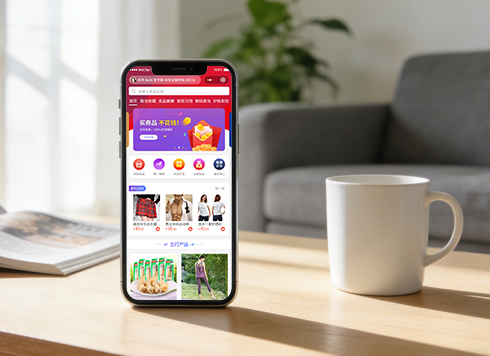 Well-Recognized Custom E-Commerce Mall System Dev
The Good Shopping mini-app is natively buil ...
-
 Anhui Huixiang Vegetable Garden Agricultural Products Mini Program v2.0 Iteration Development
HuiXiang MiniApp V2.0: Upgraded homepage, n ...
-
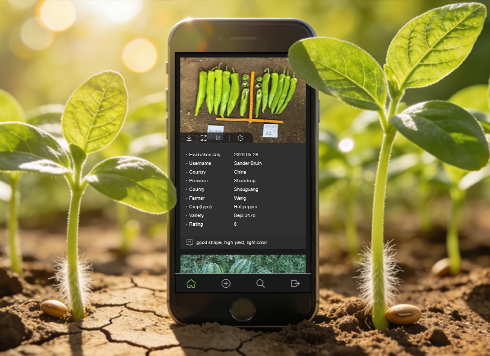 Kunshan TrialBook Mini-Program Custom Development
This project developed an English-only Tria ...
-
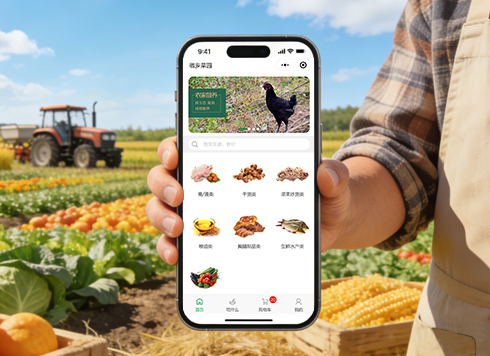 Agricultural Products WeChat Mini Program Custom Development
Lvran Di enhances agricultural sales via a ...
-
Essential Guide to Mini Program Development: From Requirement Positioning to Technology Selection Full Process Guide
Date: Jul 29, 2026 Read: 107
-
Custom Mobile App Development: Needs Assessment, Technology Selection, and Implementation Key Points
Date: Jul 20, 2026 Read: 116
-
Mobile Application Development in Practice: Requirements Analysis, Technology Selection, and Delivery Essentials
Date: Jul 17, 2026 Read: 110
-
Full-Cycle Custom Mobile Development: A Standard Guide from Requirements to Acceptance
Date: Jul 16, 2026 Read: 103
-
Custom Mobile App Development: Complete Process, Technology Selection, and Common Pitfalls
Date: Aug 11, 2026 Read: 58