



Mini Program Custom Development: A Complete Guide from Requirements to Launch and Ops
What Is Mini Program Custom Development
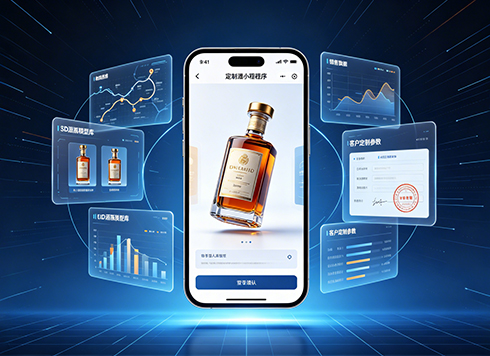
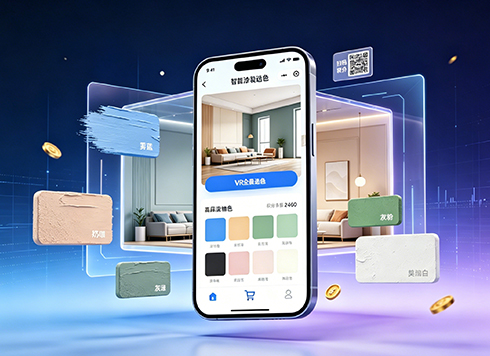
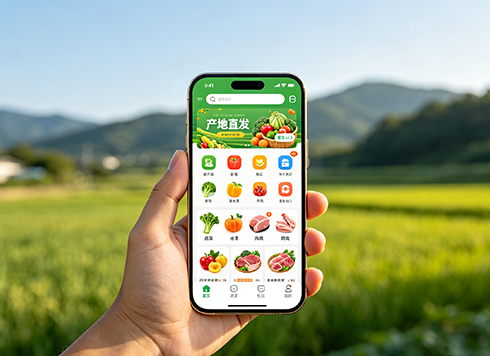
Mini program custom development means designing and building a dedicated mini program from scratch based on specific business needs, rather than using a templated tool for quick generation. In 2026, custom development typically includes three core parts: frontend interaction, backend APIs, and database design. Its main value lies in satisfying unique business processes, improving user experience, and supporting future feature expansion.
- Custom ≠ Complex: Simple businesses can also go custom; the key is whether the requirements are standardized.
- Cost Range: Basic type about 30k-80k RMB, medium 150k-300k RMB, large starting at 500k RMB (market reference for 2026, depends on features and team).
Why Custom Development
Templated mini programs suit standard scenarios (e.g., information display, simple bookings), but companies should choose custom when: integrating with internal ERP/CRM, having unique business processes, or requiring high UI/UX. Common decision comparison in 2026:
- Template solution: Monthly fee of a few hundred RMB, 30-min launch, fixed features, no deep changes.
- Custom solution: One-time payment, 2-8 weeks development, features designed on demand, iterative upgrades.
Moreover, custom development offers better data security control — code assets belong to the company and can be migrated or redeveloped later.
Four-Dimensional Framework: Deciding Whether to Go Custom
Introducing the "Four-Dimensional Selection Method," evaluating from business, budget, time, and team. This framework avoids blind decisions; each dimension has clear criteria.
- Business complexity: More than 3 steps or multi-role permissions? Yes → consider custom.
- Budget: Can you accept a one-time investment of 30k+ RMB? No → prioritize template or lightweight solution.
- Time: Launch within 2 weeks? Yes → template safer; No → custom more flexible.
- Team: Any internal staff for requirement clarification and ongoing maintenance? Yes → custom smoother.
At least three "yes" answers suggest custom route. Note: even with sufficient budget, if business is extremely complex and time is tight, implement in phases rather than one full custom.
Detailed Custom Development Process
Phase 1: Requirements Assessment & Prototyping
The PM and client jointly define a feature list and produce a high-fidelity prototype. Common pitfalls: vague requirements, ignoring edge cases. In 2026, user story mapping is often used; each feature point must clarify preconditions and outputs. Success criteria: prototype includes all core pages and interaction flows, with client written approval.
- Must-deliverables: feature list, prototype diagrams, UI design drafts.
- Common mistake: skipping prototype and developing directly, leading to 40%+ rework rate.
Phase 2: Technology Selection & Architecture Design
Frontend frameworks: native (WeChat native syntax), Taro, uni-app, etc. Backend: Node.js, Python Flask, Java Spring, etc. Architecture design must consider concurrency, data security, and scalability. For example, if expected users exceed 100k, use cloud functions + sharding. Selection principles: team familiarity > community activity > performance metrics. Note: in 2026, cloud-based solutions (e.g., WeChat Cloud Development) enable quick start but later migration costs are high.
- Comparison: Native Development vs. H5-to-Mini-Program
- Native development: better performance, supports hardware capabilities like Bluetooth, NFC; high development cost.
- H5-to-mini-program (e.g., Taro/uni-app): high code reuse, cross-platform, but some native features require plugins, slightly weaker performance.
Phase 3: Frontend & Backend Development and Integration
Develop feature modules one by one, with unit testing after each module. In 2026, Git branching with automated testing tools (e.g., Jest, Mocha) is common. During integration, keep API docs updated to avoid rework due to parameter changes. Success criteria: all test cases pass, API response time below 200ms.
- Milestones: Development complete → Internal test → UAT acceptance.
- Common pitfall: ignoring weak network testing, leading to loading failures after launch.
Phase 4: Testing & Launch
Includes functional testing, compatibility testing (different phone models), performance testing (stress testing), and security testing (data encryption, API authentication). WeChat review notes: no inducement to share, virtual goods payment must use WeChat Pay. After launch, monitor logs and prepare rollback plan.
- Wrong practice: full rollout without canary release; a bug affects all users.
- Correct practice: release to 1% traffic first, monitor 24 hours with no issues, then gradually ramp up.
Phase 5: Operations & Iteration
After launch, continuously monitor server resources, user feedback, and crash logs. Iterate every two weeks or monthly, adjusting features based on data. In 2026, popular tools include Tencent Youdian or custom event tracking for user behavior analysis. Note: avoid large one-time iterations; break into small quick experiments.
- Boundary reminder: if business changes frequently with limited budget, adopt incremental customization, develop core modules first.
Applicable Scenarios & Boundaries
Mini program custom suits: businesses with unique processes, need integration with existing systems, high brand image requirements, or long-term operations with feature iterations. Not suitable for: pure display websites, one-time promotional campaigns, extremely low budgets (<30k RMB) with no maintenance plan. Industry experience in 2026 shows projects under 20k RMB are better off using templates plus minor customization — don't force custom.
Xiyue Company once served a chain retail enterprise; the custom mini program achieved real-time store inventory sync and cross-store membership point usage. The project took 6 weeks and cost about 180k RMB. But if the enterprise only needed store info display, a template would have sufficed.
Also, if the company lacks any technical ops capability and has no one to maintain after custom, consider a development company that includes annual maintenance, or use a SaaS solution directly.
FAQs
How long does custom mini program development usually take?
Basic (about 10 pages) 2-4 weeks, medium-to-large (including admin backend) 6-12 weeks, depending on requirement clarity and dev team resources.
Which is more secure: custom or template mini program?
Custom development has independent code and data stored on your own server, securely controllable; template mini programs share underlying infrastructure, posing data leakage risks, especially when handling user privacy.
Can I change service providers after custom development?
Yes. Custom project source code belongs to the client. Ensure the contract specifies source code delivery; subsequent maintenance can be handed to another dev team.
What about requirement changes during custom development?
It's recommended to define a change procedure in the contract. Small changes may be negotiated for free; major changes billed by hours or feature points to avoid unlimited changes causing delays.
What is the mainstream custom development solution in 2026?
Frontend mostly uses uni-app for cross-platform, backend uses cloud development or lightweight Node.js with cloud DB, balancing dev efficiency and cost.
Action guide: First self-evaluate using the four-dimensional framework; then compare 2-3 dev company cases, focusing on requirement doc granularity and acceptance criteria. If business process is simple and budget limited, don't insist on custom; otherwise, custom development brings better user retention and ops flexibility. Choose a team with industry experience, and clarify source code delivery and post-launch maintenance terms.
-
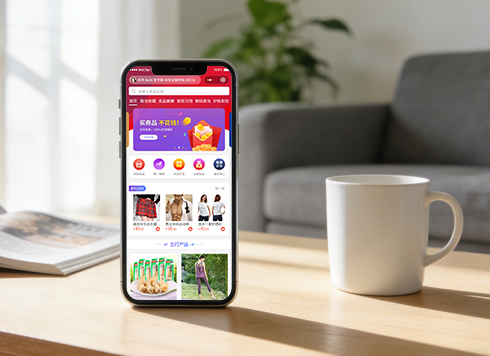 Well-Recognized Custom E-Commerce Mall System Dev
The Good Shopping mini-app is natively buil ...
-
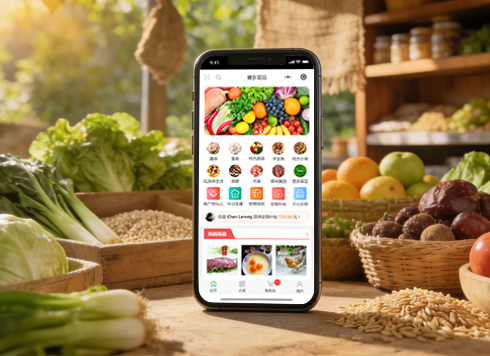 Anhui Huixiang Vegetable Garden Agricultural Products Mini Program v2.0 Iteration Development
HuiXiang MiniApp V2.0: Upgraded homepage, n ...
-
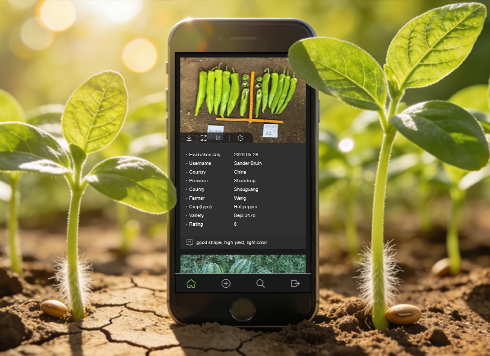 Kunshan TrialBook Mini-Program Custom Development
This project developed an English-only Tria ...
-
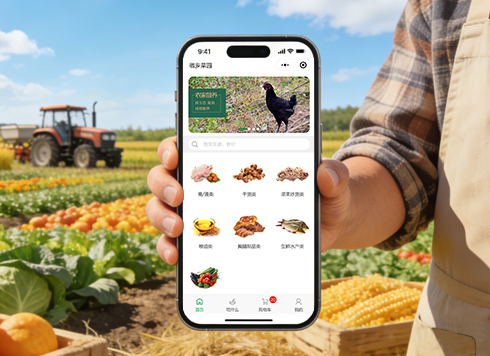 Agricultural Products WeChat Mini Program Custom Development
Lvran Di enhances agricultural sales via a ...
-
How to Develop Mobile Software: A Complete Guide from Requirements Assessment to Launch
Date: Aug 10, 2026 Read: 63
-
What Is Custom Mini Program Development? Selection Process and Implementation Key Points
Date: Aug 3, 2026 Read: 99
-
Mini Program Custom Development: Process, Options, and Common Pitfalls
Date: Aug 11, 2026 Read: 65
-
How to Choose Custom Mini Program Development: Evaluation Process, Cost Structure, and Common Pitfalls
Date: Aug 9, 2026 Read: 73
-
Custom Mini Program Development: A Full-Process Guide from Requirements to Launch
Date: Aug 6, 2026 Read: 101