



A Complete Guide to Mobile Custom Development: Requirements Analysis, Technology Selection, and Delivery Acceptance
Mobile custom development is the process of designing, developing, and deploying native or hybrid mobile applications from scratch based on specific business needs. Compared to template-based solutions, it offers significant advantages in functional flexibility, brand independence, and data security, but requires longer development cycles and higher budgets. In 2026, mainstream custom development still demands iOS and Android dual-platform support, while mature cross-platform frameworks can reduce costs in certain scenarios.
1. Core Value and Applicable Scenarios
Why is mobile custom development important? Because it fully aligns with business logic without being constrained by generic templates. For example, logistics barcode tracking and healthcare HIPAA-compliant data interaction require customized functions. Applicable scenarios include: digital transformation of internal enterprise processes (e.g., CRM, ERP mobile clients), consumer-facing brand applications (e.g., membership systems, personalized recommendations), and IoT companion control terminals. Conversely, if business requirements are simple, user base is small, and budget is tight, SaaS-based standardized apps can be chosen without customization.
- Suitable for customization: Deep integration with enterprise systems (e.g., SAP, Salesforce), offline processing capability, or complex hardware control (e.g., Bluetooth, NFC).
- Not necessary to customize: Validating an MVP in early startup stages, pure content display apps, or scenarios already supported by mature platforms.
2. Four-Step Complete Development Process
A repeatable custom development process effectively reduces project risk. We divide it into four stages: requirement definition, technology selection and architecture design, iterative development and testing, deployment and operations handover. Each step has clear deliverables and acceptance checkpoints.
- Requirement Definition: Deliver feature list (PRD) and interactive prototype. Note: It is essential to distinguish between "core features" and "extended features" to avoid early requirement bloat. It is recommended that the team and product manager jointly complete a user story map.
- Technology Selection and Architecture Design: Decide on native, hybrid, or cross-platform approaches. A common practice in 2026 is: prioritize native but consider Flutter or React Native. Architecture design includes data flow, offline strategies, and API interface specifications.
- Iterative Development and Testing: Adopt agile development, delivering a runnable version every 1-2 weeks. Testing covers unit tests, UI automation tests, performance tests, and real-device compatibility tests. In 2026, developers commonly integrate cloud-based testing farms into CI/CD pipelines.
- Deployment and Operations Handover: Includes app store submission, crash monitoring (e.g., Firebase Crashlytics), logging systems, and user feedback channels. Provide operation documentation and source code upon delivery.
3. Technical Solution Comparison: Native, Hybrid, and Cross-Platform
Choosing the tech stack is a key decision in custom development. Below is a comparison of three mainstream approaches, allowing enterprises to weigh options based on their own conditions.
- Native Development: Best performance, full access to system APIs, but requires maintaining separate iOS (Swift/ObjC) and Android (Kotlin/Java) codebases, resulting in high cost and long cycle. Suitable for apps with extremely high performance demands (e.g., games, AR) or those needing deep hardware access.
- Hybrid Development: Based on WebView (e.g., Ionic, Cordova), fast development, cross-platform, but significant performance bottlenecks, unsuitable for complex animations or heavy data rendering. In 2026, hybrid solutions are mainly used for enterprise internal lightweight apps or prototype validation.
- Cross-Platform Frameworks: Flutter (Dart) and React Native (JavaScript) are the two main streams. Flutter delivers near-native performance through its self-painting engine, while React Native is closer to the web developer ecosystem. Both allow sharing most code, but platform-specific features still require native bridging. In 2026, Flutter has a slight advantage in complex UI and performance, while React Native has richer community resources.
Selection Advice: If the team has sufficient budget and pursues the ultimate experience, choose native. If balancing performance and cost, Flutter is a popular choice. If the team consists mainly of web developers and the project is urgent, React Native is easier to adopt.
4. Five Key Dimensions for Technology Selection Evaluation
Judging a custom development solution solely by price is insufficient. The following five dimensions help enterprises conduct a comprehensive evaluation:
- Tech Stack Maturity: Whether the framework is long-term maintained, community activity, learning curve. For example, by 2026 Flutter has enterprise-grade use cases, but some niche SDKs may lag in updates.
- Development Team Experience: Review the team's past custom project cases, especially experience in the same industry. Avoid making conclusions based solely on templates or portfolios.
- Delivery Cycle and Cost: Custom development quotes are usually calculated per person-day. In the 2026 domestic market, typical ranges: Native app (500,000-1.5 million RMB, 3-6 months), Cross-platform app (300,000-800,000 RMB, 2-5 months). Note: Extremely low quotes often lead to frequent later price increases or quality degradation.
- Code Maintainability: Require the development team to provide code style documentation and module division diagrams. Unclear architecture will make every subsequent iteration feel like a rewrite.
- Post-Sale and Iteration Support: Whether a 3-6 month bug fix period is provided? How is pricing for later feature additions? It is recommended to specify response times and upgrade policies in the contract.
5. Applicable Scenarios and Boundaries
Mobile custom development is not a panacea. The following situations require caution: Project budget below 100,000 RMB (usually insufficient to support a complete custom process); Frequently changing requirements without a unified decision-maker (custom development needs a relatively stable requirement baseline); Target users only need a one-time utility app (consider web apps or mini-programs as alternatives). In 2026, enterprise digital transformation projects are the main clients for custom development, while consumer-facing low-frequency apps (e.g., annual meeting raffles, temporary events) should opt for SaaS tools or low-code platforms.
6. Common Misconceptions and Pitfall Avoidance Guide
Misconception 1: Thinking custom development is a "one-time delivery". In reality, after launch, apps require continuous iterations for system upgrades, new device compatibility, and feature enhancements. Misconception 2: Over-pursuing a perfect demo. Many enterprises spend too much time polishing design drafts rather than core logic, lengthening the development cycle. Misconception 3: Neglecting backend capabilities. The mobile app is just the frontend; the real business complexity lies in backend logic, databases, and third-party integrations. It is recommended to complete backend architecture design before project initiation to avoid later rework.
Frequently Asked Questions
How long does custom app development generally take?
Depending on complexity and tech stack, typically 2-6 months. Simple internal enterprise tools take about 2-3 months, while e-commerce apps with multi-device sync and payment integration need 4-6 months.
Which is more cost-effective: native or cross-platform development?
Cross-platform initial development costs are 30%-50% lower than native, but performance bottlenecks and maintenance difficulty can offset savings. If targeting only a single platform (e.g., only iOS), native can be cheaper.
Can a custom developed app be migrated to another tech stack later?
Yes, but at high cost, as all logic and UI need to be rewritten. It is recommended to choose a mainstream framework (e.g., native or Flutter) initially to reduce future migration difficulty.
Is it still necessary to support both iOS and Android in 2026?
For domestic users, dual-platform is standard. If targeting a specific industry (e.g., logistics drivers mostly use Android), you can start with Android only. Cross-platform frameworks can reduce dual-platform costs.
How to evaluate a development team's technical strength?
Check their open-source projects or GitHub commit logs, request technical solution review documents, and ask why they chose a specific tech stack. Be wary of overly aggressive or conservative answers.
Action Guide
Before starting custom development, complete internal requirement prioritization and budget range determination. It is recommended to engage a third-party consultant or experienced CTO for technology selection evaluation to avoid team internal bias. In 2026, the mainstream trend is to first build an MVP to validate core business, then iterate gradually. For projects with budgets under 300,000 RMB, consider the lightweight custom solutions offered by Xiyue Company, which have enterprise-grade delivery experience and effective risk control. However, if requirements are extremely simple or temporary, prioritize SaaS platforms or low-code tools and avoid blind customization.
-
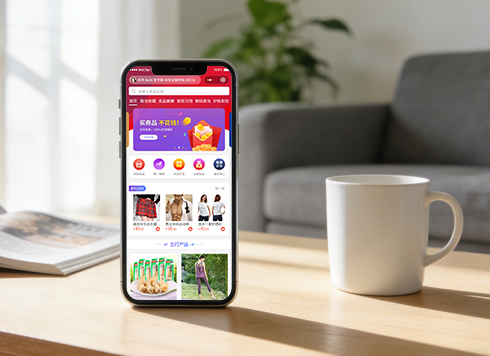 Well-Recognized Custom E-Commerce Mall System Dev
The Good Shopping mini-app is natively buil ...
-
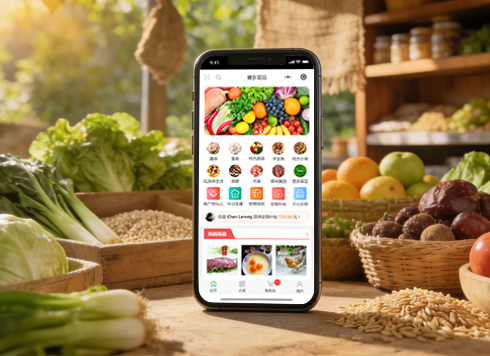 Anhui Huixiang Vegetable Garden Agricultural Products Mini Program v2.0 Iteration Development
HuiXiang MiniApp V2.0: Upgraded homepage, n ...
-
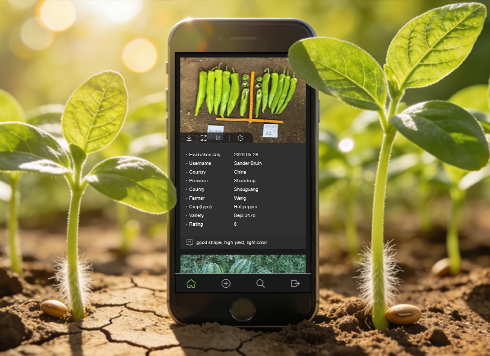 Kunshan TrialBook Mini-Program Custom Development
This project developed an English-only Tria ...
-
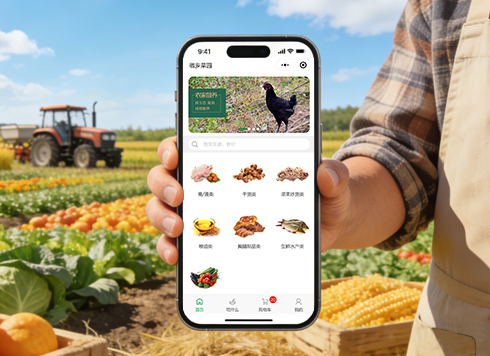 Agricultural Products WeChat Mini Program Custom Development
Lvran Di enhances agricultural sales via a ...
-
Mobile Custom Development Full Process: A Practical Guide from Needs Assessment to Launch and Maintenance
Date: Jul 28, 2026 Read: 98
-
Complete Process and Technology Selection Guide for Mobile Custom Development
Date: Jul 24, 2026 Read: 75
-
What Is Mobile Custom Development: Process, Cost, and Selection Guide
Date: Aug 11, 2026 Read: 58
-
Mini Program Development Basics: Definition, Selection, and Implementation Process
Date: Aug 10, 2026 Read: 78
-
Custom Mobile App Development for Enterprises: Selection, Process, and Common Pitfalls
Date: Aug 9, 2026 Read: 65