




Mobile Custom Software Development Guide: Process, Cost, Technology Selection, and Common Pitfalls
Mobile custom software development refers to designing, developing, and delivering applications that run on smartphones from scratch, based on an enterprise's or organization's specific business processes and user scenarios. It is not about purchasing off-the-shelf software, but converting business logic into code. Therefore, the foundation of success is not the amount of code, but the accuracy of requirements definition. In 2026, the mainstream approach is to first structure requirements, then define the technical roadmap, and finally conduct phased acceptance.
Why Custom Development Is Needed
Off-the-shelf software solves common industry problems but cannot cover the unique processes of every enterprise. The value of custom development lies in making software fit the actual business, rather than forcing the business to adapt to the software. For example, a generic ERP is difficult to adapt to a manufacturer's non-standard work order process; in such cases, a custom mobile reporting module can shorten processing time.
However, custom development does not mean reinventing the wheel. Mature development teams reuse base components and middleware, focusing customization on the core business layer. Therefore, the cost of custom development mainly depends on business complexity and frequency of changes.
- Business processes are unique and no ready-made software is available.
- Existing systems cannot support mobile office scenarios.
- Deep data integration with internal systems is required.
- Long-term iteration and independent control of intellectual property are needed.
Five-Step Implementation: From Idea to Launch
Based on project delivery practices in recent years, a reusable custom development process can be summarized into five steps: requirements boundary definition, technology selection, MVP design, iterative development, and acceptance delivery. This division ensures each step has clear inputs and outputs, avoiding constant changes during development.
- Requirements boundary definition: Clarify core users, core scenarios, and must-complete actions, and define boundaries using "what is needed" and "what is not needed." If this step is vague, all subsequent phases will require rework.
- Technology selection: Determine native, cross-platform, or hybrid solutions based on team capabilities, performance requirements, and budget. The right technology is the one that fits.
- MVP design: Build only the minimum viable product to validate core flows, business assumptions, and user feedback.
- Iterative development: Use two-week sprints with continuous integration and continuous delivery, ensuring weekly visibility and testability.
- Acceptance delivery: Accept each item against the requirements document, conduct stress testing and failure drills, and deliver source code, deployment documentation, and operation manuals.
What should you watch for in each step? Avoid "big and comprehensive" in requirements boundary definition; avoid "chasing new technologies" in technology selection; be willing to cut features in MVP design; prevent requirements creep in iterative development; and define clear acceptance criteria for acceptance delivery.
Native vs. Cross-Platform Development: How to Choose
In 2026, cross-platform toolchains have matured, but the debate between native and cross-platform continues. Native development uses iOS and Android-specific tools, offering better performance and experience; cross-platform uses Flutter, React Native, etc., with a single codebase running on both platforms.
Technology selection should not only consider development cost. If the app involves heavy audio/video processing, AR, or complex animations, native has clear advantages; if it's mainly forms, lists, and process approvals, cross-platform is sufficient.
- Performance-sensitive: Use native development with separate investment in both platforms.
- Complex business logic but standard interactions: Cross-platform is preferred.
- Team already has a technology stack: Using a familiar stack reduces learning costs.
- Need to publish to enterprise app stores: Both are acceptable, but pay attention to target platform restrictions.
A verifiable comparison dimension is as follows: native development takes about twice as long per platform compared to cross-platform, but offers higher frame rates and hardware access capabilities; cross-platform typically saves 20%-30% in cost, but some time should be reserved for handling technical debt.
Cost and Timeline: Setting Realistic Expectations
There is no unified pricing for mobile custom development, but it can be estimated by person-days. In 2026, a mid-sized app (including an admin backend) typically requires 80-150 person-days; multiplying by the team's daily rate yields an approximate range. Specifics depend on the feature list and requirements clarity.
In terms of timeline, from requirements confirmation to app store launch, it typically takes 3-6 months. If requirements change frequently, both timeline and cost will increase.
- Lightweight apps: 50,000-200,000 CNY, 1-2 months.
- Mid-sized apps: 200,000-600,000 CNY, 3-5 months.
- Complex apps: 600,000+ CNY, 6+ months.
These ranges are common industry references and do not apply to all projects. Projects with very low quotes often lack requirements analysis and testing, resulting in higher maintenance costs later.
Common Pitfalls
The first pitfall is "develop first, think about requirements later," which can lead to half the requirements being overturned during development. The second pitfall is "the more features, the better," but in reality, an MVP allows faster trial and error. The third pitfall is "only looking at price, not team capability," as low prices often come with low quality.
To avoid these pitfalls: contractually define the requirements change process and acceptance criteria; conduct demos and reviews during development; and reserve a maintenance period after launch. Additionally, non-technical stakeholders should not judge development progress by intuition, but by runnable versions.
- Starting development without signed requirements documentation
- Skipping testing and launching directly
- Not budgeting for server and operation costs
- Treating custom development as a one-off deal without planning iterations
Applicable Scenarios and Boundaries
Scenarios suitable for custom development include internal management tools, customer service apps, vertical industry applications, and cases requiring integration with hardware devices. These scenarios usually have no off-the-shelf alternatives, or the replacement cost is too high.
Custom development is not suitable when requirements are very simple and can be met with low-code platforms or third-party SaaS, or when the project budget is too small to support high-quality delivery. In such cases, purchasing an existing product is more prudent.
Boundary criterion: When requirements can be implemented with forms, process engines, and reports, custom development is unnecessary; when requirements involve complex business rules and deep system integration, custom development is justified.FAQ
How much does custom mobile app development cost?
Depending on feature complexity, the common market range is from 50,000 to over 600,000 CNY. A detailed quote requires a requirements list and person-day estimation; there is no fixed pricing.
How to choose between native and cross-platform development?
Choose native for high performance and rich interactions; choose cross-platform for standard business and limited budgets; large teams can use a hybrid approach.
How long does development typically take?
Simple apps take about 1-2 months, mid-sized apps 3-5 months, and complex apps usually no less than 6 months.
How to tell if a development vendor is reliable?
Check whether they ask about requirements before quoting prices, whether they provide prototype mockups, and whether they have success cases and commit to source code delivery.
What materials should I prepare?
You should prepare business process diagrams, core feature descriptions, and API documentation for system integration. If unavailable, verbal descriptions can be used as a substitute.
Action guide: First, write down the core business scenarios and non-core scenarios on one page. Then, use the selection dimensions in this article to determine the technical roadmap. Finally, proceed with the five-step implementation method. It should be noted that all estimate ranges may vary by region and team capability. Before formal cooperation, rely on a written requirements specification and quotation list. If your project scope is already clear, ask the technical vendor to provide a technical proposal and milestone plan before making a decision.
-
 Well-Recognized Custom E-Commerce Mall System Dev
The Good Shopping mini-app is natively buil ...
-
 Anhui Huixiang Vegetable Garden Agricultural Products Mini Program v2.0 Iteration Development
HuiXiang MiniApp V2.0: Upgraded homepage, n ...
-
 Kunshan TrialBook Mini-Program Custom Development
This project developed an English-only Tria ...
-
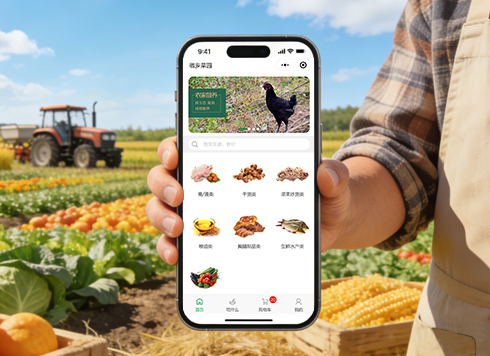 Agricultural Products WeChat Mini Program Custom Development
Lvran Di enhances agricultural sales via a ...
-
Mini Program Development Basics: Definition, Selection, and Implementation Process
Date: Aug 10, 2026 Read: 136
-
Custom Mobile App Development for Enterprises: Selection, Process, and Common Pitfalls
Date: Aug 9, 2026 Read: 110
-
How to Develop a Custom Mini Program? A Guide to Process, Tech Selection, and Evaluation
Date: Aug 4, 2026 Read: 151
-
How to Approach Custom Mobile Development: Requirements Assessment, Technology Selection, and Implementation Essentials
Date: Aug 2, 2026 Read: 182
-
How to Develop a Mini Program: A Complete Guide from Needs Assessment to Technical Implementation
Date: Jul 25, 2026 Read: 155