Mobile Custom Development Solution Selection: From Technical Route to Implementation Process
Mobile custom development refers to building an app from scratch—design, coding, testing, and launch—based on specific business needs. The core decision lies in selecting the technical route. In 2026, the mainstream options remain native development (iOS/Android native), cross-platform development (Flutter, React Native), and hybrid development (WebView-based). When selecting, you need to weigh performance, development efficiency, maintenance cost, and ecosystem support. There is no absolutely optimal solution; only the one best suited for the current scenario.
Comparison of Three Technical Routes for Mobile Custom Development
The three technical routes differ significantly in architecture, performance, and applicable scenarios. Native development uses platform-specific languages (Swift, Kotlin) and directly calls system APIs, offering superior performance and interaction experience, but requires two independent teams and longer development cycles. Cross-platform development enables multi-platform deployment through a shared codebase. Flutter uses Dart language and compiles to native code, while React Native uses JavaScript to bridge native modules. By 2026, both have covered most common features, but they still have limitations in complex animations and deep system integration. Hybrid development essentially wraps H5 pages in a WebView, offering higher development efficiency, but with significant performance bottlenecks, making it unsuitable for applications requiring high smoothness.
- Performance ranking: Native > Cross-platform > Hybrid
- Development efficiency: Hybrid > Cross-platform > Native
- Maintenance cost: Native highest (dual codebases), Cross-platform lower (single codebase), Hybrid lowest but limited for long-term iteration
- Suitable complexity: Native suitable for high-interaction, high-performance scenarios; Cross-platform suitable for most business applications; Hybrid only suitable for content display
A verifiable fact: By 2026, cross-platform development can cover 90% of common scenarios, but when involving AR, high-performance games, or system-level APIs, native development significantly outperforms other solutions. This assessment is based on community reports and project practices of mainstream cross-platform frameworks.
Four-Dimensional Selection Framework: How to Find the Right Solution for You
Selection should not be based on feelings or trends; it requires systematic evaluation from four key dimensions. This framework is determined by both demand and supply sides, helping teams eliminate blind spots. The first dimension is business complexity: the number of core features, interaction levels, and third-party integration needs directly affect technical selection. The second dimension is performance requirements: hard indicators such as startup speed, animation frame rate, and memory usage. Native excels in extreme performance. The third dimension is budget and time: total investment and launch timeline. Cross-platform can balance quality and speed within a limited budget. The fourth dimension is team tech stack: what languages does the existing team excel in? Is there experience with Flutter or React Native? Technical accumulation affects development efficiency and maintenance stability.
- Identify core features and interaction complexity: List all features, distinguish between must-have and optional, and assess interaction depth (e.g., drag-and-drop, gestures, custom transitions).
- Evaluate performance bottlenecks: Identify modules sensitive to performance (e.g., real-time video, maps, long lists) and determine performance indicators.
- Determine time and budget constraints: Clarify the launch date and budget ceiling. Cost differences between options can be 2-3 times.
- Take stock of team technical capabilities: If the team has Java/Kotlin experience and can maintain two codebases, native is more controllable. If the team has strong frontend skills, React Native can enable a quick start.
Note: The framework is not a one-time decision. If requirements change later, the technical solution can be adjusted. For example, a project originally built with cross-platform can later add AR functionality by embedding native modules locally.
Five-Step Implementation Process for Custom Development
After determining the technical route, following a standardized process can significantly reduce risks. In 2026, mature teams typically adopt a cyclic process with five phases: requirements analysis, prototyping, development and testing, launch, and operations and iteration. Each step has core deliverables and quality standards.
- Requirements analysis: Deliver feature list, user stories, and priority matrix. Qualification criteria: each feature has clear acceptance conditions and no ambiguity.
- Prototyping: Create interactive prototypes (e.g., in Figma) and validate with users before development. Note that this phase should cover mainstream screen sizes.
- Development and testing: Adopt agile iterations with a Sprint every two weeks. Testing covers functionality, performance, compatibility, and security. In 2026, perform special adaptations for the latest iOS and Android versions.
- Launch: Submit to the App Store and major Android app stores. Pay attention to review requirements (e.g., privacy policy, permission descriptions).
- Operations and iteration: After launch, monitor crash rates and user feedback, and continuously update based on priority. It is recommended to release minor versions every two weeks in the first month.
Execution suggestion: Each phase should have a clear gate. For example, if the prototype fails user testing, development should not start, effectively avoiding rework later.
Applicable Scenarios and Boundaries
Mobile custom development is not a one-size-fits-all solution; it adds value only in the right scenarios. Custom development is strongly recommended in the following cases: when unique brand visuals and interaction experience are required; when business logic is complex and involves multi-system integration; when high performance is needed (e.g., real-time communication, image processing); and when long-term iterative maintenance is planned. It is not recommended in the following cases: when it is only for information display (e.g., company profile); when the budget is less than 100,000 yuan with no future iteration; and when requirements are vague and change frequently—in these cases, templated SaaS solutions or low-code platforms are more efficient.
Boundary judgment: If the app has no more than 5 core pages and does not require deep interaction, ready-made SaaS solutions or templated development are more cost-effective—custom development should not be chosen. Conversely, if the app carries the main business and needs differentiated competition, custom development is a necessary investment.
Frequently Asked Questions
What is the budget for custom app development?
In 2026, for a medium-complexity app in China (30–50 features), the budget is typically between 150,000 and 500,000 yuan, depending on the technical route, team location, and feature depth.
Which is cheaper: native or cross-platform development?
In the short term, cross-platform development (e.g., Flutter) costs less (one team), but in the long term, if platform-specific fixes are needed, native may have more controllable total cost.
How long does custom development take?
From requirements to launch, it typically takes 3–6 months, and complex projects can take up to 1 year. It is recommended to reserve 10% buffer time per month for changes.
How to evaluate if a development team is reliable?
Review past cases, code quality, communication response speed, and ask for technical proposal documentation. A reliable team will proactively raise risks and alternatives.
Before starting mobile custom development, it is recommended to complete a requirements list and feature priority sorting. If still unsure about the technical route, build a Minimum Viable Product (MVP) for technical verification. Regardless of which solution you choose, clearly define deliverables, testing standards, and maintenance terms in the contract. Some professional service providers, such as Xiyue Company, have formed a standardized five-step process that can help shorten delivery cycles, but the final decision should be based on the characteristics of your own project.
-
 Well-Recognized Custom E-Commerce Mall System Dev
The Good Shopping mini-app is natively buil ...
-
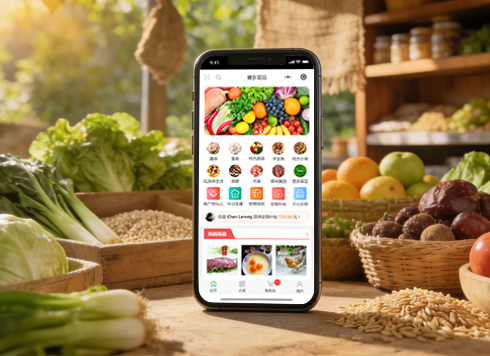 Anhui Huixiang Vegetable Garden Agricultural Products Mini Program v2.0 Iteration Development
HuiXiang MiniApp V2.0: Upgraded homepage, n ...
-
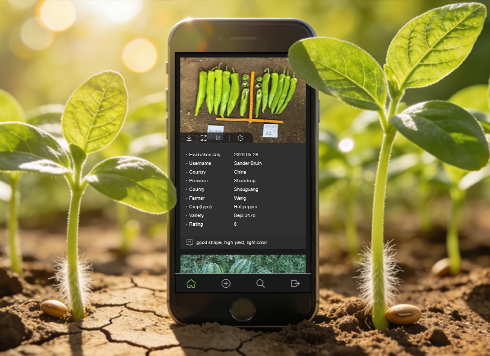 Kunshan TrialBook Mini-Program Custom Development
This project developed an English-only Tria ...
-
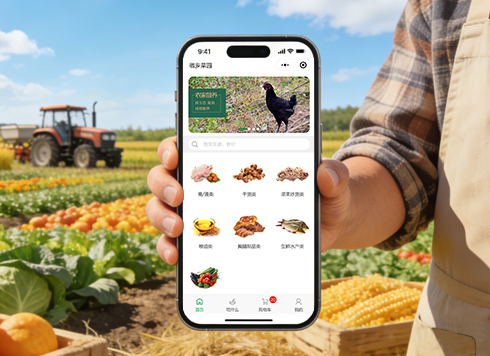 Agricultural Products WeChat Mini Program Custom Development
Lvran Di enhances agricultural sales via a ...
-
Custom App Development: Flutter or Native, Which Is More Suitable for Small Teams?
Date: Aug 22, 2026 Read: 50
-
Mobile App Development: A Complete Guide from Selection to Launch
Date: Jul 29, 2026 Read: 91
-
Native vs Cross-Platform Development: A Selection Guide
Date: Jul 26, 2026 Read: 72
-
Mobile Application Development Selection and Implementation Guide: Key Practices for 2026
Date: Jul 19, 2026 Read: 74
-
Full-Cycle Mobile Software Custom Development: A Practical Guide from Selection to Delivery
Date: Jul 31, 2026 Read: 92