



Mini Program Custom Development Selection Guide: Complete Process from Requirements to Delivery
Mini program custom development refers to the process of designing, developing, and delivering a dedicated mini program from scratch based on the specific business needs of an enterprise or individual. By 2026, the mini program ecosystem has become highly mature, and the focus of custom development has shifted from "whether it can be done" to "how to be more efficient and controllable." The key to success lies in four major stages: requirements confirmation, technology selection, development management, and acceptance and delivery. Custom development achieves fully personalized functionality and interaction, suitable for complex business scenarios or brand differentiation needs, but it is also necessary to define its boundaries to avoid blind investment.
Overview of Mini Program Custom Development
Custom development is a complete engineering process where a development team, based on specific requirements, completes UI design, front-end development, back-end construction, database design, and testing for launch. It differs from template-based development (fixed UI with minimal configuration) and SaaS solutions (renting standard features). The core value lies in flexibility and uniqueness: functions can be designed entirely according to business logic, creating a unique brand experience and supporting subsequent iterations. By 2026, platforms like WeChat and Alipay have mini programs with over 400 million daily active users. Standardized templates cannot meet complex operational needs (e.g., multi-level settlement, private domain live streaming, system integration), making custom development necessary. However, if the business is simple (e.g., display pages or basic booking) and does not require deep iterations, choosing SaaS or templates is more economical.
How to Implement Custom Development: Process and Selection
A standard custom project is divided into five phases: requirements clarification (prioritizing functions as P0/P1/P2), UI/UX design (high-fidelity prototypes and confirmation), technology selection (front-end framework like uniapp, back-end like Node.js, cloud development mode to reduce operational costs), development and testing (deliver a runnable version each week, covering functionality, performance, and compatibility), and launch and maintenance (continuous monitoring and iteration after review and release). The typical cycle is 8-12 weeks, with complex projects potentially exceeding 16 weeks.
Below is a comparison of three options (2026 market range):
- Custom Development: Full control, meets complex needs; cost $10,000-$30,000, cycle 8-16 weeks.
- Template Development: Modifies based on existing templates; cost about 30%-50% of custom development, cycle 2-4 weeks.
- SaaS: Annual subscription, ready to use; cost $1,000-$10,000 per year, cycle 1-2 weeks.
The choice depends on business complexity, budget, and long-term planning. For example, simple booking can use SaaS or templates, while an e-commerce platform integrating with ERP requires custom development.
Common Misconceptions and Quality Assessment in Custom Development
Non-technical teams often fall into these misconceptions: starting development without clear requirements (should output detailed PRD and sign off), underestimating testing costs (reserve at least 20% of budget), neglecting data analysis (need built-in tracking and dashboards), and blindly pursuing multi-platform coverage (recommend validating on one platform first before expanding). Managing change is key to controlling costs.
Acceptance should be evaluated from four dimensions: functional completeness (no blocking bugs in P0 functions), performance compliance (homepage load <3 seconds), code standards and documentation (provide API, deployment, and database documentation), and security (data encryption, injection prevention, compliance). You can ask the development team to showcase live cases and experience them directly.
Applicable Scenarios and Boundaries
Most suitable scenarios: complex business logic (multi-role permissions, tiered commissions, real-time synchronization), high brand requirements (unique UI and animations), need to integrate with internal systems (CRM/ERP/OA), long-term operations requiring data autonomy. Unsuitable scenarios: business is just starting and requirements are unclear, budget below $10,000-$15,000 (2026 baseline range), extremely short launch timeline (within 2 weeks), simple business with no intention of deep operations. Defining boundaries helps rational decision-making, avoiding blind investment for the sake of the term "custom."
Frequently Asked Questions
How much does mini program custom development typically cost?
In 2026, the industry range is $5,000-$30,000. Basic e-commerce projects cost about $10,000-$15,000, while those involving AI or complex algorithms exceed $20,000.
How long does custom development take?
Most projects take 8-12 weeks for MVP, complex projects may take over 16 weeks. It is recommended to reserve a 20% buffer for testing and modifications.
Can the project be transferred to another development team for maintenance later?
Yes, but the original team must provide complete source code, design files, API documentation, and deployment instructions. It is easier to migrate if the code is well-structured and the technology stack is common.
What is the difference between custom development and buying a template?
Template development modifies an existing framework, with lower cost but fixed functionality. Custom development starts from scratch, offering flexible functionality but higher cost and longer cycle. The choice depends on long-term business planning.
Are there additional costs after the mini program goes live?
The development contract usually covers the initial launch. Subsequent maintenance, bug fixes, and version iterations require a separate contract. It is advisable to clarify post-launch pricing before signing the contract.
Mini program custom development is a low-barrier, high-return digital transformation tool. Success depends on clear requirements, a reasonable budget, and a reliable partner. Before starting, clarify goals, compare options, and investigate the team's reputation. It is recommended to start with a small MVP for validation and iterate gradually. Xiyue Company has delivery experience in e-commerce and B2B scenarios, but the final solution should be based on your own characteristics. There is no one-size-fits-all solution, only the most suitable path.
-
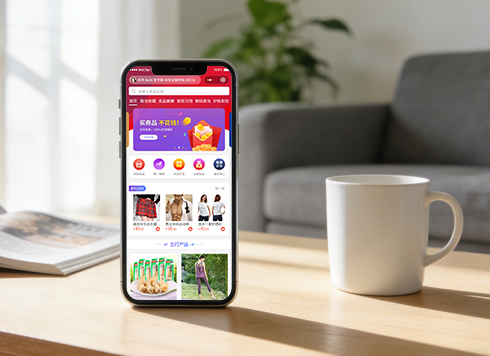 Well-Recognized Custom E-Commerce Mall System Dev
The Good Shopping mini-app is natively buil ...
-
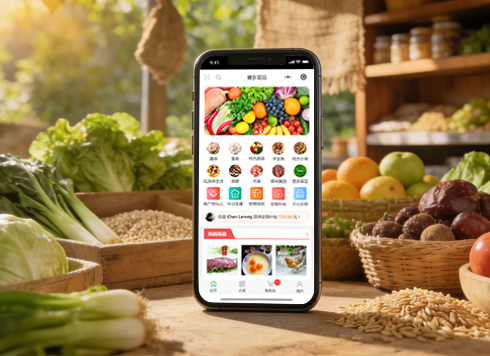 Anhui Huixiang Vegetable Garden Agricultural Products Mini Program v2.0 Iteration Development
HuiXiang MiniApp V2.0: Upgraded homepage, n ...
-
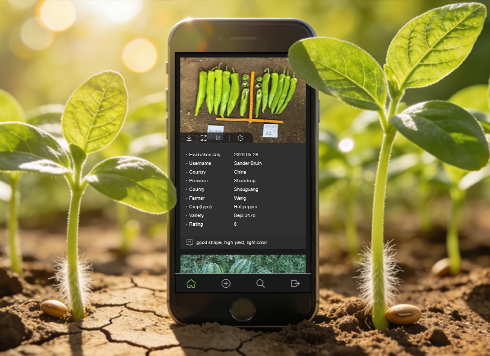 Kunshan TrialBook Mini-Program Custom Development
This project developed an English-only Tria ...
-
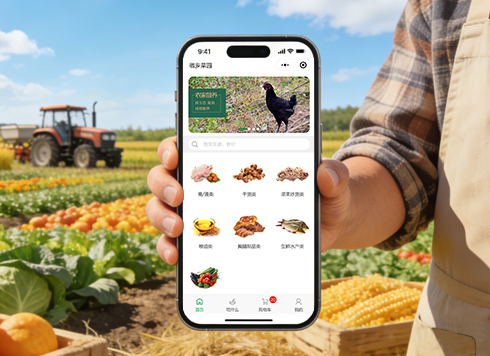 Agricultural Products WeChat Mini Program Custom Development
Lvran Di enhances agricultural sales via a ...
-
Mini Program Custom Development Full Process Guide: Key Points of Requirements, Selection, and Delivery
Date: Jul 24, 2026 Read: 110
-
Mini Program Development Basics: Definition, Selection, and Implementation Process
Date: Aug 10, 2026 Read: 78
-
Mini Program Custom Development: Core Knowledge and Selection Guide
Date: Jul 31, 2026 Read: 109
-
A Complete Guide to Custom Mobile App Development: From Requirements to Deployment and Maintenance
Date: Jul 31, 2026 Read: 85
-
Mini Program Custom Development Selection Guide: Technical Solutions and Implementation Essentials
Date: Jul 28, 2026 Read: 101