



Custom Mini-Program Development: A Complete Guide from Requirements to Launch
What is Custom Mini-Program Development
Custom mini-program development refers to creating a mini-program client and backend management system from scratch or based on a framework according to the specific business needs of an enterprise. Unlike template-based products, custom development supports on-demand functional module combination, personalized UI design, and deep integration with existing systems (e.g., ERP, CRM). In 2026, the common practice is to first define core functional boundaries and then choose the development technology stack.
The core deliverables of custom development include: front-end user client, management backend, API interfaces, and operation documentation. Its value lies in business logic closure and data privatization, avoiding the functional redundancy and scaling bottlenecks of generic templates.
Why Choose Custom Development
Template mini-programs typically charge monthly fees, suitable for validation stages; while custom development involves a one-time investment, granting long-term ownership of source code and data. For enterprises requiring complex interactions (e.g., booking, payment, logistics tracking) or brand differentiation, custom solutions better align with business workflows.
Comparison Dimensions:- Functional Flexibility: Templates limit 80% of modification possibilities; custom development allows precise control over every field and process.
- Data Ownership: Data on template platforms may be shared; custom data is fully private, meeting 2026 data compliance requirements.
- Iteration Costs: Secondary development of templates often requires data migration, while custom projects allow continuous iteration on source code.
For example, a chain enterprise requiring branch management and cross-store membership points integration can only achieve basic ordering with templates, whereas custom development can set up permission accounts and rule engines.
Core Process: Four-Stage Implementation Method
According to 2026 project delivery practices, custom development can be divided into four stages: requirements definition, technology selection, iterative development, and acceptance deployment. Each stage has clear deliverables and checkpoints to reduce rework risks.
Stage 1: Requirements Definition (Expected Duration: 1-2 Weeks)- Map business processes and data flows, clarifying core functions and MVP (Minimum Viable Product) scope.
- Create a functional list and priority matrix, distinguishing "must-haves" from "nice-to-haves."
- Produce prototype diagrams or interaction descriptions; validate logical closure through user interviews.
- Choose development method: Native (better performance) vs Hybrid (faster cross-platform). In 2026, hybrid solutions like Taro and uni-app cover WeChat, Alipay, etc.
- Determine backend language: Python (fast) or Java (stable), considering team tech stack.
- Cloud service selection: Based on 2026 trends, Serverless architecture is recommended to reduce operational costs.
- Adopt agile development with bi-weekly sprints, demonstrating a usable version each time.
- Key milestones include: front-end and back-end integration, WeChat login/payment integration, and performance stress testing.
- Achieve over 80% test case coverage, focusing on concurrency and exception scenarios.
- Conduct item-by-item acceptance per requirements document, checking data accuracy, response speed, and UI consistency.
- Configure production environment, submit for WeChat review, allowing 2-3 business days for approval.
- Continuously monitor logs and errors after deployment; set alert thresholds.
Hold review meetings after each stage to ensure requirement deviation is less than 5%. Note: Requirement changes must follow a change request process; otherwise, costs may exceed budget by over 30%.
Technology Selection and Cost Comparison
Mainstream technical solutions in 2026 include native (WXML+JS) and cross-platform (React Native/Flutter/uni-app). Selection criteria include target platform count, animation complexity, and team experience.
Solution Comparison:- Native Development: Best performance, full API access, but single-platform only. Development cost approximately 80,000–150,000 RMB (including both mini-program ends and backend).
- Hybrid Development (e.g., uni-app): One codebase runs on multiple platforms, but some native features require plugins. Cost approximately 50,000–120,000 RMB, with 20% shorter cycle.
Key differences: Hybrid solutions suit rapid prototyping; native suits high-performance scenarios (e.g., live streaming, large forms). Cost control key: requirement freeze and API reuse—reusing existing enterprise backends can reduce workload by 30%.
When selecting a development team, check their past projects for code standards, documentation completeness, and response time. A common pitfall in 2026 is "cheap outsourcing" using low-quality templates disguised as custom development, with limited functionality discovered during acceptance. Request project source code and deployment documents, and stipulate intellectual property ownership in the contract.
Frequently Asked Questions
How long does custom development take?
Typically 6–12 weeks, depending on functional complexity. Simple display types take 4–6 weeks; complex logic including payment, maps, etc., takes 8–12 weeks.
How to estimate custom development costs?
Basic version (5–8 pages, including backend): about 50,000–100,000 RMB; medium complexity (including third-party integration): about 100,000–180,000 RMB; large projects (multi-role, high concurrency): can exceed 200,000 RMB.
How to accept delivery without a technical team?
You can commission a third-party testing agency or request the development team to provide a test report (including API stress tests, compatibility list). During acceptance, focus on verifying core functional flows.
How to maintain after custom development?
The development team usually provides 1–3 months of free maintenance, then annual fees at about 15–20% of the development cost. It is recommended to reserve a maintenance budget and sign an SLA agreement.
Can AI features be integrated later?
Yes, as long as API interfaces are reserved in the custom project. Common practice in 2026 is to integrate large model APIs or build custom models for intelligent customer service and recommendations.
Applicable Scenarios and Boundaries
Custom mini-program development is suitable for: complex business logic, brand display needs, internal system integration, or existing user bases requiring secondary development. Examples: chain store booking systems, online education sections, medical appointment platforms.
Not suitable for: businesses still in rapid trial phases (should first validate with templates), extremely simple functions (e.g., pure information display), or budgets below 30,000 RMB (quality difficult to guarantee). Additionally, if the team lacks a dedicated contact person for requirements, custom development can easily fall into requirement creep.
Boundary judgment: If existing templates meet 80% of functions and brand requirements are not high, prioritize templates plus minor adjustments. The investment in custom development should correspond to quantifiable business value, such as 30% efficiency improvement or increased conversion rates.
Action Guide: Before starting custom development, draw a business process diagram and clarify core functionality priorities. When selecting a development team, ask for source code snippets and deployment environment examples from similar projects. In 2026, all mini-program custom projects delivered by Xiyue Company adopt the four-stage implementation method, ensuring requirement transparency and cycle controllability. It is recommended to reserve 10–15% of the budget as a buffer for requirement changes.
-
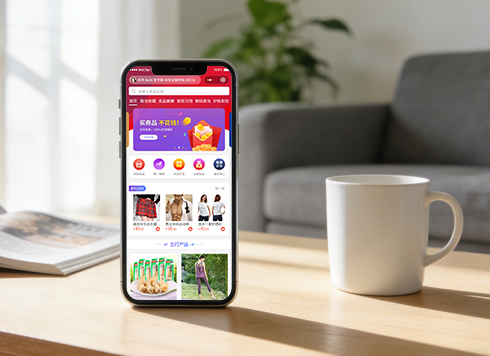 Well-Recognized Custom E-Commerce Mall System Dev
The Good Shopping mini-app is natively buil ...
-
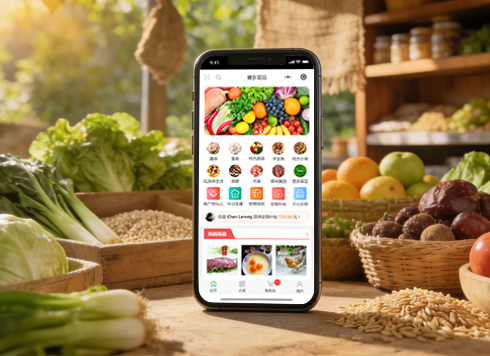 Anhui Huixiang Vegetable Garden Agricultural Products Mini Program v2.0 Iteration Development
HuiXiang MiniApp V2.0: Upgraded homepage, n ...
-
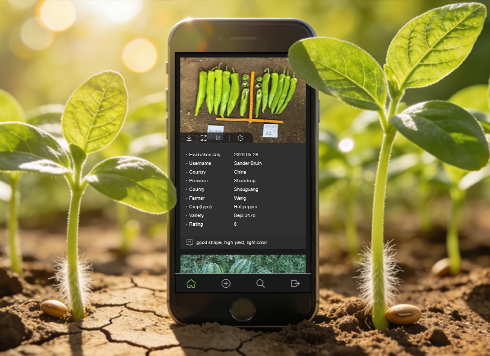 Kunshan TrialBook Mini-Program Custom Development
This project developed an English-only Tria ...
-
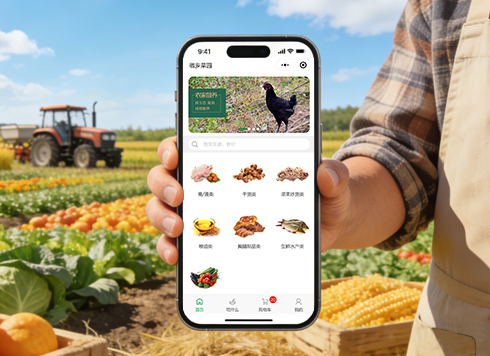 Agricultural Products WeChat Mini Program Custom Development
Lvran Di enhances agricultural sales via a ...
-
Complete Process and Technology Selection Guide for Mobile App Development from Requirements to Launch
Date: Jul 25, 2026 Read: 111
-
Mini Program Development Basics: Definition, Selection, and Implementation Process
Date: Aug 10, 2026 Read: 78
-
Custom Mobile App Development for Enterprises: Selection, Process, and Common Pitfalls
Date: Aug 9, 2026 Read: 65
-
How to Develop a Custom Mini Program? A Guide to Process, Tech Selection, and Evaluation
Date: Aug 4, 2026 Read: 91
-
Mobile Custom Software Development Guide: Process, Cost, Technology Selection, and Common Pitfalls
Date: Aug 2, 2026 Read: 113