



Complete Guide to Custom Mobile App Development Process and Technology Selection
Custom mobile app development is the process of building an application from scratch based on specific business needs. The mainstream solutions in 2026 include native, React Native, and Flutter. The core reasons for choosing custom development are competitive differentiation and data security, but it requires a budget of at least 500,000 RMB and a timeline of 3–5 months. This article provides a full-process guide and technology comparison to help enterprises make informed decisions.
What is Custom Mobile Development
Custom mobile development refers to the process where a development team builds a dedicated mobile application from scratch based on the specific business needs of an enterprise, as opposed to using standardized templates or SaaS platforms. Common custom development approaches in 2026 include native (iOS/Android native languages), cross-platform (React Native, Flutter), and hybrid architectures. The core value lies in high control over functionality, interaction, and data, but requires a higher budget and timeline.
- Native Development: Uses Swift/Kotlin, offering the best performance, suitable for complex interaction scenarios.
- Cross-Platform Frameworks: Write once, run on multiple platforms, high development efficiency, but some underlying features are limited.
- Hybrid Solutions: WebView wrappers, suitable for content-display apps, but with lower fluency.
Why Choose Custom Development
In 2026, the core drivers for enterprises to choose custom development are competitive differentiation and data security. Standardized SaaS products cannot meet personalized workflows or brand experiences; custom apps can integrate with existing enterprise systems (e.g., CRM, ERP) and provide high control over data sovereignty. According to industry practices, when the user scale exceeds 10,000 and business logic requires frequent iteration, custom solutions offer better cost-effectiveness than outsourced templates. However, if requirements are simple and the budget is below 100,000 RMB, consider mature SaaS solutions.
Standard Custom Development Process
Requirements Analysis and Prototype Design
This phase determines project success. The team must conduct in-depth interviews with business stakeholders, produce a feature list, user flow diagrams, and interactive prototypes. A common mistake is neglecting the complexity of third-party API integration. In 2026, it is recommended to adopt agile iteration, splitting MVP (Minimum Viable Product) and subsequent versions.
- Key Deliverables: Product Requirements Document (PRD), high-fidelity prototypes.
- Pitfall to Avoid: Defining what not to do is more important than what to do, to prevent scope creep.
Technology Selection and Architecture Design
Technology selection requires balancing performance, development speed, and team capabilities. Below is a comparison of common solutions in 2026:
- Native Development: Excellent performance (frame rate >60fps), fast startup, but longer development cycle (roughly double the time of cross-platform). Suitable for games, AR/VR, and high-performance applications. Cost range: first-tier teams 1.5–4 million RMB, second-tier 800,000–2 million RMB.
- React Native: Code reuse rate about 80%, active community, suitable for medium-complexity apps like e-commerce and social networks; however, JS bridge has performance bottlenecks. Cost range: first-tier teams 1–2.5 million RMB, second-tier 500,000–1.5 million RMB.
- Flutter: Self-drawn engine with performance close to native, supports hot reload, suitable for UI-complex, fast-iteration projects; but larger package size (~10MB+). Cost range: first-tier teams 1.2–3 million RMB, second-tier 600,000–1.8 million RMB.
Decision framework: If the team lacks native experience and needs to launch on iOS/Android simultaneously, prioritize Flutter or React Native; if manpower is already available, native is safer. Based on 2026 project delivery habits, medium-sized apps (within 10 screens) can reduce development time by about 30% using Flutter.
Development and Testing
The development phase adopts mainstream DevOps tools (e.g., GitLab CI, Jenkins) for automated builds. Testing must cover functionality, compatibility, performance, and security. A common pitfall is neglecting weak network conditions and low-end device adaptation. In 2026, it is recommended to use cloud real-device testing platforms covering the top 50 models.
Launch and Post-Launch Iteration
The App Store review cycle is typically 1–3 days; ensure privacy policy and metadata compliance. After launch, monitor crash rates (target below 0.5%) and user feedback, releasing minor version iterations monthly.
How to Evaluate the Capability of a Custom Development Company
When evaluating a team, focus on three factors: whether past cases are in the same domain, whether the tech stack matches, and whether the project management process is transparent. Common cooperation models in 2026 are fixed price plus milestone payments, avoiding full upfront payment. Additionally, ask for a preliminary solution review report to verify their depth of business understanding.
- Red Flags: Inability to show actual code repositories, promises of 100% satisfaction, refusal to sign a non-disclosure agreement.
- Acceptable Standards: Can provide at least 2 online cases of similar projects with traceable iteration records.
Applicable Scenarios and Boundaries
Scenarios Suitable for Custom Development
- Complex business logic requiring deep integration with backend systems (e.g., logistics dispatch, medical appointments).
- High requirements for interaction experience (e.g., video editing, live streaming).
- Sensitive data security (e.g., finance, government) requiring private deployment or local encryption.
Scenarios Where Custom Development is Not Recommended
- Generic needs where competitors already offer standardized solutions (e.g., simple booking, information display).
- Budget below 500,000 RMB (first-tier team quotes in 2026) and tight timeline (less than 3 months).
- Only need to validate an idea short-term with possible pivot later — consider low-code platforms or outsourced mini versions first.
Common Misconceptions
- Misconception 1: Custom development always costs more than templates. In fact, long-term iteration costs may be lower because code is reusable.
- Misconception 2: Cross-platform can fully replace native. Note: Flutter has weaker support for underlying hardware like Bluetooth and NFC.
- Misconception 3: The more features, the better. MVP principle prioritizes core flow, letting the product quickly go to market for validation.
FAQ
How long does custom development typically take?
A medium-sized app (10–20 feature points) takes about 3–5 months from requirements to launch, including 1 month for requirement design, 2 months for development, and 1 month for testing and release. The timeline varies based on team efficiency and feature complexity.
What is the price range for custom development?
Domestic second-tier teams quote 500,000–1.5 million RMB, first-tier teams 1.5–4 million RMB, depending on feature complexity and team level. Too low a price may indicate quality risks.
How to ensure development quality?
Sign an SLA requiring phase-wise deliverables (prototypes, codebase, test reports) and set acceptance criteria, such as response time below 2 seconds and crash rate below 0.3%.
How is ongoing maintenance charged?
Usually billed by man-hours or quarterly service packages, with annual maintenance cost about 15%–20% of the total development price.
Action guide: If you are planning to start a mobile app project, first clarify core requirements and budget, and define non-functional requirements (e.g., concurrent users, security level). For enterprises with limited budget and the need for fast trial, consider collaborating with industry-experienced teams using MVP + iterative delivery. Also, ensure the contract specifies the tech stack, deliverables, and acceptance criteria to avoid later disputes.
-
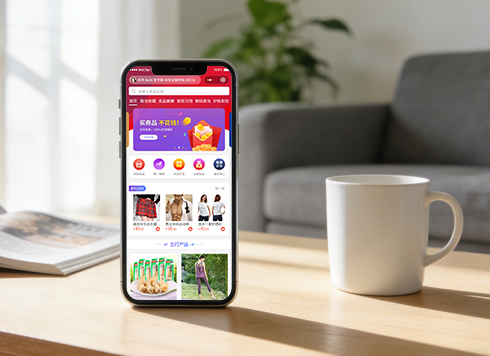 Well-Recognized Custom E-Commerce Mall System Dev
The Good Shopping mini-app is natively buil ...
-
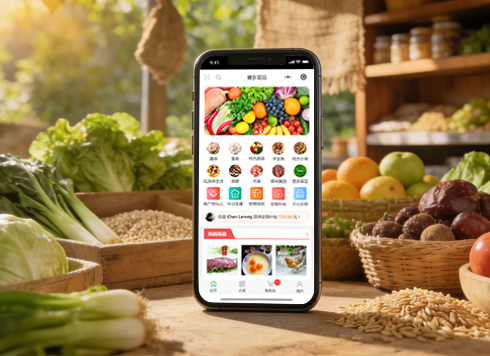 Anhui Huixiang Vegetable Garden Agricultural Products Mini Program v2.0 Iteration Development
HuiXiang MiniApp V2.0: Upgraded homepage, n ...
-
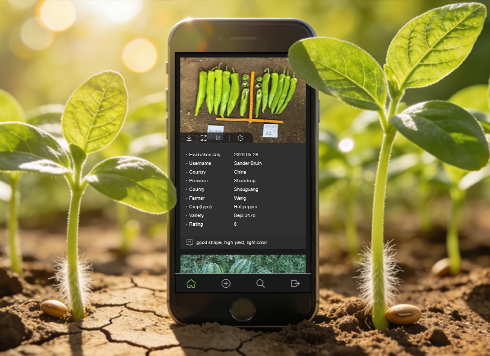 Kunshan TrialBook Mini-Program Custom Development
This project developed an English-only Tria ...
-
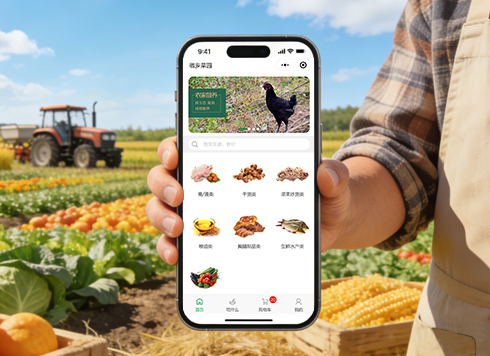 Agricultural Products WeChat Mini Program Custom Development
Lvran Di enhances agricultural sales via a ...
-
Enterprise WeChat Mini Program Custom Development: A Complete Guide to Selection and Implementation
Date: Jul 27, 2026 Read: 106
-
Mini Program Development Basics: Definition, Selection, and Implementation Process
Date: Aug 10, 2026 Read: 78
-
Custom Mobile App Development for Enterprises: Selection, Process, and Common Pitfalls
Date: Aug 9, 2026 Read: 65
-
How to Develop a Custom Mini Program? A Guide to Process, Tech Selection, and Evaluation
Date: Aug 4, 2026 Read: 91
-
Mobile Custom Software Development Guide: Process, Cost, Technology Selection, and Common Pitfalls
Date: Aug 2, 2026 Read: 113