



Mobile App Custom Development: A Complete Guide from Requirements to Launch
Mobile app custom development refers to designing, coding, and delivering mobile software from scratch or based on a framework according to specific business needs of an enterprise. In 2026, the core reason for enterprises to choose custom development lies in business logic differentiation and data sovereignty, rather than mere technical implementation. A mature custom development process should cover requirements analysis, technology selection, iterative development, testing, release, and maintenance. Key conclusion: success hinges on upfront requirement alignment rather than later technical fixes; selection must balance performance and cost; iterative delivery is more reliable than a one-time perfect release.
Requirements Phase: Clarify "Why" and "For Whom"
The biggest risk in custom development comes from vague requirements. Before project initiation, user personas and scenario inventories must be completed. A common mistake is treating the boss's ideas as all user needs. Acceptable deliverables should include a feature priority matrix (MoSCoW method) and a core process experience map. In 2026, more teams use lean canvases to quickly align business assumptions, then validate through user interviews.
- Distinguish "must-have features" from "delight features" to avoid early feature bloat. For example, in an e-commerce app, product browsing and payment are must-haves, while social sharing is a delight feature.
- Invite 3-5 target users for prototype testing, not just internal reviews. The test environment should simulate real scenarios, recording operation paths and feedback.
- Requirements documents should include acceptance criteria (Given-When-Then format) to reduce later disputes. For example: "When the user clicks the payment button, the system should display a payment confirmation page and process the order within 5 seconds."
Additionally, it is recommended to define a data tracking plan during the requirements phase to measure user behavior and core metrics after launch. Ignoring this step often leads to missing data later, hindering optimization and iteration.
Technology Selection: Native, Cross-Platform, and Progressive Trade-offs
Common solutions in 2026 fall into three categories: native development (iOS Swift + Android Kotlin), cross-platform (Flutter / React Native), and progressive (PWA). Selection must consider performance requirements, development cost, team capability, and long-term iteration pace. There is no universally optimal solution; only the one best suited for the current business stage.
Four-Dimension Selection Framework
Evaluate across performance, cost, team, and ecosystem. For example, apps with heavy interaction and complex animations (e.g., video editing) should prioritize native; budget-limited and standardized functions (e.g., e-commerce) recommend Flutter.
- Performance comparison: Native = Flutter > React Native > PWA (near native at doubled cost). Note that Flutter may encounter compatibility issues on iOS due to its rendering mode.
- Cost comparison (initial): PWA (200k-400k CNY) < Flutter (500k-800k CNY) < Native (800k-1.2M CNY, both platforms). These ranges are based on mainstream team quotes in 2026; actual prices vary with feature complexity.
- Iteration efficiency: Cross-platform hot reload is superior, but native has more complete access to system features. Flutter's Hot Reload significantly shortens debugging cycles.
- Non-applicable boundaries: When heavily dependent on low-level hardware such as gyroscope, ARCore, or Bluetooth Low Energy, cross-platform is not recommended; PWA cannot use notifications or background tasks and is unsuitable for offline scenarios.
Additionally, hybrid rendering solutions (e.g., Flutter + native plugins) emerged in 2026 to partially address performance gaps, but they increase architecture complexity. Selection should be based on POC validation in real scenarios, not just on technical blog comparisons.
Development Implementation: Agile Delivery and Key Milestones
Custom development is recommended to use the Scrum framework, delivering a runnable incremental version every 1-2 weeks. Key milestones include: Sprint 0 (technical research and architecture design), MVP release (narrow but deep feature set), and UAT phase (user acceptance testing). In 2026, project delivery practices often tie milestone payments to Sprint demos to reduce risk for both parties.
- Sprint 0: Set up CI/CD, finalize component library and API contracts. Technical debt assessment should be completed here to avoid later accumulation.
- Iterative development: Daily standups to resolve blockers, weekly demos to collect feedback. Use burndown charts to track progress and adjust priorities timely.
- Internal beta release: Use TestFlight/Google Play internal channels to collect crash logs. Cover Android 7.0 and above.
- UAT: Business side tests each acceptance criterion and signs off. Prepare UAT scripts simulating real business processes.
Note: Avoid adding new requirements mid-iteration; instead, add them to the product backlog. If requirements change frequently, adopt rolling planning: reassess priorities every two Sprints. In 2026, many teams integrate DevOps toolchains for automated builds, tests, and deployments, shortening release cycles to one day.
Testing and Release: Quality Assurance and Compliance Preparation
Testing must cover functionality, performance, security, and compatibility. In 2026, mainstream tools include Appium (automation), Perfdog (performance), and MobSF (security scanning). For compliance, note the Personal Information Protection Law and new App Store review rules: require clear privacy policy pop-ups, minimize data collection, and provide user deletion features.
- Functional testing: Write test cases and run automation scripts. Aim for coverage of at least 80%.
- Performance testing: First screen load time < 2 seconds, memory usage < 200MB (mid-range devices). Use Perfdog to record CPU and GPU curves.
- Security testing: Encrypted transmission (HTTPS + TLS 1.3), local sensitive data masking, minimal permissions. Check for hardcoded keys.
- Compatibility: Cover at least 20 devices from recent flagship and mid-low end models. Focus on Android fragmentation.
Before release, prepare a privacy policy pop-up and app store screenshot set. Apple review typically takes 2-3 days; plan buffer time. In 2026, Google Play tightened push notification permissions; adapt in advance. After launch, continuously monitor crash rates, keeping them below 0.5%.
Applicable Scenarios and Boundaries
Custom development is suitable for: strong industry specificity (e.g., healthcare, industrial), controllable user scale (100k-5M), and needing autonomous data control. It is not suitable for: unvalidated ideas (use templates or low-code MVP first), extremely low budgets (<200k CNY), or expecting complex functionality to launch within 3 months. Boundary statement: when business logic can be covered by standardized SaaS, custom development is not optimal because long-term maintenance costs may exceed SaaS subscription fees. For example, if a generic CRM system lacks strong industry characteristics, SaaS is the preferred choice.
Additionally, for scenarios where user growth exceeds expectations, plan for backend elasticity in advance (microservices architecture, cloud-native). If the business model changes frequently, consider componentized architecture to reduce rework costs and future refactoring risks.
Frequently Asked Questions
How much does custom development typically cost?
In 2026, the price range for mobile app custom development (both platforms) is 300k-1.5M CNY, depending on feature complexity, design sophistication, and team level.
How to judge if a development team is reliable?
Check previous projects' App Store ratings and delivery documents, and ask for a code sample and test coverage report.
Is cross-platform performance sufficient?
For 90% of use cases (e-commerce, community, tools), performance is adequate. However, heavy graphics rendering or complex animations remain native advantages.
How long is the typical development cycle?
MVP version: 4-6 weeks; full-featured version: 8-16 weeks, adjustable based on team size and requirement complexity.
How to maintain after custom development?
Sign an annual maintenance contract (about 15%-20% of development cost), covering compatibility updates, security patches, and emergency bug fixes.
Action guide: Before starting a project, spend 2 weeks on requirements alignment and technology selection research, then choose a suitable team for POC validation. Applicable boundary: if user growth exceeds expectations, plan for backend elasticity in advance; if the business model changes frequently, consider componentized architecture to reduce rework costs.
-
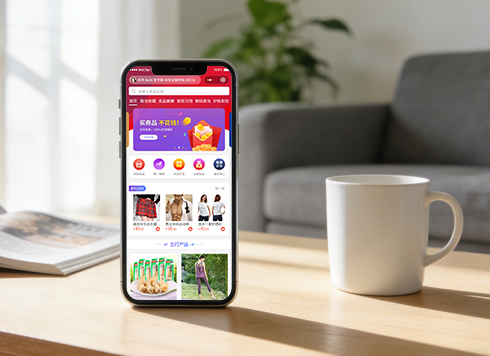 Well-Recognized Custom E-Commerce Mall System Dev
The Good Shopping mini-app is natively buil ...
-
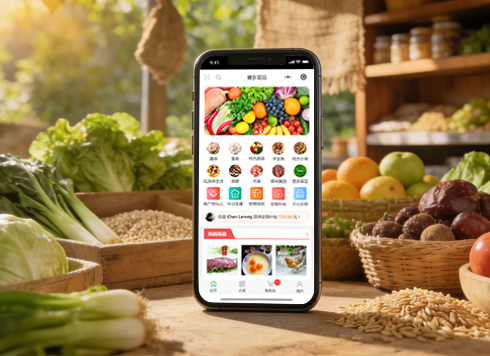 Anhui Huixiang Vegetable Garden Agricultural Products Mini Program v2.0 Iteration Development
HuiXiang MiniApp V2.0: Upgraded homepage, n ...
-
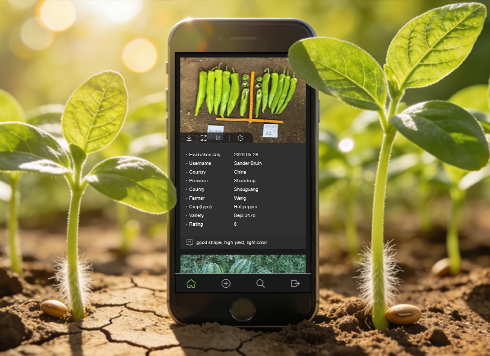 Kunshan TrialBook Mini-Program Custom Development
This project developed an English-only Tria ...
-
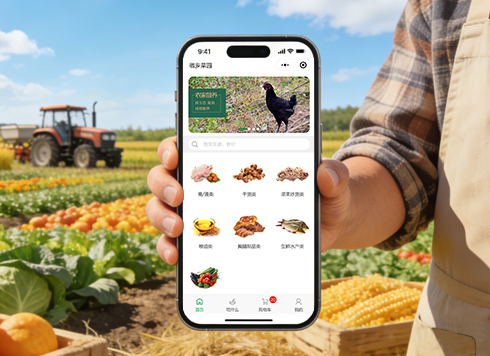 Agricultural Products WeChat Mini Program Custom Development
Lvran Di enhances agricultural sales via a ...
-
Why Mobile App Custom Development Delays Keep Happening—The Problem Usually Starts in the Requirements Phase
Date: Aug 13, 2026 Read: 66
-
Mobile App Custom Development Full Guide: Key Steps from Requirements to Launch
Date: Aug 8, 2026 Read: 66
-
Complete Process of Custom Mobile Development: Key Steps from Requirements to Launch
Date: Jul 30, 2026 Read: 98
-
After an app launches, does ops still need to ask developers for a new release every time they change campaign images or copy?
Date: Sep 13, 2026 Read: 4
-
Push works on test devices but users say they don't receive it: check code or phone settings first?
Date: Sep 12, 2026 Read: 15