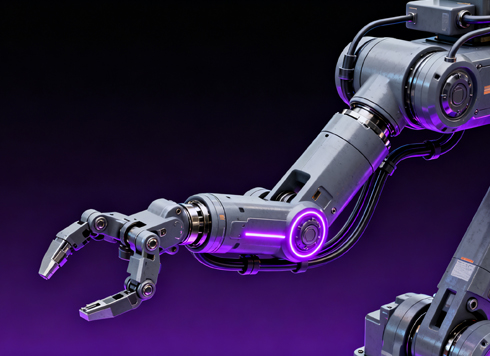




How Long Does a Three.js 3D Product Showcase Take from Modeling to Delivery? Why Does Rework Happen in Modeling?
Three.js 3D animation production is not something that can be done with front-end rendering alone. It typically involves modeling, materials and lighting, animation logic, and WebGL performance optimization. Based on 2026 project delivery practices, a medium-complexity product showcase Three.js animation takes an experience range of 10–20 working days from model preparation to web launch. Rework is often caused not by slow rendering but by a misalignment between modeling precision and real-time rendering goals — effect images can be rendered offline, while Three.js is real-time, so model polygon count, texture specifications, and light baking methods cannot be directly copied.
Modeling vs. Rendering: Why Does Modeling Determine the Rework Rate?
Three.js renders in real time, so the browser has to compute hundreds of thousands or even millions of faces per frame. If polygon count, texture size, or model hierarchy is not controlled during modeling, downstream optimization costs will be high. A common counterexample is importing a high-precision C4D model directly, which causes page lag and forces rework for polygon reduction.
Another often-overlooked aspect is the coordination between modeling and animation. For example, a product rotation animation requires the model's axis to be centered and the component hierarchy to be clear. If grouping is done carelessly during modeling, later bone binding or translation animations will become very troublesome. Based on 2026 project delivery practices, naming conventions and hierarchy rules should be established at the modeling stage.
- Polygon count: Keep a single scene within 300,000 faces, depending on the target devices and browser compatibility scope.
- Texture specs: Diffuse maps are often 2048×2048; normal maps can be 1024 or 2048 based on detail needs.
- Hierarchy naming: Use lowercase English with underscores to avoid name conflicts after importing into Three.js.
Offline Rendering vs. Three.js Real-Time Rendering: How to Choose?
Offline rendering pursues static photo-realistic quality and can spend minutes or even hours rendering a single frame. Three.js aims for smooth interaction in the browser, with a budget of roughly 16 milliseconds per frame. Therefore, for the same model, the two approaches differ significantly in materials, lighting, and baking workflows. When choosing, ask three questions: Does it need user interaction? Does it need to show product motion? Does it need to be embedded in a web page or mini program? If all three are yes, choose Three.js; if only static high-precision images are needed, choose offline rendering.
- Offline rendering: offline output, high precision, no interaction, billed per image (experience range: 1–3 days per image, including model adjustments).
- Three.js real-time rendering: real-time interaction, supports animation and roaming, requires performance optimization, overall timeline per project (experience range: 10–20 working days).
Note: Do not confuse offline rendering with real-time rendering. A common cause of rework is clients using offline-render standards to review the colors and textures of Three.js real-time outputs — this is an expectation mismatch. Before delivery, confirm the material complexity and performance limits of the real-time rendering.
A Four-Step Delivery Process: Checkpoints from Modeling to Launch
Based on enterprise project delivery experience, we often use a four-step process to reduce rework: modeling spec, material baking, animation splitting, and performance acceptance. Each step has clear deliverables and checkpoints.
- Modeling spec: Verify polygon count, axis alignment, and hierarchy naming. The model origin must be at the world center so rotation animations do not drift.
- Material baking: Bake specular details into normal maps or AO maps to reduce real-time lighting calculations. Check texture size and Mipmap settings.
- Animation splitting: Split the product demo into multiple animation clips managed by AnimationClip. Confirm animation duration and interaction trigger points.
- Performance acceptance: Run frame rate on target devices, commonly using Stats.js or FPS monitoring in incognito mode. Target at least 30 fps on mainstream phones and 60 fps on desktop browsers.
Each step in this process requires an acceptance checklist. For example, in modeling spec, check whether the triangle count exceeds 300,000; in material baking, check whether texture sizes exceed 2048; in performance acceptance, check whether the mobile first-screen load time is within 3 seconds. In one product showcase project our team handled, the client allowed only 5 days, but the original model had a very high face count and could not run directly in Three.js. We first reduced the model and baked textures, then redid the animation before delivery. However, to meet the deadline we omitted some dynamic details, and the client later requested an additional round of changes, adding 3 working days. This project timeline was well below the typical range of 10–20 working days, proving that up-front asset checks are essential.
Delivery Timeline and Acceptance Criteria: Common Quantitative Ranges in 2026
Based on 2026 project delivery practices, Three.js animation project timelines are mainly affected by three factors: model complexity, interaction behavior, and device compatibility. Experience range: simple product showcase (1–2 products, no complex interactions) takes 8–12 working days; medium complexity (3–5 products, with transitions and animations) takes 12–20 working days; projects requiring backend data or motion capture may take more than 30 working days.
- Model source: If the client provides models, format checks are needed; if no models are provided, modeling adds 5–10 working days.
- Interaction needs: Auto-play and manual rotation only means a shorter timeline; adding AR or gesture recognition significantly increases the timeline.
- Compatibility scope: Supporting only the latest Chrome and Safari shortens the timeline; supporting older Android browsers increases optimization costs.
Acceptance criteria can revolve around three dimensions: complete functionality, performance compliance, and visual alignment with the approved design. Complete functionality means all animations and interactions trigger correctly; performance compliance means stable frame rates on target devices; visual alignment means material colors are within an acceptable range of deviation from the design mockup. If modifications are needed after delivery, it is recommended to agree on rework boundaries in advance. A common cause of rework is inconsistency between the source model and the final output, such as missing textures or broken animation hierarchies. Therefore, when delivering, in addition to the program code, you should also provide a model file list and a texture list.
Applicable Scenarios and Boundaries: Which Projects Should Not Force Three.js?
Three.js 3D animations suit scenarios that need interaction, dynamic display, and cross-platform access, such as official website product pages, mini-program 3D showcases, and online configurators. They are not suitable for purely static high-precision effect image display, nor for projects requiring extensive physics simulation or hyper-realistic materials. For such needs, offline renderers or professional game engines are more appropriate.
- Good fit: 3D scenes on official website homepages, interactive product demonstrations, WebAR product showcases, and simple data visualization.
- Not a fit: static image printing, cinematic CG, complex physics collisions, and realistic scenes requiring heavy particle effects.
Also note that Three.js projects depend on browsers and devices. If the project requires compatibility with IE or old Android versions, Three.js is not recommended, or significant degradation is needed. Additionally, if the team lacks WebGL optimization experience, the timeline will clearly extend; factor in the learning cost when quoting.
FAQ
How much does Three.js 3D animation production generally cost?
Based on experience range, simple product showcases are around 10,000–30,000 RMB, medium complexity 30,000–80,000 RMB, and custom interactions or motion capture above 80,000 RMB; the exact price varies with model count, animation length, and optimization requirements.
Are modeling and rendering done by the same people?
Small teams often have one person handle both; larger projects split them. Modeling focuses on structural accuracy, rendering focuses on materials and lighting, and Three.js development also requires front-end knowledge. The division of labor should follow project complexity.
Should product showcases use effect images or Three.js real-time rendering?
Choose Three.js for interaction and dynamic display; choose effect images for static high-precision visuals. They can also be combined: use offline rendering for promotional images and Three.js for web interaction.
What formats are typically delivered for Three.js animations?
Usually delivered as an HTML/CSS/JS code package, with models in glTF/GLB format and textures in PNG/JPG/WebP. Model source files and a texture list are also provided for easy maintenance.
Action guide: First run a simple product model through Three.js to gauge existing assets and team capabilities. For static projects that do not require real-time rendering, there is no need to force Three.js. For daily quotes, estimate based on timeline, interaction complexity, and compatibility scope, referring to the ranges above. Also, it is recommended to specify revision limits and rework boundaries in the contract to prevent extra costs from model version iterations.
-
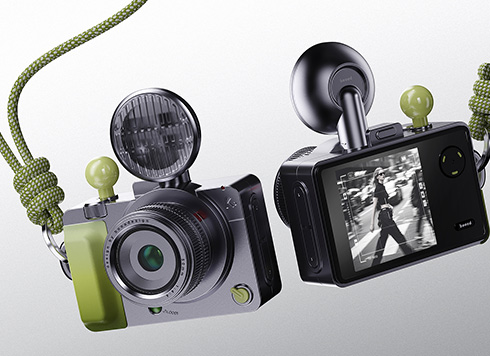 EDC·Trendy Camera Product Design: Form Follows Emotion
EDC Toy Camera: Braun-inspired retro design ...
-
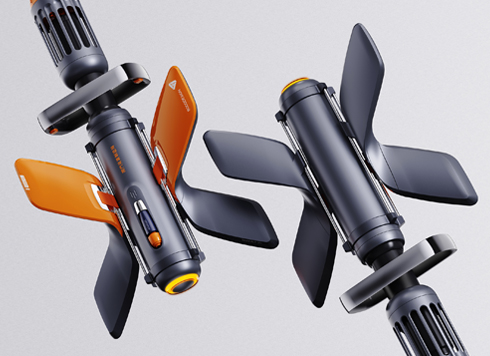 Product Design of Children's "Bubble Rocket" Underwater Thruster
Inspired by "Octonauts + Space", kids' "Bub ...
-
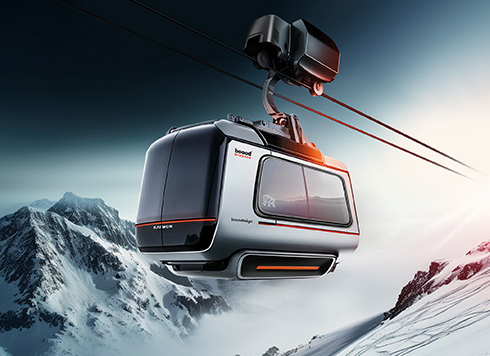 Design of Adaptive Intelligent High-Altitude Shuttle Transport Robot
Smart rural shuttle bot: Streamlined, weath ...
-
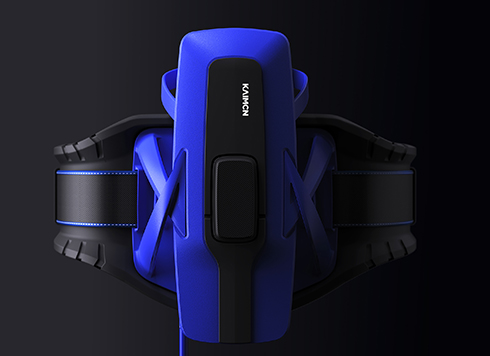 "Effortless" Exoskeleton Wear: Unleash Ultimate Freedom in the Sea
"Unfelt Wearability" & "Bionic Power" redef ...
-
Why does mini-program 3D start smooth on a budget Android phone but get hot and drop frames after two minutes?
Date: Oct 14, 2026 Read: 7
-
In product demo animation, prototype still frames look premium, but the final video moves like PPT slides—should you add motion previews first or increase render precision?
Date: Oct 13, 2026 Read: 10
-
In web 3D, glass curtain walls and railings flicker at oblique angles—should you merge coplanar geometry first or adjust the camera near/far clipping planes first?
Date: Oct 12, 2026 Read: 19
-
Three.js 3D Animation on a Showroom Touchscreen: Can It Stay Stable for a Full Day Offline Without Restart?
Date: Oct 11, 2026 Read: 25
-
Client says your UE5 render looks like a game screenshot: adjust post-processing first or change the reflection source first?
Date: Oct 10, 2026 Read: 36