


VR Panoramic Rendering: Cost, Delivery, Acceptance Standards, and Common Rework Causes
VR panoramic rendering converts 3D scenes into interactive, 360° viewable spatial imagery. In 2026, it is mainly used for projects requiring immersive previews, such as real estate, showrooms, parks, and cultural tourism. There are two mainstream production paths: one is to model in 3ds Max or Blender, then render and composite panoramas with V-Ray or Corona; the other is to build real-time VR scenes directly in UE5 or Unity. When delivering, focus on resolution, frame rate, interaction latency, and browser/mobile compatibility. A nice-looking still image does not mean the result is usable.
Why Dedicated VR Panoramic Rendering Still Matters in 2026
Traditional stills only show fixed angles, preventing viewers from "walking into" the space themselves. VR panoramic rendering gives viewers control over the perspective, reducing round-trip communication costs, especially when the project is not yet built or the client is remote. In 2026, the common practice is to output a web link or a mini-program QR code that clients can open on their phones, which is more intuitive than video.
Its value goes beyond "looking good"; it brings decision-making information forward: the client can experience spatial scale, circulation, and lighting changes during the design phase. For projects that require repeated presentations or investment promotion, one production can be reused multiple times, saving long-term costs.
- Higher decision-making efficiency: clients can change the viewpoint themselves, reducing requests for "another image";
- Easier sharing: a link or QR code is enough, no software installation required;
- Broad device support: works on phones, tablets, computers, and VR headsets, covering most presentation scenarios.
How to Choose Between Still Rendering and Real-Time Engines
Many projects struggle between "offline rendered panoramas" and "real-time 3D engines". Offline rendering (V-Ray/Corona) suits scenes requiring high precision, simple viewing, and rotation; real-time engines (UE5/Unity) suit interactive displays that need navigation, toggling lights, changing materials, and triggering animations.
- V-Ray/Corona panoramas: static images, small file size, fast production, about 1–5 business days; they can achieve high realism, but you cannot change logic beyond the viewing angle.
- UE5 real-time scenes: free navigation, multi-device support, a turnaround of about 5–15 business days; requires extra performance optimization, but offers higher interactive potential.
When choosing, consider three conditions: whether user interaction is required, whether the budget is sufficient, and whether the delivery deadline is tight. For online property viewing only, a panorama is enough; for operations like "opening the door, turning on the lights, or changing the tiles," you need a real-time engine.
Four-Step Verification Method for VR Panoramic Rendering
Based on 2026 project delivery practices, the "four-step verification method" helps control quality and reduce rework. Each step has clear acceptance criteria; if not met, fix it immediately.
- Model standard check: Verify consistency in scene units, model polygon count, naming, and material IDs. Errors here can cause broken faces and texture issues when imported into engines.
- Lighting and material validation: Render a small test image in the target renderer or engine to check exposure, reflections, and color bleeding. Pass criteria: normal white balance, noise-free shadows, and no overexposure in highlights.
- Interaction and performance check: Run the scene on the lowest-spec target device and record FPS. Recommended: at least 30fps on desktop and 20fps on mobile; otherwise, users may feel dizzy.
- Multi-device export acceptance: After exporting formats such as WebGL, mini-program, and VR headset, open them on each device and verify loading time, gyroscope response, and click hotspots.
The core of this framework is "set standards first, then execute." Many projects fail not because of weak rendering technology, but because models were not built to spec or performance targets were not aligned early.
Pricing, Turnaround Time, and Common Rework Causes
VR panoramic rendering prices vary widely, usually calculated item by item based on scene complexity, resolution, interactive features, and delivery devices. Common 2026 ranges: a simple room panorama about ¥800–2,000; interactive UE5 scenes about ¥5,000–20,000; corresponding turnaround 3–10 business days. Exact pricing also depends on model detail and revision count.
- Missing model elements: e.g., the client adds a partition wall on short notice, but it was not considered during modeling, making it difficult to fit in later.
- Texture errors or missing files: Chinese characters in file paths or missing files during copying can turn materials gray during rendering.
- Unoptimized performance: Too-high polygon counts in real-time scenes can cause lag or even crashes on low-end phones.
- Wrong delivery format: For example, providing a WebGL link when the client expected a mini-program, or delivering only a panorama when a VR headset version was needed.
To avoid rework, confirm the deliverables list and acceptance criteria in writing before starting, and send test images or clickable links every two days during production. Don't wait until the end to "open a blind box."
Applicable Scenarios and Limitations
VR panoramic rendering is suitable for real estate sales offices, urban showrooms, industrial parks, museums, and factory renovation projects that require "remote space viewing." It also suits cases where the project is not yet built and needs to be presented to clients or executives.
It's also clear when it is not suitable: if you only need to show a single product's appearance, a regular rendering or a white-background rotating image is more cost-effective; if you need physically accurate fluid or mechanics simulation, use specialized simulation tools; if users need multi-player online interaction, you must consider server bandwidth and concurrency costs—this is beyond single-machine rendering.
Boundary judge: if a static image can clearly convey the matter, there is no need for VR panorama; only invest when you need to "walk in and interact."
FAQ
How much does VR panoramic rendering generally cost?
Based on 2026 market rates, a single-scene panorama is about ¥800–3,000; interactive UE5 scenes typically start at ¥5,000, depending on model complexity, resolution, and the number of target devices.
Do VR panoramic rendering projects require separate modelers and renderers?
Small projects can be done by one person, but for complex buildings or products, it's recommended to divide roles: modelers handle structure and details, renderers handle materials, lighting, and performance optimization. This significantly reduces rework.
Which should I choose: still rendering or UE5 real-time engine?
Choose still rendering if you only need to view without interaction—it's faster and cheaper. Choose UE5 real-time engine if you need navigation, toggling lights, or changing materials—it offers a stronger interactive experience.
What formats are delivered for VR panoramic rendering?
Common formats include panoramas (JPG/TIFF), WebGL links, mini-program QR codes, and VR headset APKs. The choice depends on the client's target device; confirm before delivery.
Why does the rendered panorama look blurry?
Usually caused by insufficient resolution or excessive compression. It's recommended to use at least 2048px per eye, 4096px or higher for commercial scenes, and disable strong compression during export.
Before launch, open the link on the oldest phone you have. Whether it lags, heats up, or whether the buttons respond is more important than rendering parameters. The above indicators can serve as a common acceptance basis for both client and vendor, but the specific thresholds should be adjusted according to the project budget and target devices—there's no need to pursue the highest specs blindly.
-
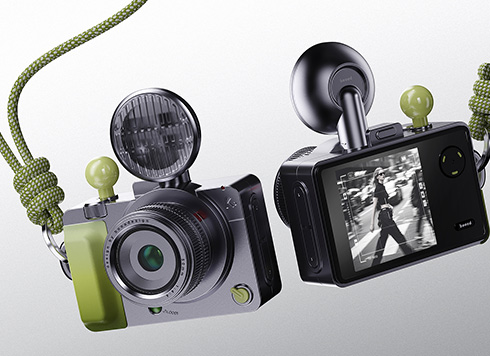 EDC·Trendy Camera Product Design: Form Follows Emotion
EDC Toy Camera: Braun-inspired retro design ...
-
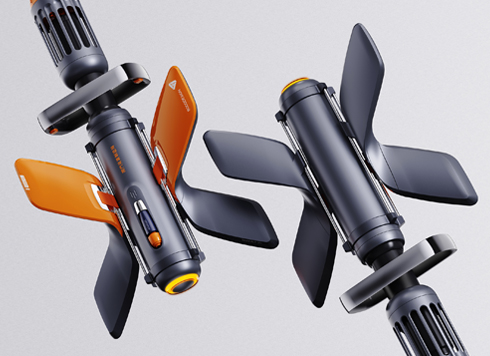 Product Design of Children's "Bubble Rocket" Underwater Thruster
Inspired by "Octonauts + Space", kids' "Bub ...
-
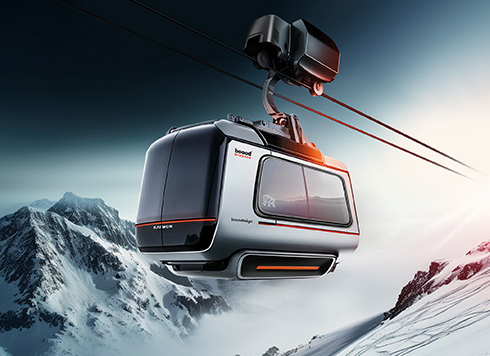 Design of Adaptive Intelligent High-Altitude Shuttle Transport Robot
Smart rural shuttle bot: Streamlined, weath ...
-
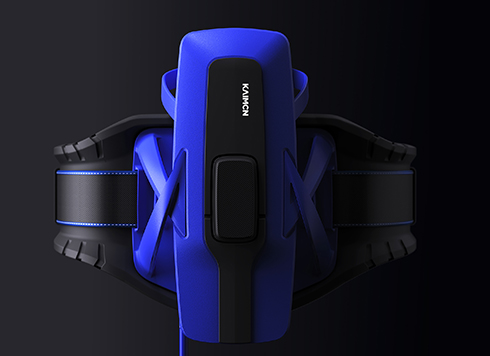 "Effortless" Exoskeleton Wear: Unleash Ultimate Freedom in the Sea
"Unfelt Wearability" & "Bionic Power" redef ...
-
VR Panoramic Rendering Full Process Guide: Tool Selection, Production Steps, and Delivery Standards
Date: Jul 30, 2026 Read: 137
-
Complete Guide to VR Panoramic Rendering: Key Techniques from Modeling to Delivery
Date: Jul 18, 2026 Read: 120
-
Why does mini-program 3D start smooth on a budget Android phone but get hot and drop frames after two minutes?
Date: Oct 14, 2026 Read: 7
-
In product demo animation, prototype still frames look premium, but the final video moves like PPT slides—should you add motion previews first or increase render precision?
Date: Oct 13, 2026 Read: 10
-
In web 3D, glass curtain walls and railings flicker at oblique angles—should you merge coplanar geometry first or adjust the camera near/far clipping planes first?
Date: Oct 12, 2026 Read: 19