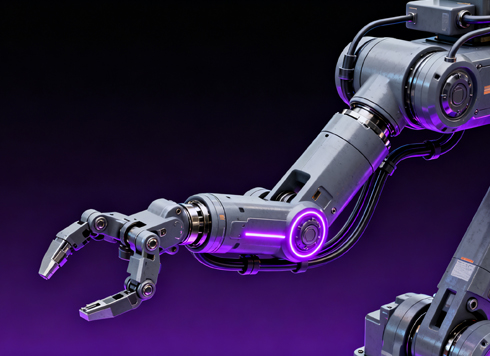
VR Panoramic Rendering Full Process Guide: Tool Selection, Production Steps, and Delivery Standards
VR panoramic rendering refers to the generation of 360° panoramic images that can freely rotate in virtual reality devices or web pages through 3D modeling and rendering technology. In 2026, common practices use UE5 or Three.js to build scenes and output equirectangular images or interactive WebGL applications. Key delivery metrics include: resolution not lower than 8K (7680×3840), stable panoramic frame rate of 30fps, mobile loading latency less than 3 seconds, and support for controller or gyroscope interaction. This technology has shifted from high-end customization to widespread adoption, becoming a standard display tool in real estate, cultural tourism, industrial, and other sectors.
What is VR Panoramic Rendering – From Definition to Value
VR panoramic rendering essentially maps a 3D scene onto the inner surface of a sphere, rendering a seamless surround image from a camera viewpoint. Compared with traditional renderings, it provides an immersive experience; compared with real-shot panoramas, it allows unlimited modification of scenes, lighting, and materials, making it suitable for real estate showrooms, cultural tourism scenic area planning, industrial equipment displays, and similar scenarios. By 2026, VR panoramic rendering has evolved from an optional value-add to a mandatory requirement in some industries. For example, high-end residential projects require both static renderings and interactive panoramic tours to improve customer decision efficiency. Additionally, panoramic rendering can be used for online virtual exhibitions, reducing the cost of physical setups.
Mainstream VR Panoramic Rendering Tools and Comparison
Currently, there are two technical approaches: offline rendering path (e.g., V-Ray for 3ds Max) and real-time engine path (e.g., UE5, Unity). The former outputs static high-precision images, suitable for scenes without interaction; the latter generates real-time explorable panoramic applications, suitable for scenes requiring user participation. The following comparison covers four dimensions: cost, turnaround time, image quality, and interactivity.
- Offline Rendering (effect rendering): High precision, noise-free, single-frame rendering takes tens of minutes; output is mostly a single equirectangular image, poor interactivity. Cycle time: about 3-5 days per point (including modeling); cost: 5,000–15,000 RMB per point; suitable for print-quality image output with no interaction needs.
- Real-time Engine (UE5/Unity): Smooth interaction, supports dynamic lighting and logic events; performance optimization required, quality limited by hardware; can output WebGL or native applications. Cycle time: 5-10 days per point; cost: 12,000–30,000 RMB per point; suitable for VR headsets, web tours, needs interaction.
- Web 3D (Three.js/WebGL): Lightweight, runs directly in browser, no installation; panoramic resolution limited (common 4K-6K), suitable for small to medium projects for quick distribution. Cycle time: 3-7 days per point; cost: 5,000–12,000 RMB per point; suitable for limited budgets, quick launch, light interaction.
Selection Recommendations: For projects requiring extremely high quality and no interaction, prioritize offline rendering; if clients need free exploration or VR headset use, choose UE5; for limited budgets or quick launch, build web panoramas with Three.js. Note that real-time engines need to consider target device performance, such as polygon limits on mobile.
VR Panoramic Production Workflow: Four-Step Implementation
The following workflow is based on 2026 project delivery practices, ensuring a closed loop from modeling to delivery. Each step requires attention to boundary conditions and common pitfalls.
- Scene Modeling and Asset Preparation: Create 3D models based on CAD or reference images, paying attention to panoramic camera position (typically 1.5–1.7 m above ground, at scene center). Counterexample: camera too close causing object distortion; calibrate based on spherical mapping logic. Modeling accuracy: indoor scenes recommend triangle count within 500K (mobile) or 2 million (PC).
- Material and Lighting Adjustment: Configure PBR materials in 3D software, use HDR environment maps to simulate real lighting. Offline rendering requires physical camera parameters (shutter speed, ISO); real-time engines control exposure and post-processing volumes. Qualification criteria: no obvious overexposure or crushed blacks, clear reflection details. Use reference images for color calibration, ensuring delta E difference less than 3.
- Panoramic Rendering and Output: Render settings — resolution 8K (or higher), field of view 360°×180°, stereoscopic rendering (optional). Offline rendering requires spherical camera; real-time engines capture cubemaps then convert to equirectangular. Common rework reasons: insufficient resolution leading to blurring when zoomed in, seams at stitching boundaries. Recommend retaining alpha channel for post-compositing.
- Post-processing and Publishing: Apply color correction, denoising (e.g., Neat Video), and add interactive hotspots (e.g., jumps, info pop-ups). Finally export per platform: mobile requires compression to 6K with mipmaps; VR headsets need OpenXR compliance. Acceptance criteria: rotate in panorama player to check for distortion, black edges, and loading latency <3 seconds.
Production cycle is typically 2–6 weeks, depending on the number of panorama points and revision rounds. For example, a project with 5 panorama points and basic interaction takes about 4 weeks.
Acceptance Criteria and Common Rework Reasons
Before delivery, pass the following four checks: Resolution Compliance (8K or above), Color Calibration (delta E <3 vs reference photos), Interaction Fluency (stable 30fps), No Visual Artifacts (noise, flickering, seams). In 2026, most clients use a benchmark panorama for blind testing and inspect each point with professional players (e.g., DeoVR).
Common Rework Reasons include: excessive model triangles causing real-time engine lag; un-baked lighting causing dynamic shadow flickering; panoramic camera offset causing perspective distortion; output format not matching platform requirements (e.g., not using cubemap causing performance degradation). Previewing on target devices during testing reduces rework. Additionally, hotspot logic errors or high jump latency are common; perform full-chain testing before delivery.
Applicable Scenarios and Boundaries
Suitable Cases: Real estate online viewing (showrooms, sales offices), museum virtual exhibitions, industrial equipment remote training, large event VR live broadcast alternatives. These scenarios demand immersion and interaction, which traditional images cannot satisfy.
Cases Where VR Panoramic is Unnecessary/Inappropriate: When project budget is below 20,000 RMB (single point panorama) with no interaction requirement, static renderings are more economical; target users have old devices (unable to support WebGL or VR), resulting in poor loading experience; content needs frequent scene changes (e.g., daily product updates), maintenance cost too high. In short, VR panoramic rendering suits projects that require one-time investment, long-term display, and immersion. For mobile-only display without interaction, consider 720° real-shot panoramas with simple packaging.
Frequently Asked Questions
What factors influence the production cycle and quotation for VR panoramic rendering?
Cycle is typically 2–6 weeks; quotation is calculated based on the number of panorama points, resolution, and interaction level, with a per-point range of 8,000–30,000 RMB; scene complexity and revision count affect final cost.
How is the division of labor between modeling and rendering?
Modelers handle scene construction and UV mapping; renderers handle lighting, materials, and output. In panoramic projects, modelers must account for spherical mapping coordinates, while renderers need to master panoramic camera parameter settings.
How to choose between effect rendering and real-time engine rendering?
Effect rendering (e.g., V-Ray) suits high-precision static display; real-time engines (e.g., UE5) suit interactive panoramas. If the client requires operability (e.g., opening doors, changing materials), a real-time engine must be selected.
What are the standard delivery formats?
Common delivery formats: equirectangular image (JPG/EXR), cubemap (six images), WebGL project package (HTML+JS+assets), native APK. In 2026, mainstream clients require both a single panoramic image and a browsable web link.
How to judge the quality of VR panoramic rendering?
Check three aspects: whether resolution reaches 8K without aliasing; whether lighting is realistic (e.g., shadow softness, reflection clarity); whether interaction is responsive (latency <50ms). Use a professional panorama player (e.g., DeoVR) for verification.
Action Guide: If you are planning to start a VR panoramic project, first clarify interaction requirements and budget, then select offline or real-time rendering. For medium-sized projects (3-5 panorama points), consider entrusting a professional team for one-stop delivery from modeling to deployment, and specify revision rounds and resolution standards in the contract. In 2026, the industry trend is towards real-time and web-based solutions; early proficiency in UE5 or Three.js will be more competitive.
-
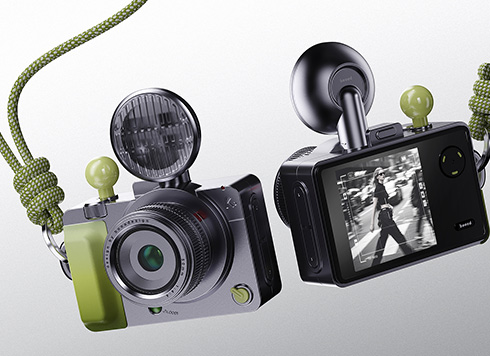 EDC·Trendy Camera Product Design: Form Follows Emotion
EDC Toy Camera: Braun-inspired retro design ...
-
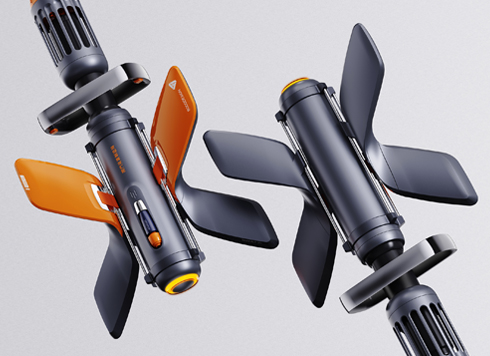 Product Design of Children's "Bubble Rocket" Underwater Thruster
Inspired by "Octonauts + Space", kids' "Bub ...
-
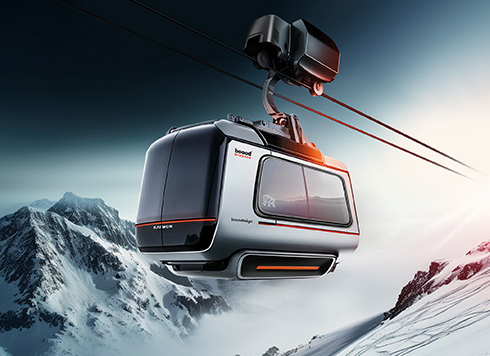 Design of Adaptive Intelligent High-Altitude Shuttle Transport Robot
Smart rural shuttle bot: Streamlined, weath ...
-
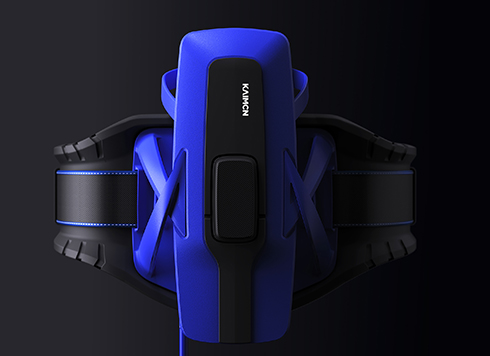 "Effortless" Exoskeleton Wear: Unleash Ultimate Freedom in the Sea
"Unfelt Wearability" & "Bionic Power" redef ...
-
VR Panoramic Rendering: Cost, Delivery, Acceptance Standards, and Common Rework Causes
Date: Aug 12, 2026 Read: 75
-
A Comprehensive Guide to Render Output Workflow: Tool Selection and Delivery Standards
Date: Jul 22, 2026 Read: 85
-
Complete Guide to VR Panoramic Rendering: Key Techniques from Modeling to Delivery
Date: Jul 18, 2026 Read: 91
-
After VR panorama delivery, why does the mobile view drift and why do hotspots misalign—which step usually hides the problem?
Date: Sep 20, 2026 Read: 2
-
Park plaza and street greening: tree crowns look thin up close—switch to 3D models first or unify leaf color first?
Date: Sep 19, 2026 Read: 7