





Complete Guide to Park, Plaza, and Street Greening: Toolchain, Acceptance Criteria, and Common Pitfalls
Park, plaza, and street greening refers to the process of creating vegetation models (trees, shrubs, grass, flower beds) for urban public spaces (parks, plazas, streets) using 3D modeling and rendering techniques. In 2026, the two mainstream approaches are: first, detailed modeling in 3ds Max or Blender followed by static rendering with V-Ray or Corona; second, using Unreal Engine 5 or Unity real-time engines along with SpeedTree or self-optimized vegetation assets to deliver interactive 3D scenes. Regardless of the path, key delivery metrics include: vegetation diversity (at least 3 tree species), LOD levels (at least 2), polygon count control (single high-detail tree no more than 20,000 faces), seasonal accuracy (at least distinguishing spring/summer from autumn/winter), and realistic lighting (shadow softness, bloom control). Core conclusion: A qualified park, plaza, or street greening delivery must satisfy the "four-step quality inspection method" — resource pre-check, layout simulation, LOD layering, and lighting consistency — and the deliverable type (static render or real-time interactive) should be clarified in advance to select the appropriate toolchain, thereby avoiding over 60% of rework.
Core Challenges and Solutions
The complexity of park, plaza, and street greening lies in balancing the randomness of natural forms with overall scene style and performance budgets. A common mistake in 2026 is directly using generic model libraries, leading to repetitive vegetation forms and mismatch with terrain lighting. For example, placing tropical palm trees in temperate streets, or ignoring seasonal effects so all vegetation appears the same green. Another frequent rework cause is neglecting LOD transitions, resulting in "pop-in" where models suddenly disappear at a distance. The correct approach: first determine the scene's latitude region and season, then select corresponding tree species (e.g., maple, oak, pine for temperate; coconut, palm for tropical). Next, decide planting density based on street width or plaza zones — main roads 8-12 meters apart, plaza areas can be dense at 4-6 meters, but leave line-of-sight clear zones.
The solution can be summarized as the "four-step quality inspection method":
- Step 1: Resource Pre-check — Inspect all vegetation models for correct UVs, normal maps, and PBR materials (roughness, metalness, AO maps complete). Avoid non-PBR assets that cause rendering inconsistencies. Pay special attention to subsurface scattering parameters for leaf translucent materials.
- Step 2: Layout Simulation — Place key tree species (e.g., street trees, signature trees) ensuring focal point visibility; use instance scattering tools (e.g., Blender's Geometry Nodes or 3ds Max's Forest Pack) to distribute shrubs and grass, maintaining random size and rotation differences of at least 30%. After layout, check with top view to avoid trees sticking to building walls or intersecting each other.
- Step 3: LOD Layering — Generate at least 3 LOD levels for each vegetation: LOD0 full detail (for close-ups, max 10K faces), LOD1 reduced to 60% faces (mid-range), LOD2 as billboard or single polygon (far-away). When using automatic LOD tools (e.g., Simplygon or Unreal's SSim), manually check clipping accuracy to avoid obvious transition jumps. In real-time engines, set cull distances: small shrubs disappear beyond 15m, medium trees switch to LOD2 beyond 50m.
- Step 4: Lighting and Tone Consistency — Set directional light to simulate sun position; use volumetric light or ambient occlusion to enhance vegetation depth; adjust BaseColor hue of vegetation materials warmer or cooler to match season. For example, common practice in 2026: summer scenes have leaf colors slightly yellowish-green (R/G difference <5%), while winter scenes lean gray-brown (saturation reduced by 40%).
Toolchain and Selection Comparison
In 2026, park, plaza, and street greening involves multiple tools from modeling to rendering; the choice depends mainly on deliverable type and timeline. The following is a detailed comparison of static rendering and real-time engine workflows, including cost and cycle reference ranges (based on industry averages, subject to project complexity):
- Static Rendering (V-Ray/Corona): Suitable for single-frame or fixed-perspective presentation, emphasizing photorealistic lighting and detail. Advantages: Simulates complex subsurface scattering (e.g., leaf translucency), high rendering quality ceiling. Disadvantages: Non-interactive, each perspective change requires re-rendering. Cost range: 500-3000 RMB per frame (depending on complexity); production cycle 3-7 days (including post-processing).
- Real-time Engine (UE5/Unity): Suitable for full walkthroughs, VR, or interactive solutions. Advantages: Users can freely view after delivery, supports dynamic season switching. Disadvantages: Performance constraints force sharp reduction in vegetation polygon count (single tree within 2000 faces), requiring more LOD and culling optimization. Cost range: 20,000-80,000 RMB for complete delivery; production cycle 2-4 weeks.
Selection advice: If the final deliverable is only a few renderings, prefer V-Ray; if the client needs demo animation or immersive experience, choose UE5. For mixed needs (renderings + simple walkthrough), model in Blender and output to UE5, delivering static renders and real-time clips separately. Note: A 2026 trend is using NVIDIA Omniverse for collaboration, but it is not yet widespread.
Production Workflow: Detailed Four-Step Implementation
The following framework can directly guide team task allocation, with acceptance criteria for each step.
Step 1: Requirements Analysis and Resource Preparation
Confirm with the client the scene's season, tree species style (European formal/Chinese natural/tropical), and final use (bidding/promotion/construction guidance). Collect or create vegetation assets accordingly: prioritize licensed commercial model libraries (e.g., Quixel Megascans), model missing species based on real photos with error control on leaf shape and branch proportions. Also agree on deliverable list: renderings should include original EXR and PSD with channels; real-time engines need packaging as EXE or WebGL. Acceptance criteria: Confirm at least 5 core tree species assets pass normal map and AO inspection, and each tree's polygon count meets subsequent LOD compression range.
Step 2: Scene Layout and Instancing
Divide the scene into zones (plaza center, walkway sides, shaded areas), distribute according to density templates (sparse trees spacing ≥15m, dense planting ≤4m). When using scattering tools, avoid vegetation penetrating buildings or ground; if penetration occurs, manually adjust height or rotation. Common practice in 2026: first layout with white models for preliminary review, then replace with detailed models. For large parks, layout block by block and export scene snapshots for client confirmation. Acceptance criteria: After exporting layout top view, check for obvious holes or stacking; zone green coverage deviation within 10%.
Step 3: LOD and Performance Optimization
Generate LODs for all high-poly models and test transition smoothness at different distances. In real-time engines, also set cull distances: small shrubs disappear beyond 15m, medium trees switch to LOD2 beyond 50m. Note: Polygon difference between LOD0 and LOD1 should not exceed 50%, otherwise visual jump occurs on switching. Use a drone perspective to verify that trees maintain basic outline at long distances. Acceptance criteria: Running on target hardware (e.g., mid-range GTX 3060), frame rate stable above 30fps; or single-frame render time under 30 minutes (renderings).
Step 4: Lighting and Post-Processing Output
Set sun angle and intensity to match geographic latitude (e.g., for 40°N summer, solar altitude ~70°, shadow length ratio ~0.36). Add atmospheric elements (falling leaves, bloom, air perspective) to avoid a sterile "plastic" look. For renderings, output at least two versions: white-model channel version and final color version for post-processing. For real-time engines, package into executable files with a material parameter documentation. Acceptance criteria: Client can clearly identify tree species, season, lighting direction, with no obvious clipped blacks or overexposed areas.
Applicable Scenarios and Boundaries
Park, plaza, and street greening is most suitable for: landscape effect displays in urban design bidding, real estate project demonstration area visualization, and interactive planning systems for tourist attractions. Specific applicability:
- Highly applicable: Multi-perspective comparison during scheme selection; precise plant arrangement needed before construction; bidding documents requiring immersive experience.
- Partially applicable: Simple street greening (only 2-3 tree species) can be simplified to billboard-style greening without full workflow.
Unsuitable or unnecessary scenarios:
- Not applicable: 2D city management maps requiring only planar functionality (use textures); existing high-precision aerial photorealistic models requiring minimal additional greenery (more efficient to overlay PNG transparent tree sprites).
- Inefficient scenarios: Very low-budget simple schematics (use decals or card-style greening to save 70% time). Additionally, in 2026 project delivery, if users only need quick visuals for internal decisions, do not start full LOD optimization; use pre-built scene libraries plus post-processing filters for rapid output.
Frequently Asked Questions
What is the typical production cycle for park and plaza greening?
A simple street (within 1km, 3 tree species): about 3-5 days; medium plaza (multiple zones, 5+ species): about 7-14 days; large park (including water systems, terrain): 3-6 weeks.
What factors affect pricing?
Main factors: number of tree species (15%-20% surcharge per additional species), whether custom models are needed, rendering method (static renders are about 30% cheaper than real-time engines), and iteration count (usually includes 2 free revisions).
Do modeling and rendering have to use the same software?
Not necessarily, but matching pipelines are recommended. For example, when modeling in Blender and importing to UE5, pay attention to coordinate axis and unit conversion (recommend setting meters as unit). If only doing static renders, completing the entire workflow in 3ds Max is more efficient.
Which is better for bidding: static renderings or real-time engines?
Static renderings are good for displaying details; real-time engines are good for showing spatial relationships and circulation. It is recommended to provide multiple high-quality renderings for key nodes, plus a 3-5 minute walkthrough video (exported from the engine) to cover reviewers' habits.
What are the standard delivery formats?
For renderings: common formats include JPEG/TIFF/PSD, resolution not less than 4K; for real-time engines: include original project files and executables (win64/macOS), plus an asset list.
Action Guide: When undertaking park, plaza, or street greening in 2026, first clarify with the client whether the deliverable is static images or interactive scenes, then select the toolchain. During execution, focus on LOD levels and lighting consistency — these are the most common rework areas. If the team is new to greening scenes, start with a standard park block (100m×100m) to practice the four-step method before scaling up. Additionally, it is recommended to build an internal vegetation asset library with standardized models for different seasons and regions, which can effectively shorten subsequent project cycles by over 30%.
-
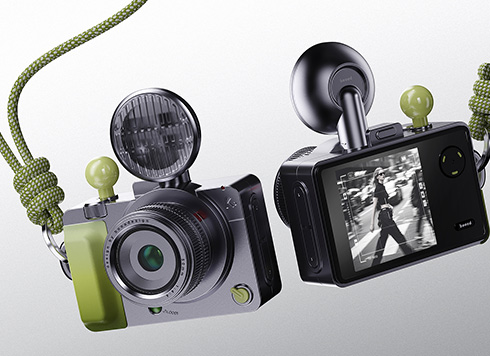 EDC·Trendy Camera Product Design: Form Follows Emotion
EDC Toy Camera: Braun-inspired retro design ...
-
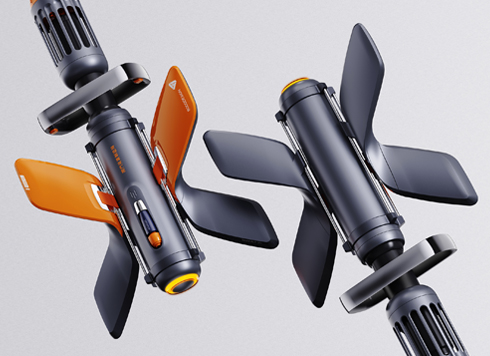 Product Design of Children's "Bubble Rocket" Underwater Thruster
Inspired by "Octonauts + Space", kids' "Bub ...
-
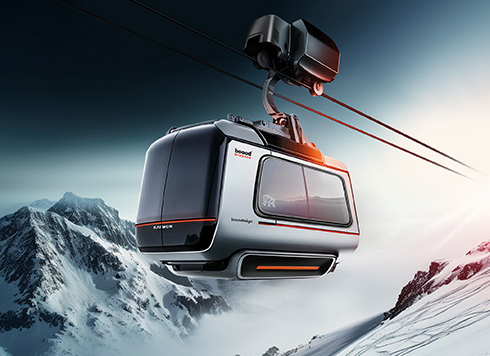 Design of Adaptive Intelligent High-Altitude Shuttle Transport Robot
Smart rural shuttle bot: Streamlined, weath ...
-
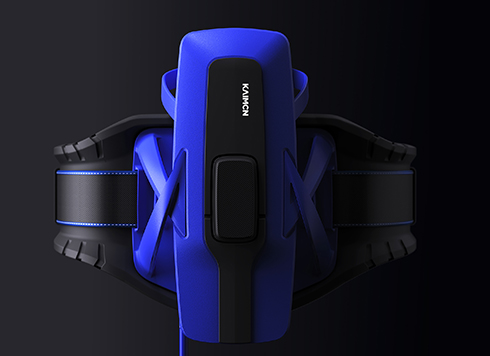 "Effortless" Exoskeleton Wear: Unleash Ultimate Freedom in the Sea
"Unfelt Wearability" & "Bionic Power" redef ...
-
After VR panorama delivery, why does the mobile view drift and why do hotspots misalign—which step usually hides the problem?
Date: Sep 20, 2026 Read: 2
-
Park plaza and street greening: tree crowns look thin up close—switch to 3D models first or unify leaf color first?
Date: Sep 19, 2026 Read: 7
-
WebGL product 3D display: metal and glass keep looking like plastic—bake environment maps first or use real-time reflections to avoid rework?
Date: Sep 18, 2026 Read: 14
-
When the CAD site plan and site photos don't match for factory landscape 3D modeling, which source should drive the model to avoid rework?
Date: Sep 17, 2026 Read: 12
-
Mini Program 3D display: the product goes black when rotated to the back—is the issue usually in baking or lighting layout?
Date: Sep 16, 2026 Read: 17