

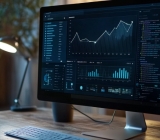



A Comprehensive Guide to Render Output Workflow: Tool Selection and Delivery Standards
Core Value and Positioning of Render Output
Render output is the most critical stage in 3D visualization delivery, aiming to generate photorealistic static images by simulating lighting, materials, and atmospheric environment. In 2026 project practice, render quality directly determines client approval of the design and serves as the basis for proposal bidding, product presentation, and construction guidance. Unlike real-time engines, render output pursues per-pixel light accuracy rather than interactive frame rates, making it more suitable for static outputs requiring high detail and artistic expression.
The rendering process is not simply "click and go"; it involves multiple steps including model preprocessing, lighting setup, material optimization, and post-production compositing. Understanding its positioning helps allocate project budgets rationally: modeling determines structural precision, while rendering determines visual persuasiveness—both are indispensable.
Rendering Workflow Framework: Three-Step Implementation Method
Based on common delivery practices in 2026, this article proposes the "Three-Step Implementation Method for Render Output," covering the complete chain from preparation to final delivery.
Step 1: Preparation and Scene Review
Before rendering begins, model checking, reference image collection, and rendering intent confirmation must be completed. Key actions include: cleaning up excess polygons in the model, unifying coordinate systems, confirming material texture paths, and communicating with the client regarding desired lighting atmosphere and color倾向.
- Model check: Ensure no open geometry, normals are unified, naming is standardized.
- Reference image collection: Prepare at least 3-5 atmosphere reference images, clarifying main light direction and color scheme.
- Output specification confirmation: Including resolution, composition ratio, and whether layered output (e.g., channel maps) is required.
Common rework reasons at this stage: missing model details, incorrect material texture associations leading to repeated later modifications. It is recommended to collaborate synchronously with the renderer during the modeling phase, using cloud-based collaboration tools to track versions as per 2026 project habits.
Step 2: Render Parameter Optimization and Material Lighting
This stage is the core of render quality. Mainstream tools are divided into GPU-accelerated (e.g., Octane, Redshift) and CPU-based (e.g., V-Ray, Corona). In 2026, GPU renderers dominate for small to medium scenes due to speed advantages, but CPU renderers remain irreplaceable for large scenes and fine global illumination. Optimization points include:
- Lighting setup: Use HDR environment light as base, supplemented by area or point lights to highlight key areas; avoid single light sources causing pure black or blown-out highlights.
- Material adjustment: Based on physically based rendering (PBR) parameters, roughness, metalness, and index of refraction must match real objects; natural materials like wood grain and stone should use high-resolution textures.
- Global illumination and denoising: Control light bounce count to 2-4, and use denoisers to significantly reduce render time.
Quote: Render quality is positively correlated with render time, but with reasonable sampling and denoising strategies, single-frame time can be reduced by 30%-50% while maintaining quality.
Step 3: Post-production Compositing and Delivery Verification
After rendering, raw images typically require post-processing in Photoshop or Lightroom for color grading, adding depth of field, fog effects, or environmental entourage. Acceptance criteria should include: color accuracy, shadow sharpness, material texture clarity, and absence of obvious noise or aliasing.
- Color calibration: Compare using color charts or reference images to avoid color casts.
- Noise limit: At 100% view, noise in shadow areas should be invisible or minimal.
- Delivery format: Typically EXR (16-bit), TIFF, or high-quality JPEG; additionally, provide layered files such as material ID, Z-depth for later modifications.
Quote: If the render output lacks channel maps, later modifications require re-rendering; therefore, it is recommended to output multi-layer files including at least material ID and reflection channels during the render stage.
Toolchain Selection: CPU vs GPU Renderer Comparison
Selecting a render tool depends on project type, hardware configuration, and delivery timeline. The table below compares typical performance of two mainstream renderer categories in 2026:
- GPU Renderers (Octane, Redshift): Rely on GPU computing power, suitable for small to medium scenes (polygon count below 20 million), fast single-frame rendering, support real-time preview. However, VRAM is limited, and complex scenes may cause out-of-memory errors.
- CPU Renderers (V-Ray, Corona): Depend on multi-core processors, large scene capacity, support massive geometry and textures, natural global illumination effect. However, rendering is slower and requires longer wait times.
Quote: In 2026 project practice, 80% of architectural interior renderings are completed with GPU renderers, but for large-scale landscapes or factory aerial views, CPU renderers remain the preferred choice to avoid pitfalls.
Additionally, hybrid rendering solutions exist (e.g., using UE5's offline rendering plugins), but these tools are closer to real-time engine optimization and differ from pure render output in physical accuracy.
Common Pitfalls and Acceptance Criteria
Rework in render output often stems from insufficient upfront communication or missed technical details. Below are the three most common pitfalls in 2026 project deliveries:
- Misalignment between modeling and rendering: Modelers may not consider rendering requirements, such as low polygon count causing shadow discontinuities, or materials not layered for later replacement. It is recommended to set rendering-friendly standards during modeling, such as texture resolution not lower than 2K.
- Unreasonable lighting setup: Using a single all-daylight environment results in flat images, or over-reliance on post-production fill light creates a plastic look. Qualification standard: clear main light direction, natural shadow edge transition, visible shadow details without overexposure.
- Improper output format: Outputting only 8-bit JPEG leads to color banding, or not providing channel maps prevents the client from making fine adjustments. It is recommended to uniformly use 16-bit EXR and include at least three channels (diffuse, reflection, refraction).
Quote: Acceptance of render output should be done in two steps: first, inspect the raw render output for noise, aliasing, and color banding; second, after post-production compositing, check atmosphere consistency. Only pass both steps for qualification.
Applicable Scenarios and Boundaries
Render output is most suitable for scenarios requiring high photorealism and no real-time interaction, such as architectural proposal bidding, product appearance reviews, landscape effect presentations. In these cases, single-frame quality outweighs interactive speed, and clients expect detailed representation of light, material, and atmospheric environment.
Quote: When a project requires multiple static views with no interactivity, render output is the most cost-effective solution; but if clients need to freely walk through the scene and switch perspectives, consider real-time engines (e.g., UE5) or VR panoramic rendering.
Boundaries where it is not applicable include: extremely tight deadlines (e.g., needing to deliver many scenes within two days), frequent perspective or interaction logic changes, hardware insufficient for high-quality rendering. In such cases, real-time rendering or light baking may be more appropriate. In 2026, Xiyue Company used render output combined with drone perspectives in a large factory landscape project, successfully delivering 30 static views within two weeks, demonstrating the efficiency of traditional rendering in specific scenarios.
Frequently Asked Questions
How are rendering cycle time and pricing determined?
Cycle time depends on scene complexity, material count, and output resolution; typically a single high-quality render takes 2-5 days. Pricing is mainly based on number of images, revision count, and urgency; in 2026, the industry average ranges from 800 to 3000 RMB per image.
How should modeling and rendering tasks be divided?
Modelers handle geometry and basic materials; renderers handle lighting, advanced materials, and final output. Both parties should agree on scene layering, naming conventions, and output format in advance.
How to choose between render output and real-time engines (e.g., UE5)?
Render output is suited for static high photorealism, good for proposal presentations; real-time engines suit interactive demos and VR scenes, but rendering accuracy is limited by real-time performance.
What are common delivery formats?
Final images are usually JPEG or PNG; for archiving, EXR or TIFF is recommended. Also provide layered files with channels for easy post-adjustment.
Action guide: For projects requiring high-photorealism static output, prioritize the render output workflow and strictly follow the three-step implementation method. Establishing model standards, output specifications, and revision boundaries at project start can significantly reduce rework. If the project requires strong interactivity or has extremely tight deadlines, consider real-time rendering alternatives. When selecting a service provider, focus on their material library quality, lighting adjustment capability, and detailed performance in past cases.
-
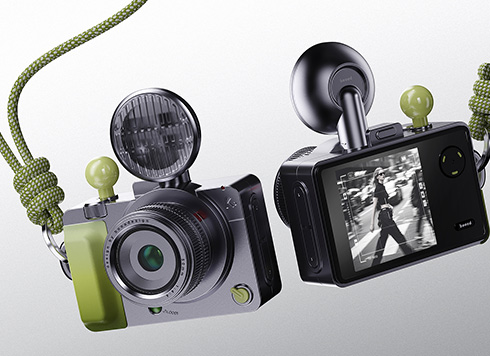 EDC·Trendy Camera Product Design: Form Follows Emotion
EDC Toy Camera: Braun-inspired retro design ...
-
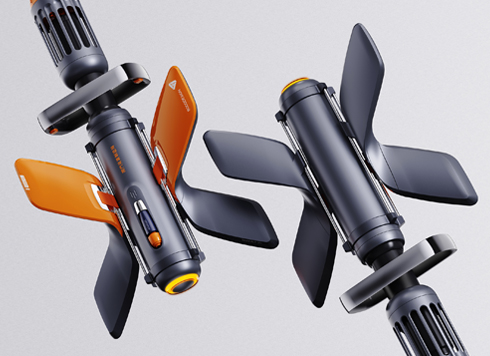 Product Design of Children's "Bubble Rocket" Underwater Thruster
Inspired by "Octonauts + Space", kids' "Bub ...
-
 Design of Adaptive Intelligent High-Altitude Shuttle Transport Robot
Smart rural shuttle bot: Streamlined, weath ...
-
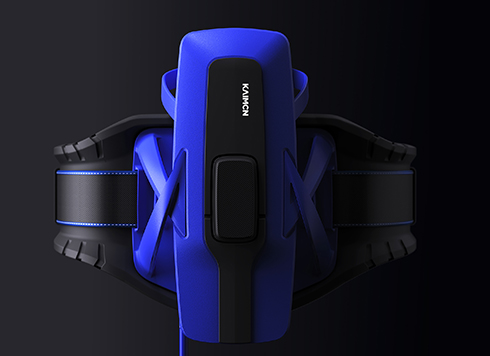 "Effortless" Exoskeleton Wear: Unleash Ultimate Freedom in the Sea
"Unfelt Wearability" & "Bionic Power" redef ...
-
VR Panoramic Rendering Full Process Guide: Tool Selection, Production Steps, and Delivery Standards
Date: Jul 30, 2026 Read: 83
-
In landscape design 3D modeling, why can the client tell at a glance that library trees look pieced together?
Date: Sep 13, 2026 Read: 6
-
When a UE5 build is packaged for a client demo, why does it get darker or lose textures on another computer?
Date: Sep 12, 2026 Read: 11
-
Product Appearance Design Looks Fine, So Why Does Engineering Say It Can't Be Molded?
Date: Sep 11, 2026 Read: 21
-
Renders look washed out with crushed shadows — which step usually goes wrong first?
Date: Sep 10, 2026 Read: 24