



Custom Mini Program Development: A Complete Guide from Requirements Analysis to Launch and Maintenance
What Is Custom Mini Program Development
Custom mini program development is the process of building a mini program application from scratch or based on a framework, using personalized coding tailored to the enterprise's specific business logic and brand requirements, and delivering an independently deployed application. Unlike using SaaS templates, custom development allows full control over functionality, data, and interaction. Suitable scenarios include: businesses requiring complex business logic (e.g., booking systems, e-commerce group buying), integration with internal systems (ERP/CRM), or those seeking a unique user experience.
In 2026, the mini program ecosystem is highly mature. Custom development no longer means "reinventing the wheel" but rather using mature frameworks (such as uni-app, Taro) to quickly build multi-platform compatible versions while retaining autonomy over core business logic.
- Core features: source code delivery, self-owned servers, independent databases, independent UI/UX design
- Comparison with templates: Template development is low-cost (thousands of yuan) and quick to launch, but limited in functionality and difficult to extend; custom development is expensive (tens of thousands of yuan and above) but flexible and controllable.
Why Custom Development Is Needed
Standard templates cannot meet the differentiated needs of all enterprises. For example, chain stores require multi-level permission management, referral-based distribution, dynamic pricing strategies, etc. Such logic in templates often requires workarounds or is simply impossible. Custom development can precisely match business processes, avoiding "cutting the feet to fit the shoes".
Common drivers in 2026 include:
- Data privatization: Industries such as catering and healthcare have high data compliance requirements and need to store user data on their own servers rather than on third-party platforms.
- System integration: Connecting with existing inventory, membership, and payment systems; templates usually offer only limited APIs.
- Brand experience: Custom UI animations and specific interactions (e.g., AR try-ons) can increase conversion rates, which are difficult to achieve with templates.
Complete Process of Custom Development
Requirements Analysis and Project Initiation
This phase determines the quality of all subsequent work. A common practice is to produce a functional specification (PRD) that clearly defines user roles, core paths, and exception flows. In 2026, mainstream tools include Figma for prototyping and ProcessOn for flowcharts; agile development teams typically hold at least two reviews during this phase.
Acceptance criteria: The requirements document should include all page transition relationships, API interface expectations, and error state descriptions. Avoid vague requirements that lead to rework.
Technical Solution Selection
Choosing the framework and backend language directly affects development cycle and maintenance costs. Below is a comparison of three common combinations in 2026:
- Option A: uni-app + PHP/Laravel — Suitable for enterprises with limited budgets and standard features; fast development but average performance and scalability under high user load.
- Option B: Taro + Node.js/Express — Suitable for teams needing cross-platform (WeChat + Alipay + Douyin) and familiar with JS; unified frontend and backend language for easier debugging.
- Option C: Native development (WeChat native + Java/Go) — Suitable for scenarios with high performance requirements, extensive local computation, or complex animations; highest development cost but best runtime efficiency.
Selection criteria: enterprise user volume, team tech stack, future iteration frequency. In 2026 project deliveries, Xiyue Company recommends Option B to clients needing multi-platform coverage due to its active community, rich component library, and ability to shorten development cycle by approximately 30%.
Design, Development, and Testing
Adopt an iterative "small steps, fast runs" model: one Sprint every two weeks, with a demo of usable features at the end of each Sprint. Design drafts should include exception states (empty data, network errors, insufficient permissions). Developers code according to API documentation, with frontend and backend proceeding in parallel.
Testing focus: Payment flow integrity, third-party login callbacks, compatibility across different device models. In 2026, it is recommended to use automated testing tools (e.g., WeChat Developer Tools automation scripts) to cover at least core paths.
Launch and Ongoing Maintenance
Before submitting for WeChat review, complete security checks (HTTPS certificates, SQL injection prevention). The review period is typically 1–7 days; expedited channels require payment. After launch, continuously monitor performance and crashes, and release minor versions every two weeks to fix defects. Common pitfall: neglecting code obfuscation leading to reverse engineering of business logic; it is recommended to use WeChat's official hardening tool.
Suitable Scenarios and Boundaries
Scenarios suitable for custom development: Complex business logic (e.g., multi-level distribution, dynamic pricing); deep integration with internal systems; brand wants to build independent user data assets; has a budget for continuous iteration (at least 100,000–200,000 yuan per year for maintenance).
Scenarios where custom development is unsuitable or unnecessary: Only for information display without complex interactions; budget under 30,000 yuan with a requirement to launch within one month; no dedicated technical staff to interface. In these cases, template or SaaS solutions are more economical and efficient.
A common misconception in 2026 is "start with a cheap template, then migrate to custom later". In reality, template data export is difficult, code is unreadable, and the later customization cost may be higher than building from scratch.
FAQ
How long does custom development take?
A small to medium mini program (about 20 pages) typically takes 6–12 weeks; large e-commerce systems may take 4–6 months, depending on requirement complexity and team resources.
How much does custom development cost?
In 2026 market ranges: simple display type: 80,000–150,000 yuan; medium complexity (including user system + payment): 150,000–300,000 yuan; multi-platform + backend complex business: starting at 300,000 yuan. Note: extremely low quotes (below 50,000 yuan) often mean repackaged templates.
How to ensure data security after custom development?
Use HTTPS encrypted transmission, backend data masking, regular penetration testing, and integrate third-party firewalls. Also sign a confidentiality agreement and ensure source code ownership belongs to the enterprise.
Can we maintain it ourselves after custom development?
Yes, provided the developer delivers complete source code, deployment documentation, and API explanations. It is recommended that the enterprise assign one junior frontend developer for daily maintenance; complex issues can be outsourced.
How to judge if a development team is reliable?
Check online ratings of past projects, ask to view code repositories (GitHub or GitLab), and inquire about the response mechanism for requirement changes. Reliable teams will proactively provide change processes and fee calculation methods.
Action guide: First, clarify your own core business processes and pain points, then select a development plan based on the comparison above. If requirements are clear but you lack an internal technical lead, you can entrust an experienced custom team (e.g., Xiyue Company) to handle requirement breakdown and project management. Note: Custom development relies on long-term collaboration, so do not just look at the quote; also consider the team's delivery track record and after-sales commitment. Boundary: When the enterprise's annual revenue is below 2 million yuan and there is no technology reserve, it is recommended to prioritize cost-effective template solutions first, then migrate to custom development after scaling up.
-
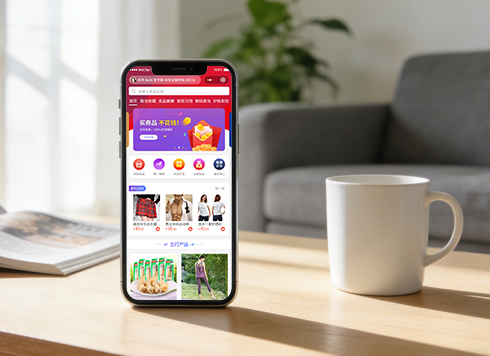 Well-Recognized Custom E-Commerce Mall System Dev
The Good Shopping mini-app is natively buil ...
-
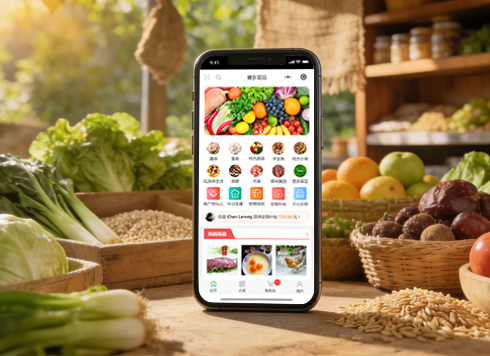 Anhui Huixiang Vegetable Garden Agricultural Products Mini Program v2.0 Iteration Development
HuiXiang MiniApp V2.0: Upgraded homepage, n ...
-
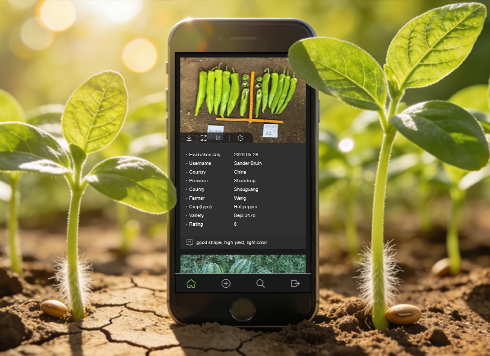 Kunshan TrialBook Mini-Program Custom Development
This project developed an English-only Tria ...
-
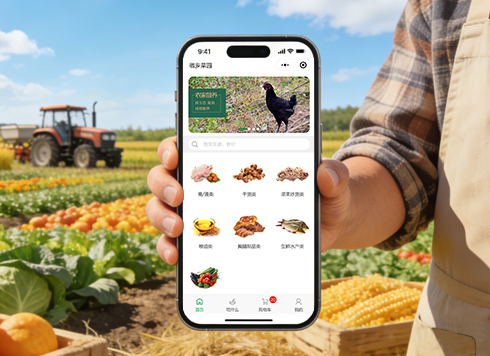 Agricultural Products WeChat Mini Program Custom Development
Lvran Di enhances agricultural sales via a ...
-
Mini Program Custom Development: Core Knowledge and Selection Guide
Date: Jul 31, 2026 Read: 109
-
Mini Program Custom Development: Selection Process and Pitfall Avoidance Guide
Date: Jul 27, 2026 Read: 84
-
Complete Process and Technology Selection Guide for Mobile Custom Development
Date: Jul 24, 2026 Read: 75
-
Custom Mini-Program Development: A Complete Guide from Requirements to Launch
Date: Jul 23, 2026 Read: 111
-
Core Process and Selection Guide for Custom Mini-Program Development
Date: Jul 19, 2026 Read: 100