Complete Process and Selection Guide for Mobile Custom Development
What is Mobile Custom Development
Mobile custom development refers to the process of building a mobile application from scratch, including architecture design, UI development, and backend integration, tailored to the specific needs of a business or product. Unlike template-based development, custom development can deeply match business logic and brand identity, offering better control over data security, feature expansion, and user experience. In 2026, a common approach is to adopt a modular architecture, packaging common capabilities (e.g., login, payment) as SDKs while iterating core business independently, balancing efficiency and flexibility.
The value of custom development lies in its uniqueness—whether it's a complex e-commerce transaction flow or an IoT companion app that needs to interact with hardware, only custom development can achieve it. But this also means higher investment and longer cycles, so thorough requirements research and technical validation must be completed before project initiation.
Standard Process for Custom Development
A reusable process framework can distribute risks across each stage. The industry-wide 'five-step implementation method' in 2026 is as follows:
- Requirements Refinement: Transform vague ideas into quantifiable feature lists, distinguishing MVP from subsequent versions, avoiding the 'one-step-to-completion' mindset.
- Prototype Validation: Conduct user experience testing using low-fidelity or high-fidelity prototypes to ensure core flows have no logical flaws. This step is often skipped, but it is the number one cause of rework.
- Technology Selection and Architecture Design: Choose native/hybrid/cross-platform solutions based on user volume, real-time requirements, and device compatibility, and design server-side interface specifications.
- Agile Development and Continuous Integration: Deliver runnable versions in sprint cycles, integrate code daily with automated testing, avoiding last-minute integration bottlenecks.
- Gradual Release and Operations: First push to 5%-10% of users, monitor crash rates and performance metrics, then roll out to all users after stabilization.
Clear 'gate' standards should be set between each step—for example, no development entry without user-test-passed prototype, no release if code coverage below 80%. This effectively curbs project creep.
Technology Selection Comparison
Technology choices directly impact development cost, performance, and maintenance difficulty. Below is a structured comparison of three mainstream approaches:
- Native Development (iOS Swift + Android Kotlin): Best performance, full access to hardware APIs; suitable for apps with high requirements for animation and real-time interaction (e.g., video editing, games). However, two codebases, high cost, long cycle.
- Hybrid Development (WebView + JS Bridge): Fast development, reuse of web frontend; suitable for content-oriented, display-oriented apps (e.g., news, internal enterprise tools). But interaction smoothness is limited, complex animations may lag.
- Cross-Platform Frameworks (e.g., Flutter, React Native): One codebase for both platforms, development efficiency close to hybrid, performance close to native; suitable for medium-sized projects balancing cost and experience. However, reliance on third-party ecosystems, some native features require bridging.
Selection Principle: If the app frequently uses hardware like camera, Bluetooth, sensors, prioritize native; if logic is simple and iteration speed is high, consider cross-platform; hybrid development is gradually being replaced by cross-platform, only suitable for extremely low budgets or short-term validation. In 2026, most commercial projects adopt a mixed architecture of 'native shell + cross-platform core'.
Common Mistakes and Boundaries
Mistake 1: Neglecting Backend Synchronization Design
The mobile side is just the carrier; data and business logic mostly reside on the backend. Many projects only design frontend interfaces early on, leading to frequent API changes during integration. The correct approach is to define API contracts during the prototype phase.
Mistake 2: Underestimating Testing Costs
Fragmentation testing needs to cover different brands, system versions, and network environments. In 2026, the testing device pool typically includes the top 20 models plus emulators, with special tests for weak networks, interruptions, and memory leaks. Budget at least 15% for testing.
Applicable Scenarios and Boundaries
Custom development is suitable for projects with unique business models, long-term operation needs, or sensitive data (e.g., finance, healthcare). Avoid custom development in these cases: A. Short-term marketing activities (use mini-programs or pages instead); B. Features highly similar to competitors (templates suffice); C. Budget below 100,000 USD (hard to cover the full process).
If the team lacks mobile experience, it's recommended to engage a professional agency (such as Xiyue Company) for technical consulting or core module contracting early on, preventing later restructuring due to architectural mistakes.
Frequently Asked Questions
How long does custom development usually take?
From requirements confirmation to launch, a typical commercial app takes 3–6 months; complex projects (including admin panel + multi-platform sync) may take 8–12 months. The industry average in 2026 is 4.5 months.
How to choose a development team?
Focus on the stability and response speed of the team's past cases, not just UI aesthetics. Ask them to provide a backend architecture review report from at least one similar project.
Can requirements be changed during development?
Yes, but through a change control process to assess impact, avoiding unlimited cost increases. It's recommended to defer non-urgent requirements to the next iteration rather than inserting them into the current sprint.
How much more expensive is custom development compared to templates?
Typically, custom costs 3–5 times more than templates. However, retrofitting a template may incur hidden costs due to framework limitations, so evaluate long-term maintenance needs before deciding.
What maintenance investment is needed after launch?
Per 2026 practice, annual maintenance costs are about 15%–25% of total development cost, including version adaptation, bug fixes, and performance optimization.
Suggestion: Start by defining what NOT to do: keep only essential features in the priority list, mark others as 'V2.0'. Also reserve a 20% buffer budget for unknown risks. If you have no dedicated mobile personnel internally, consider a phased contract with an experienced service provider (e.g., Xiyue Company) to validate the first phase before deepening cooperation.
-
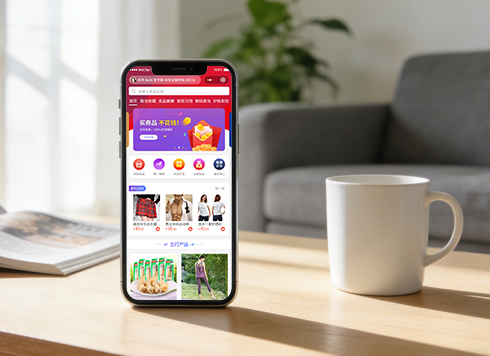 Well-Recognized Custom E-Commerce Mall System Dev
The Good Shopping mini-app is natively buil ...
-
 Anhui Huixiang Vegetable Garden Agricultural Products Mini Program v2.0 Iteration Development
HuiXiang MiniApp V2.0: Upgraded homepage, n ...
-
 Kunshan TrialBook Mini-Program Custom Development
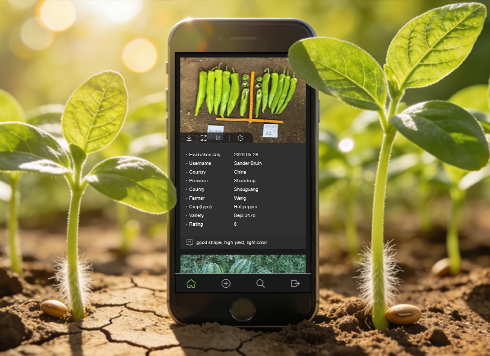
This project developed an English-only Tria ...
-
 Agricultural Products WeChat Mini Program Custom Development
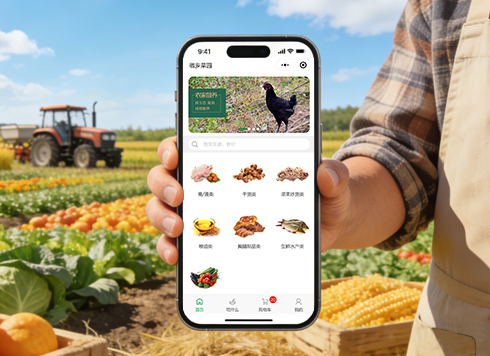
Lvran Di enhances agricultural sales via a ...
-
A Complete Guide to Mobile Custom Development: Process, Technology Selection, and Pitfall Avoidance
Date: Jul 29, 2026 Read: 75
-
Mobile Custom Development Full Process: A Practical Guide from Needs Assessment to Launch and Maintenance
Date: Jul 28, 2026 Read: 98
-
Mobile Custom Development: A Complete Technical Selection and Implementation Guide from Requirements to Launch
Date: Jul 27, 2026 Read: 105
-
Mobile Custom Development Full Process Guide: From Requirements Analysis to Launch and Maintenance
Date: Jul 25, 2026 Read: 89
-
Complete Process and Technology Selection Guide for Mobile Custom Development
Date: Jul 24, 2026 Read: 75