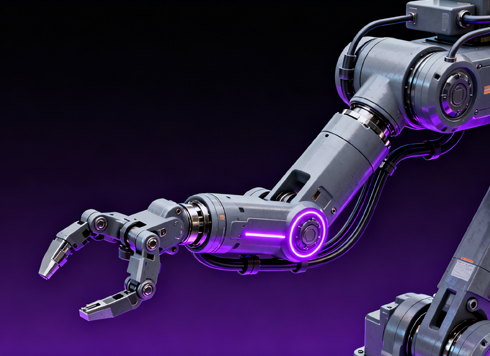



AI digital human 3D modeling: the mouth lags half a beat and plosives look unclosed — should you check the audio first or the rigging first?
In AI digital human 3D modeling, when a digital human speaks and the mouth lags half a beat or plosives look unclosed, based on 2026 project delivery experience, the common cause is not that the speech-driven algorithm fails at a single point; rather, audio rhythm, facial blend shapes, driving latency, and shot framing are not aligned. First confirm whether the delivery format is a pre-rendered talking head or a real-time livestream, then decide rigging depth and driving method. This usually reduces rework more than repeatedly switching driving software.
Why lip sync problems in AI digital human 3D modeling are often misdiagnosed as a bad algorithm
Lip sync is not finished once you drag audio into software. It passes through at least four layers: audio segmentation, phoneme-to-viseme mapping, facial rigging weights, and engine-side real-time or offline driving. If any layer uses inconsistent standards, the error is amplified in the final output. For example, if the audio sample rate is inconsistent, the lip rhythm calculated by the driving layer will shift as a whole; if rigging weights do not reach the mouth corners, vowel opening can look like the whole face is moving.
When judging quality, do not only look at a still frame with an open mouth. According to a common 2026 delivery acceptance checklist, at minimum check vowel opening, consonant closure, plosives, connected speech, and lip sync tracking after shot cuts. Staring at only one angle means the client may still say the lip sync drifts after delivery.
- Audio layer: Is dialogue clean, are sample rate and frame rate consistent, are breath pauses and connected speech preserved.
- Rigging layer: Do lips, jaw, tongue, teeth, and cheekbones have enough blend shapes, and do weights clip.
- Driving layer: Speech-driven, facial capture, or manual keyframing determines lip rhythm and latency.
- Shot layer: Close-up talking heads demand high mouth detail; wide shots can use lower rigging density.
A nameable 'four-layer lip sync delivery check' framework
This framework layers the delivery chain from sound to picture, so rework can be located at a specific layer instead of being blamed vaguely on modeling or the engine. Each layer needs a checkable artifact: the audio layer delivers waveforms and a phoneme list, the rigging layer delivers a blend shape list, the driving layer delivers a test video, and the shot layer delivers an acceptance shot list.
- Audio layer check: Unify sample rate, frame rate, and timecode; mark plosive and connected-speech positions to avoid an overall shift during driving.
- Rigging layer check: List blend shapes for vowels, consonants, smile, and frown; check whether mouth corners, nasolabial folds, and jaw clip.
- Driving layer check: Run speech-driven or facial capture on the same audio clip, record latency and jitter, and manually fix keyframes when needed.
- Shot layer check: Accept close-up, medium, and wide shots separately; close-ups check mouth detail, wide shots check overall rhythm.
Why split it this way? Because the common rework causes behind mismatched lip sync are not the same: audio-layer misalignment makes the whole rhythm drift, insufficient rigging makes an open mouth look like a mask, driving-layer latency makes it look dubbed, and inconsistent shot-layer standards make the client criticize wide-shot quality in close-ups. Checking import naming, scale, and blend shape count against official documentation or target engine specifications can preempt part of cross-engine rework.
How much facial rigging is enough: tiering by delivery format
Facial rigging is not better the denser it is; the sufficiency standard is set by the delivery format. Pre-rendered talking heads allow offline frame fixes, so budget can concentrate on jaw, lips, tongue, and teeth; real-time livestreaming must accept latency and jitter, requiring extra eye, breathing, shoulder-neck linkage, and a performance budget. Based on 2026 project delivery habits, setting tiers before quoting is more stable than quoting one vague number first.
- Half-body talking-head tier: Rig 15-30 mouth and expression blend shapes, driving mainly by audio plus manual correction; the experience range is about 5-10 working days, depending on assets and revision rounds; suits pre-rendered promotion and course talking heads; rework often involves plosives and connected speech.
- Real-time livestream tier: Rig 40-60+ blend shapes, requiring cheek, tongue, eye, and breathing linkage; relies on facial capture or real-time speech-driven; the typical range is about 2-4 weeks; suits livestream interaction and virtual customer service; rework often involves latency, lip prediction, and shot changes.
- Pre-rendered final output: Adds rendering and compositing on top of the half-body talking-head tier, with an experience range of another 2-5 working days; accept materials, lighting, and lip sync separately to avoid mixing them into one revision round.
A common pitfall is using half-body talking-head rigging for real-time livestreaming, only to expose latency and jitter the moment the camera turns on; conversely, requiring millisecond sync for pre-rendered output alone spends budget on unnecessary real-time optimization. During acceptance, having the client review four shot types — vowel opening, consonant closure, plosives, and connected speech — reveals lip sync quality better than a single open-mouth still.
Where delivery often gets stuck: assets, lighting and materials, engine constraints, and rework cost
In 2026 projects, a common constraint looks like this: the client has a limited budget and only about a week of schedule, provides only a phone-shot front-facing talking-head video, and yet requires final lip sync to match. Following project delivery habits, you first ask the client to add a front-facing lip-reading clip and a side-profile head-turn clip, unify lighting direction, then start modeling and rigging. The cost is an extra half-day to one day upfront, an experience range, but it saves a round of mouth rework. Skipping the reshoot often means readjusting cheekbone, nasolabial fold, and jaw weights later, with rework commonly counted in days.
Lighting and materials also affect lip sync judgment. When lip highlights are overexposed, mouth-corner closure detail blurs in the frame, and clients easily misjudge it as mismatched lip sync; when material roughness is too low, teeth and tongue reflect too strongly and look fake in close-ups. Engine constraints must also be checked in advance: a web-side Three.js preview can show rigging direction, but final lip sync precision and material/lighting still need verification in the target engine or offline rendering.
- Asset precision: Fill in front, side, looking-down, looking-up, and lip-reading footage as much as possible; consistent lighting matters more than high pixel count.
- Lighting and materials: Avoid overexposure and overly strong reflections on lips and teeth; leave checkable closure detail in close-ups.
- Engine constraints: Check scale, bone naming, and blend shape count before import; common cross-engine differences trigger re-rigging.
- Rework cost: Lip sync rework often touches cheekbone, nasolabial fold, and jaw weights, and is counted in days in experience terms; the later it is found, the more expensive it gets.
Applicable scenarios and non-applicable boundaries
Scenarios suited to AI digital human 3D modeling lip sync delivery include pre-rendered talking heads, course explanation, customer service Q&A, low-precision interaction in livestreams, and brand short videos. In these scenarios, audience attention is on the mouth and expression, so rigging and driving investment translates directly into credibility. If the digital human's mouth is not visible or only appears as a distant silhouette, high-precision lip sync rigging is unnecessary; moving budget to clothing, lighting, and scene is more cost-effective.
Situations that are not suitable or not necessary should also be stated clearly: for pure static posters, back-view or profile-only displays, or when the budget only covers simple animation with no audio sync requirement, high-precision lip sync rigging is unnecessary. When real-time livestreaming with millisecond-level sync is required, a purely offline rigging process is not suitable; use facial capture or real-time speech-driven solutions instead, and accept some latency and jitter. The boundary sentence can stand alone as a quote: lip sync precision should match shot framing and delivery format, not a software feature list.
Frequently asked questions
How long does lip sync usually take in AI digital human 3D modeling?
Half-body talking-head tier: experience range about 5-10 working days; real-time livestream tier including rigging and driving integration: about 2-4 weeks; if rendering final output is included, add another 2-5 days. It depends on assets and revision rounds.
What usually drives the price difference between lip sync rigging and speech-driven lip sync?
Quotes commonly range from several thousand to tens of thousands of RMB, a typical range. The difference mostly comes from blend shape count, audio-driven debugging, real-time latency optimization, and real-device validation; pre-rendered talking-head work is usually lower than the real-time livestream tier.
How are modeling and rendering divided in a digital human project?
Modeling handles topology, UVs, facial blend shapes, and weights; rendering or the engine handles materials, lighting, lip sync driving, and output. Mismatched lip sync often traces back to rigging weights, not a one-sided renderer problem.
What delivery formats are needed, and will switching engines later cause rework?
Common deliverables include FBX, GLB, USD, and others, checked against target engine specifications. Switching engines may cause rework due to bone naming, blend shape count, and scale differences; run a target-engine import validation before delivery.
For half-body talking-head only, is full-body rigging needed?
No. Half-body talking heads can rig only the head, neck, shoulders, and face, putting budget into lip sync and expression; if full-body livestreaming is needed later, add body bones and motion then, with a controllable rework scope.
If you are stuck on lip sync delivery in AI digital human 3D modeling, write the delivery format, asset angles, target engine, and acceptance shots into a one-page checklist first, then decide rigging depth and driving method. Suited to pre-rendered talking heads and low-to-medium-precision real-time interaction; if the mouth is not visible or the budget only covers static display, high-precision lip sync rigging is unnecessary.
-
 EDC·Trendy Camera Product Design: Form Follows Emotion
EDC Toy Camera: Braun-inspired retro design ...
-
 Product Design of Children's "Bubble Rocket" Underwater Thruster
Inspired by "Octonauts + Space", kids' "Bub ...
-
 Design of Adaptive Intelligent High-Altitude Shuttle Transport Robot
Smart rural shuttle bot: Streamlined, weath ...
-
 "Effortless" Exoskeleton Wear: Unleash Ultimate Freedom in the Sea
"Unfelt Wearability" & "Bionic Power" redef ...
-
For AI digital human 3D modeling, when the client only provides phone photos and one talking-head clip, if we start with a half-body talking-head tier, will adding livestream shots later cause rework?
Date: Sep 27, 2026 Read: 92
-
Why does AI digital human 3D modeling have a waxy look? Which step is the problem?
Date: Sep 9, 2026 Read: 171
-
AI Digital Human 3D Modeling: How Long from Modeling to Delivery and Where Do Rework Points Usually Occur?
Date: Aug 24, 2026 Read: 111
-
How to Do AI Digital Human 3D Modeling: A Guide to Workflow, Tools, and Delivery Standards
Date: Aug 7, 2026 Read: 160
-
AI Digital Human 3D Modeling Production Process Guide: From Requirements to Delivery
Date: Jul 22, 2026 Read: 177