



Mini Program 3D display: the product goes black when rotated to the back—is the issue usually in baking or lighting layout?
In Mini Program 3D product displays, when the model turns black on the back or gray on the side, it is usually not because the engine is not capable enough, but because the lighting budget is allocated to the wrong places: baking only covers the front lit area, while the real-time part keeps only one key light. Based on 2026 Mini Program delivery experience, for this kind of 'changes face when the angle changes' issue, in most cases you should first check the lightmap UV coverage and the number of real-time lights, rather than suspecting the device model or engine version first.
Why Mini Program 3D lighting and shadows cannot simply copy desktop practices
Mini Program 3D runs inside host environments such as WeChat and Alipay, where bundle size, texture memory, and GPU calls all have extra ceilings, so it is not the same playbook as a desktop renderer. On desktop, you can attach several real-time lights with shadows; in a Mini Program, every additional light may drag down the frame rate on low- to mid-range devices. So Mini Program 3D lighting is more like a budget allocation: first mark which lighting and shadows will not change during user interaction, then decide how much compute to spend on the part that will change.
Another easily overlooked factor is the screen environment. Mini Program screens are small, and users often browse under bright outdoor light, so the range of light and dark tones is already compressed; insufficient lighting contrast gets amplified into a flat look.
- Host limits: Bundle size, texture memory, and first-screen time all have ceilings, and the lighting plan must obey these constraints first.
- Screen differences: A small screen plus outdoor brightness eats up some shadow detail, making insufficient lighting contrast especially obvious.
- Interaction mode: Users mostly rotate and tap, so camera changes are limited, which makes it suitable to precompute most lighting and shadows.
First separate which lighting and shadows change with interaction
Based on project delivery experience, Mini Program 3D lighting can be divided into three tiers, with only one criterion: whether the lighting and shadows on this object change during user interaction. The benefit of this split is that modeling, rendering, and programming share the same standard for the same issue, avoiding a situation where programming assumes rendering will bake, rendering assumes programming will add lights, and in the end neither side does it.
- Fully baked: Static scenes and static lights, with all lighting and shadows baked into lightmaps. This suits fixed-angle product displays and small exhibition walkthroughs. The UVs used for baking need a separate set; do not share them with the base texture UVs.
- Real-time-first: Lights need to change with interaction, such as switchable display window lights or highlights that change color with the material. In this tier, control the number of real-time lights and shadow range; a common practice is to keep only one or two key lights with shadows.
- Hybrid: Baked main subject plus a small amount of real-time fill light. This is a relatively common compromise in 2026 Mini Program 3D. The cost is that art and programming need to tune parameters together, and when revisions happen, both sides may need changes.
What baking and real-time each cost
When choosing a plan, do not compare only the visuals; factor in runtime performance, revision cost, and bundle size together. The following is given as experience ranges; the specific values still depend on scene complexity and device coverage.
- Runtime performance: Baking barely uses real-time compute; the more real-time lights, the more obvious the frame rate fluctuations on low- to mid-range devices.
- Revision cost: When changing light positions or material colors, baking usually requires re-baking, with an experience range of a few hours; real-time can be adjusted instantly in the engine.
- Bundle size and memory: Baked textures increase texture size. A common mobile practice is to bake only the main lit surfaces and use compressed formats.
- Timeline differences: Assuming the model already exists, a pure baking plan has an experience range of about three to seven working days; because a hybrid plan requires joint tuning, it typically adds another two to five working days.
At delivery: diagnosing the black-back case
A common situation on projects: the front of the product gets very full lighting, then the client rotates it on the phone and the back turns directly into a dark block, and they suspect the engine does not support it. The constraints are that the bundle size is near its limit and device coverage must start from older Android phones. A more stable approach is to attribute the cause first: check whether the lightmap UVs cover only the front visible faces, then check whether the real-time lights are down to ambient only. In terms of order, usually add a second UV set first, expand the baking range to the full circumference, and then decide whether to add a very weak fill light; if the bundle size is truly exceeded, fall back to adding only a small texture dedicated to the back. The cost is one re-bake of lighting and one re-export of assets, adding an experience range of half a day to two days, and when the deadline is tight, it can push into the joint tuning day.
Another type of rework comes from materials. If the reflection intensity and roughness standards for the same material are not unified across viewing angles, rotating to a different angle looks like a different surface and can also appear black. This kind of issue can be avoided by writing material parameters into the specification early.
Which items to check during real-device acceptance
For acceptance, do not look only at exported screenshots; look at real devices. It is recommended to check at least once on a regular Android phone and once on an older device model.
- Light and dark gradation: Bright areas do not blur into one mass, dark areas do not go dead black, and the structure is still visible in the darkest areas.
- Contact shadows: There is a transition where the object meets the ground; it is not floating as if suspended, nor a single hard-edged black shadow.
- All-around consistency: When rotating to the back and sides, the light-dark transition is continuous, with no obvious dividing line or sudden change.
- Performance criteria: The frame rate is stable during continuous interaction, with no obvious drop followed by rebound.
Which scenarios suit this, and which do not need to be forced in
This lighting approach suits scenarios where the main subject is relatively fixed and interaction is mainly rotation, zooming, and local clicks, such as product appearance displays, small exhibitions, and equipment structure demonstrations. With baking or hybrid lighting, both visuals and performance are relatively controllable.
But if a scenario requires multiple lights switching on and off in real time, frequent material color changes, continuous character animation, or near-film-level reflections and global illumination, then there is no need to force it into a Mini Program. Heavy lighting can be placed in server-side rendering or pre-rendered video, with the Mini Program side only handling display. If you only need to show a static image to a client, producing a still render directly is also simpler.
Frequently asked questions
Does Mini Program 3D always require lighting baking?
Not necessarily. Baking a static main subject gives more stable visuals and saves performance; when the scene has only simple ambient light and very few objects, real-time is enough. It mainly depends on whether lighting and shadows change with interaction.
After baking, the back still goes black when rotated—what should I check first?
First check whether the lightmap UVs unwrap only the front visible faces, then check whether the real-time lights are down to ambient only. In most cases, the baking coverage was not made full circumference, rather than an engine problem.
Will baked textures make the bundle bigger?
They will take up a certain amount of space. A common practice is to bake only the main lit surfaces, control texture resolution, and use compressed formats; exactly how much can be compressed needs to be verified against real-device startup time.
Should lighting be done in modeling or rendering?
Modeling is responsible for structure, material segmentation, and the second UV set; rendering is responsible for light placement, baking parameters, and real-device verification. Both sides need to align on lighting standards early.
Next step suggestion: first list the objects in the scene by whether their lighting and shadows change with interaction, then set the baking-to-real-time ratio, and run a startup and interaction test on a mid-range phone before finalizing. Based on 2026 delivery habits, writing these standards into requirements and quotes can save a lot of back-and-forth revisions.
-
 EDC·Trendy Camera Product Design: Form Follows Emotion
EDC Toy Camera: Braun-inspired retro design ...
-
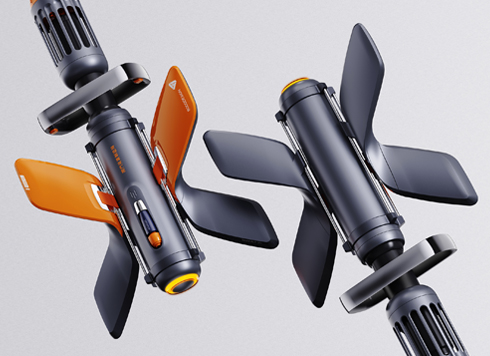 Product Design of Children's "Bubble Rocket" Underwater Thruster
Inspired by "Octonauts + Space", kids' "Bub ...
-
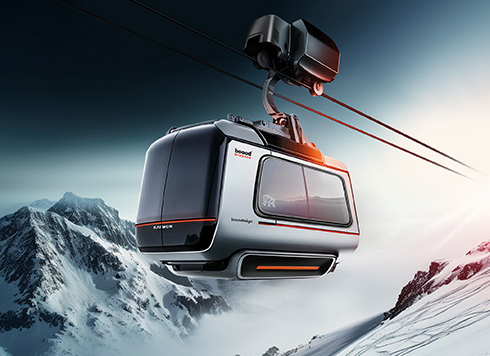 Design of Adaptive Intelligent High-Altitude Shuttle Transport Robot
Smart rural shuttle bot: Streamlined, weath ...
-
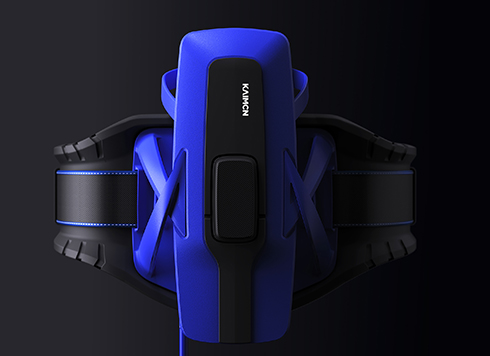 "Effortless" Exoskeleton Wear: Unleash Ultimate Freedom in the Sea
"Unfelt Wearability" & "Bionic Power" redef ...
-
After VR panorama delivery, why does the mobile view drift and why do hotspots misalign—which step usually hides the problem?
Date: Sep 20, 2026 Read: 4
-
Park plaza and street greening: tree crowns look thin up close—switch to 3D models first or unify leaf color first?
Date: Sep 19, 2026 Read: 9
-
WebGL product 3D display: metal and glass keep looking like plastic—bake environment maps first or use real-time reflections to avoid rework?
Date: Sep 18, 2026 Read: 15
-
When the CAD site plan and site photos don't match for factory landscape 3D modeling, which source should drive the model to avoid rework?
Date: Sep 17, 2026 Read: 13
-
When a 3D bird's-eye rendering looks like a sandbox model instead of a real aerial photo, is the problem usually the camera or the scene props?
Date: Sep 15, 2026 Read: 23