



When a 3D bird's-eye rendering looks like a sandbox model instead of a real aerial photo, is the problem usually the camera or the scene props?
A 3D bird's-eye rendering that looks like a sandbox model is usually not a renderer problem; it is more often because the camera angle, building proportions, scene prop density, and lighting logic have drifted away from how real aerial photography observes a site. Based on 2026 project delivery experience, calibrating perspective with camera height and focal length first, then adding ground materials and aerial perspective, can noticeably reduce the “fake sandbox feel.” The following sections cover visual signals, judgment criteria, a production framework, option comparison, applicable boundaries, and delivery practice.
Which visual signals make a bird's-eye view look like a sandbox at first glance?
The sandbox feel usually comes from several overlapping signals: the camera focal length is too wide, building outlines are too clean, the ground lacks material variation, context trees and cars are arranged in a regular pattern, and the distance has no aerial attenuation. A single signal is not necessarily fatal, but when three or four appear at once, viewers will identify the image as a model rather than real aerial photography.
- Camera focal length and height: Bird's-eye views commonly use a focal length between 24–50 mm (typical range). The wide-angle end tends to stretch building edges, while the telephoto end is closer to the compressed look of real aerial photography.
- Building detail levels: Foreground buildings need details such as window frames, balconies, and rooftop equipment. Distant buildings can be simplified, but the simplification should progress with distance rather than leaving an entire area equally clean.
- Ground material variation: Roads, paving, grass, and water should differ in roughness and reflectivity. A single material makes the ground look like a sheet of plastic.
- Scene prop randomness: Trees, cars, and people arranged at regular intervals are a frequent source of the sandbox feel; in real scenes, the spacing and orientation of these elements are random.
- Aerial perspective: Distant objects should lose contrast and shift cooler or grayer with distance. Without this attenuation, the background looks as clear as the foreground.
A bird's-eye view that feels like a sandbox is often related to an overly wide camera focal length: the wide angle stretches building edges, and the distance lacks aerial attenuation, so the eye immediately reads it as a model.
To judge whether it looks real, check three layers of visual anchors first
To judge whether a bird's-eye rendering is close to real aerial photography, check three layers of anchors: geometry, lighting, and atmosphere. Only when all three hold up is the image less likely to be called “toy-like” by the client.
- Geometry anchor: Whether the ratio of building height to road width, the span of bridges and rivers, and the relationship between tree height and floor count match the typical scale of the project location.
- Lighting anchor: Whether the key light direction is consistent with the project's latitude and orientation, and whether shadow length matches the sun altitude angle and time of day.
- Atmosphere anchor: Whether aerial perspective, fog, cloud shadows, and the wet or dry feel of the ground are consistent. The foreground cannot be sunny while the background is in thick fog.
When checking, it helps to look at a grayscale or clay render pass first. Removing material color interference makes it easier to spot whether proportions and lighting have gone off. Only after this step is solid do materials and post-production become meaningful.
A practical “Three Checks, Four Additions” production framework
In projects, bird's-eye view rework is concentrated in early-stage proportions and later-stage scene props. Based on delivery practice, production can be split into “Three Checks, Four Additions”: first check the camera, proportions, and lighting direction; then add ground materials, scene prop randomness, aerial perspective, and detail levels.
- Check the camera: Set camera height, pitch angle, and focal length. Bird's-eye views commonly use a viewing height between 80–300 m (typical range), depending on project scale.
- Check proportions: Use the master plan or CAD base drawing to align road centerlines, building outlines, and site boundaries, and unify unit conventions to avoid scaling the model later.
- Check lighting direction: Set the key light according to the project orientation and target rendering time. Once the shadow direction changes midway, materials and post-production must be readjusted.
- Add ground materials: Assign roughness and reflectivity separately for roads, paving, grass, and water, so the ground has at least 2–3 material layers.
- Add scene prop randomness: Place trees, cars, and people according to density ranges, avoiding evenly spaced arrays. Distant props can be less detailed, but should not be omitted entirely.
- Add aerial perspective: Add fog or depth attenuation according to depth of field, reduce contrast and saturation in the background, and keep detail in the foreground.
- Add detail levels: Add window frames, railings, and rooftop equipment to foreground buildings; keep masses and materials in the midground; leave only silhouettes in the background to prevent polygon count from spiraling out of control.
The first three steps of this framework determine the image skeleton, while the last four determine realism. A common mistake is to do materials and scene props first, then rebuild after the client points out that building proportions are wrong—often costing 1–2 working days or more.
Offline rendering vs. real-time engines: which path should a bird's-eye view take?
In 2026, bird's-eye rendering follows two main paths: offline rendering (common renderers such as V-Ray and Corona) and real-time engines (such as UE5). Both can produce bird's-eye views, but their suitable scenarios and delivery rhythms differ.
- Offline rendering: Image layers and material details are easier to control, making it suitable for approval submissions, printing, and final presentation images. A single medium-complexity bird's-eye view has an experience range of 1–3 working days (3–7 working days including modeling), and changes require re-rendering.
- Real-time engines: Suitable for multi-angle screenshots or interactive demonstrations. Scene setup has an experience range of 3–7 working days, and rendering is faster; however, materials and lighting must be tuned to engine conventions, concentrating effort in the early stage.
- Where it does not apply: If only a single static presentation image is needed and the budget is limited, the early setup cost of a real-time engine may not be worthwhile; if frequent viewpoint changes or video are needed, repeated offline rendering takes more time.
- Common caution: Both paths depend on model units, camera conventions, and material naming standards. If these are not unified during modeling, most rework lands on the rendering side.
To choose a path, ask three questions first: how many images are needed, whether interaction is required, and how often changes occur. If two of the three lean dynamic, a real-time engine is more convenient; if all three lean static, offline rendering is more direct.
Applicable scenarios and boundaries
3D bird's-eye renderings suit urban design, park planning, architectural complex presentations, landscape architecture, and factory or industrial park displays. They are good at showing the spatial relationships between buildings, roads, greenery, and water, as well as the connection logic between multiple sites.
- Suitable for: scheme presentations, planning approvals, investment promotion displays, planning concept comparisons, and multi-angle static renderings.
- Not necessary for: projects that only need partial facades or interior details; a bird's-eye view cannot replace a close-up rendering.
- Not suitable for: projects requiring precise engineering dimensions, MEP coordination, or construction briefings; a bird's-eye view is visual expression, not a construction basis.
- Boundary statement: If the core need is “to see the door and window style of a building clearly,” a bird's-eye rendering is not appropriate; use a close-up or eye-level view instead.
On delivery: when asset precision and proportions are not locked, where does the rework cost show up?
A common constraint in projects: the client provides only a master plan CAD and a few site photos, while tree, car, and people assets come from a generic library. The approach is to first use the master plan to set building outlines and road centerlines, unify tree height ranges and traffic direction, then assign detail levels based on camera distance. If proportion calibration is skipped, the client can quickly point out that building heights and road widths in the rendering are wrong; rework requires rebuilding the model outline, costing about 1–2 working days and even affecting the deadline. Before delivery, check unit conventions, camera height, and scene prop density to stop most rework before rendering. Based on typical ranges, spending an extra half day to a day on early calibration usually saves a full round of image rework.
Common questions
How many days does a bird's-eye rendering usually take for one image?
Based on 2026 delivery experience, a single medium-complexity bird's-eye view under offline rendering commonly takes 1–3 working days; if starting from modeling, the overall range is about 3–7 working days, fluctuating with model volume and revision rounds.
What causes price differences for bird's-eye views, and is more expensive always more realistic?
Price differences mostly come from modeling subdivision, scene prop quantity, and output precision, with an experience range from several thousand yuan to tens of thousands of yuan. More expensive does not necessarily mean it meets your needs; check the delivery list and revision rounds first.
Can modeling and rendering for a bird's-eye rendering be assigned to different people?
Yes, but camera height, unit conventions, material naming, and texture paths must be clearly defined during modeling; otherwise the rendering side will need to rework proportions or re-import the model.
What formats are usually delivered for bird's-eye renderings?
Common delivery formats are JPG or PNG bitmaps; for printing, provide TIFF or high-resolution PDF separately; for presentation animations or real-time demonstrations, output MP4 or the engine project.
If the client asks to change building height at short notice, can a bird's-eye view still be partially modified?
If the model layers and material naming are standardized, partial replacement and re-rendering of a single image is often possible, typically saving 30%–50% of the time compared with redoing the whole scene; if the model has already been merged and exported, it usually must be rebuilt.
If the project leans toward static presentations, prioritize the “Three Checks, Four Additions” approach: set the camera and proportions first, then add materials and aerial perspective. If interaction or multi-angle switching is needed later, consider a real-time engine path. The boundary is simple: bird's-eye views solve “spatial relationships,” while close-up views solve “detail relationships.” When both are needed, produce a low-precision bird's-eye view first to lock proportions, then allocate close-up workload. In similar projects, Xiyue Company usually aligns with the client on image count and revision rounds before scheduling modeling and rendering manpower.
-
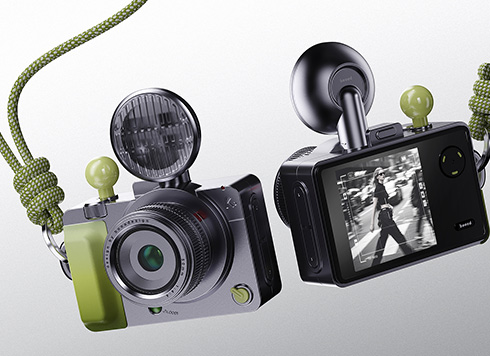 EDC·Trendy Camera Product Design: Form Follows Emotion
EDC Toy Camera: Braun-inspired retro design ...
-
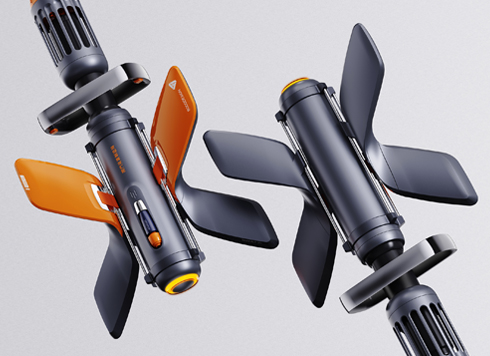 Product Design of Children's "Bubble Rocket" Underwater Thruster
Inspired by "Octonauts + Space", kids' "Bub ...
-
 Design of Adaptive Intelligent High-Altitude Shuttle Transport Robot
Smart rural shuttle bot: Streamlined, weath ...
-
 "Effortless" Exoskeleton Wear: Unleash Ultimate Freedom in the Sea
"Unfelt Wearability" & "Bionic Power" redef ...
-
After VR panorama delivery, why does the mobile view drift and why do hotspots misalign—which step usually hides the problem?
Date: Sep 20, 2026 Read: 5
-
Park plaza and street greening: tree crowns look thin up close—switch to 3D models first or unify leaf color first?
Date: Sep 19, 2026 Read: 9
-
WebGL product 3D display: metal and glass keep looking like plastic—bake environment maps first or use real-time reflections to avoid rework?
Date: Sep 18, 2026 Read: 15
-
When the CAD site plan and site photos don't match for factory landscape 3D modeling, which source should drive the model to avoid rework?
Date: Sep 17, 2026 Read: 14
-
Mini Program 3D display: the product goes black when rotated to the back—is the issue usually in baking or lighting layout?
Date: Sep 16, 2026 Read: 18