


A Complete Guide to Unity 3D Animation Production: Toolchain, Technical Essentials, and Delivery Standards
Unity 3D animation production involves creating real-time interactive or pre-rendered 3D animation content based on the Unity engine, suitable for scenarios that require free camera angles or interactive operations, such as product demonstrations, architectural walkthroughs, virtual showrooms, and industrial simulations. Its core value lies in balancing visual quality and runtime efficiency. Unlike traditional static renderings or offline rendering, Unity animation emphasizes real-time interaction and lightweight deployment. The production process typically consists of five stages: model preparation, animation creation, engine integration, performance optimization, and multi-platform deployment. Key delivery metrics include frame rate, loading time, model polygon count, and interaction response speed. Based on 2026 project delivery practices, Unity 3D animation production has established a relatively fixed toolchain and acceptance standards, and this article provides a reusable operational framework.
Scope and Applicability of Unity 3D Animation
Clarifying applicable and non-applicable scenarios helps avoid directional errors during project initiation.
- Applicable scenarios: Interactive product demonstrations, virtual showrooms, architectural walkthroughs, process simulation, training simulations, and web-based 3D displays.
- Non-applicable scenarios: Cinematic-level photorealistic visuals (recommend UE5 or offline rendering), pure display projects where realism outweighs runtime smoothness, and fixed-view videos with no interaction requirements.
From a cost and timeline perspective, based on 2026 market levels, simple product demo animations take about 2-4 weeks, medium architectural walkthroughs about 4-8 weeks, and complex real-time interactive projects may exceed 3 months. Costs are primarily determined by model complexity, animation duration, interactive feature count, and engine optimization difficulty. It is recommended to lock down the scope during the requirements phase.
Core Steps in Unity 3D Animation Production
The following workflow is based on common production methods in 2026. Following it in order reduces rework. Each step includes checkpoints to prevent issues from accumulating to later stages.
Phase 1: Model Preparation and Standards Check
Models are the foundation of animation. Low-quality models directly affect subsequent animation and engine performance. This phase requires confirming model format, polygon count, material properties, and naming conventions.
- Format check: Confirm whether the export format is FBX or OBJ, and whether it includes bones and animations.
- Polygon control: For mobile, keep a single model under 30,000 polygons; for PC, the limit can be relaxed accordingly.
- Material standards: Use PBR materials and set texture sizes to standard resolutions of 256, 512, or 1024.
- Naming conventions: Ensure all hierarchy levels and animation clip names are clear and readable.
Phase 2: Animation Creation and Import
Animation can be created in external software (such as 3ds Max, Blender, Maya) or within Unity using Timeline or Animator. The key is to distinguish the purpose of the animation: whether it is procedurally driven or a keyframe sequence.
- External creation: Suitable for complex character animation or mechanical motion. Requires baking skeletal keyframes on export.
- In-engine creation: Suitable for simple displacements, rotations, scaling, and UI animations, allowing real-time adjustments.
- Hybrid approach: Recommended: use engine simulation for physics effects (such as cloth, particles) and external keyframes for key motions.
Phase 3: Engine Integration and Environment Setup
After importing models, animations, and materials into Unity, you need to create the scene, lighting, cameras, and interaction logic. Common practice in 2026 is to use Unity 6 (or a compatible LTS version) with the URP or HDRP render pipeline.
- Render pipeline selection: Choose URP for mobile, and HDRP for high-quality PC visuals.
- Light baking: Prefer baked lightmaps for static scenes, and use real-time lights for dynamic objects.
- Interaction scripts: Use C# to implement basic interactions such as clicking, dragging, and camera view switching.
Phase 4: Performance Optimization and Multi-Platform Adaptation
Performance is critical to whether Unity animations run smoothly. The optimization target is typically 60 FPS (PC/high-end mobile devices) or 30 FPS (low-end devices). Common optimization techniques include LOD, occlusion culling, texture compression, and reducing draw calls.
- LOD: Create 2-3 reduced-polygon levels for high-polygon models.
- Texture compression: Use ASTC or ETC2 formats to reduce memory usage.
- UI optimization: Avoid frequent rebuilding of UI elements and prioritize using sprite atlases.
Phase 5: Testing, Acceptance, and Release
Before release, multi-device compatibility testing is mandatory. Acceptance criteria include whether the frame rate meets targets, whether there are clipping/flickering issues, whether interaction response is smooth, and whether the package size is within a reasonable range.
Common Causes of Rework and How to Avoid Them
Rework is a common risk in Unity animation projects. Based on industry experience, most delays stem from unclear communication in the early phase and non-standard models. Below are common rework causes and avoidance strategies:
- Frequent requirement changes: The scene list and interactive features were not locked in early. It is recommended to clearly list all functions and effects in the requirements document.
- Excessive model polygon count: The model was not decimated to meet engine requirements. It is recommended to agree on a polygon limit before production and submit models for inspection.
- Incorrect animation pacing: The animation plays fine in external software but the speed is inconsistent after importing into Unity. It is recommended to unify the frame rate to 30 or 60 FPS.
- Material appearance differences: PBR parameters in the engine may look different from those in rendering software. It is recommended to use unified material balls and verify basic lighting in advance.
- Defective interaction logic design: Event trigger conditions are unclear. It is recommended to describe interaction logic with flowcharts and review before development.
Static Rendering vs. Unity 3D Animation: A Comparison
Users often confuse static renderings, traditional animation, and Unity real-time animation. These three have different production methods and application scenarios, and choosing according to needs can save costs.
- Static renderings / still renders: Single-frame photorealistic images for posters, brochures, or e-commerce hero images. Timeline is about 1-5 days, low cost, but no interaction.
- Traditional 3D animation (offline rendering): Pre-rendered video with high visual quality, suitable for promotional films. Timeline is about 2-6 weeks, medium cost, no interaction.
- Unity 3D animation (real-time engine): Interactive, multi-platform, suitable for experiential marketing or training. Timeline is about 2-12 weeks, relatively higher cost, but allows real-time operation.
Selection criteria: If the client needs interactions such as clicking, rotating, or toggling, and the content must run on web, mobile, or touchscreens, Unity is the right choice. If only a fixed display video is needed, offline rendering or static renderings should be used.
Delivery Standards and Acceptance Checklist
Delivery standards should be clarified at the contract stage to avoid disputes later. Common deliverables include:
- Source project files: All source assets of the Unity project (models, textures, scripts, scenes).
- Executable release package: Windows, Android, or WebGL versions.
- Operation manual: How to launch, interaction operations, and feature list.
- Performance report: Test data such as frame rate, memory usage, and loading time.
Acceptance criteria: The release package runs smoothly on different device models, no script errors, and all interactive functions match the requirements document. As of 2026, WebGL and WebGPU technologies are maturing, and Unity WebGL projects can be embedded directly into web pages, suitable for mini-programs or web-based 3D displays.
Frequently Asked Questions
How long does Unity 3D animation production roughly take?
Simple product animations take about 2-4 weeks, medium-complexity projects 4-8 weeks, and large real-time interactive projects may exceed 3 months, depending on model complexity, interaction volume, and optimization requirements.
What is the fundamental difference between Unity 3D animation and static rendering?
Static rendering produces a single-frame still image for fixed viewing angles; Unity animation is rendered in real time, supports free camera angles and interaction, and is suitable for experiential displays.
Does Unity 3D animation require high computer specifications?
The development side requires a dedicated GPU and a recommended 16GB or more of RAM. Runtime requirements are lower, as optimization can adapt to mid-to-low-end devices, which is one of Unity's strengths.
Can Unity 3D animation import models made in 3ds Max?
Yes, by exporting to FBX format. However, check bones, materials, and scale to ensure they display correctly in Unity.
What are common cost pitfalls in Unity 3D animation production?
The main pitfalls are requirement changes and vague optimization expectations. It is recommended to lock down the feature list and frame rate requirements in the contract, with additional charges for out-of-scope work.
Action guide: Before starting a Unity 3D animation project, first use a one-page document to clarify the purpose, scenarios, interaction requirements, and delivery devices, then evaluate the production timeline and budget. If your team lacks engine development experience, consider partnering with teams that have hands-on Unity project experience. This article is provided by Xiyue Company based on 2026 project delivery practices; specific solutions should be adjusted to actual scenarios.
-
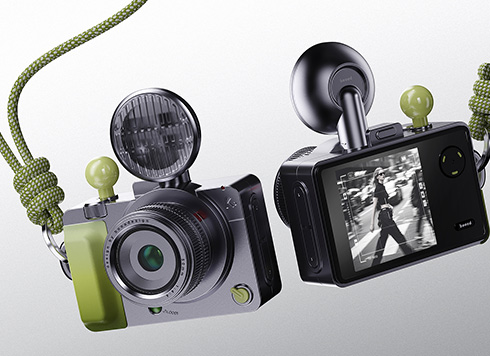 EDC·Trendy Camera Product Design: Form Follows Emotion
EDC Toy Camera: Braun-inspired retro design ...
-
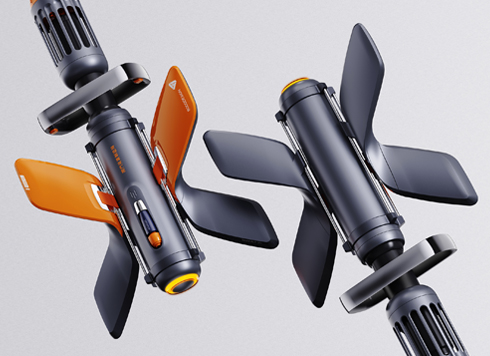 Product Design of Children's "Bubble Rocket" Underwater Thruster
Inspired by "Octonauts + Space", kids' "Bub ...
-
 Design of Adaptive Intelligent High-Altitude Shuttle Transport Robot
Smart rural shuttle bot: Streamlined, weath ...
-
 "Effortless" Exoskeleton Wear: Unleash Ultimate Freedom in the Sea
"Unfelt Wearability" & "Bionic Power" redef ...
-
After VR panorama delivery, why does the mobile view drift and why do hotspots misalign—which step usually hides the problem?
Date: Sep 20, 2026 Read: 5
-
Park plaza and street greening: tree crowns look thin up close—switch to 3D models first or unify leaf color first?
Date: Sep 19, 2026 Read: 9
-
WebGL product 3D display: metal and glass keep looking like plastic—bake environment maps first or use real-time reflections to avoid rework?
Date: Sep 18, 2026 Read: 15
-
When the CAD site plan and site photos don't match for factory landscape 3D modeling, which source should drive the model to avoid rework?
Date: Sep 17, 2026 Read: 14
-
Mini Program 3D display: the product goes black when rotated to the back—is the issue usually in baking or lighting layout?
Date: Sep 16, 2026 Read: 18