


A Beijing company's website just launched and the client says on WeChat that searching the company name returns nothing—should we explain first or complete the pages first?
Conclusion: If a Beijing company’s website has just launched and a client cannot find the full company name in search, there is no need to rush into a redesign, nor should you only reply “wait for Baidu to index it.” Based on 2026 Beijing project delivery experience, the more reliable order is: first check whether robots.txt allows crawling, whether the sitemap opens, whether the ICP filing entity matches the full company name shown on the page, and whether core pages have readable body text; once these four checks pass, submit to Baidu Search Resource Platform and point the WeChat official account menu and map listings to the website. When filing and pages are complete, brand terms commonly appear in 2–6 weeks; if they still cannot be found after 6 weeks, then check domain history and content quality. Buying “fast indexing” is not a solution.
When a client searches the full company name, why does someone else often appear first
Baidu indexing broadly goes through discovery, crawling, indexing, and ranking, and a new site will not enter results on launch day. Beijing’s client structure amplifies this: there are many headquarters-type companies and suppliers to central state-owned enterprises and public institutions, and procurement staff and bosses are used to first searching the full company name to verify the entity, then searching “Beijing + service” to assess capability, and finally checking maps and WeChat official accounts. Before the official website appears, clients see Qichacha, recruitment sites, platform stores, or competitor pages—effectively someone else has written the company introduction for you.
Being indexed does not mean ranking high, but if you are not indexed, clients do not even have a chance to compare. This is more obvious in scenarios such as bidding, supplier onboarding, and client factory audits: when materials say “check the official website,” being two weeks late may mean missing the deadline.
- Treating ICP filing as an indexing switch: Filing addresses entity compliance, not crawling and indexing; this is a common misjudgment for new sites.
- Treating submission as an indexing result: Submitting a sitemap only helps pages be discovered earlier; it does not mean indexing takes effect the same day.
- Treating bought backlinks as a shortcut: It may bring crawling in the short term, but it may also bring spam links, and cleanup takes more time than the original submission.
First distinguish “not yet our turn” from “being blocked”: a four-layer check
When a new site cannot be found, the cause is usually not the design mockup. Check in a “hard constraints first, soft factors later” order: rule out technical blocking first, then look at entity, content, and entry points. If the order is reversed, it is easy to spend money on backlinks while missing a site-wide robots block.
- Crawlability layer: Whether robots.txt allows crawling, whether the sitemap opens normally, whether the homepage and core pages return normal status, and whether they open directly on mobile.
- Entity layer: Whether the ICP filing entity, the full company name on the page, the business license name, and the filing information in the footer match. An abbreviation can go in a subtitle, but it should not replace the full name.
- Content layer: Whether each core page has readable text, whether products, services, and cases can be understood, and whether images have alt text. A homepage with only images and animation lacks indexable content after crawling.
- Entry layer: Whether the sitemap has been submitted on Baidu Search Resource Platform, and whether the WeChat official account menu, map listings, and platform stores have entries pointing to the official website.
The first two layers are about “whether you are blocked”; the last two are about “whether you are understood and found.” Use Baidu Search Resource Platform’s public documentation and MIIT filing requirements as the standard, and do not trust non-official “indexing channels.”
Waiting for natural indexing vs. proactive submission: the difference is cost and timeline
The two are not opposites; the difference lies in effort, timeline, and controllability. Waiting for natural indexing suits cases where pages are not complete and clients are not yet searching the company name; proactive submission suits cases where filing is complete, core pages are complete, and clients have begun reporting that they cannot find the site. The typical experience range for new-site brand terms in Beijing is 2–6 weeks; generic industry terms take longer, commonly starting at 3–6 months, affected by competition and content update cadence.
- Waiting for natural indexing: Low cost and no extra tools, but the timeline is uncertain; repeatedly changing pages can slow crawling. Suitable for the stage just after launch when content is still being added.
- Proactive submission plus basic optimization: Prepare a sitemap, core page text, consistent entity information, and a small number of real entry points; the timeline may be shortened, but no specific number of days is promised. Suitable when a bid, factory audit, or partnership requires checking the official website beforehand.
- Not recommended: Buying “fast indexing” or “guaranteed first-page placement,” or using bulk backlinks to push brand terms; the common cost is spam backlinks and pages being demoted.
When budget is limited, first complete four types of pages—homepage, product/service pages, About Us, and Contact Us—before submitting. The typical experience range for a basic display website in Beijing is RMB 15,000–40,000, with a timeline of 3–6 weeks; when ICP filing, content organization, and map listings are included, the timeline often adds another 1–2 weeks. This range is only for judging whether the investment is reasonable, not a quotation commitment.
On the delivery site: on day three after launch, the boss asks “why still can’t we be found?”
A common constraint is: a budget around RMB 20,000, launch in three weeks, the client can provide only a business license and a few product images, and on day three after launch the boss asks on WeChat while the client is also waiting for an answer. At this point, the move is not to add animation first, but to put the full company name in the homepage title and footer, display the filing number according to the rules, submit the sitemap, and point the WeChat official account menu and map listings to the official website; give the client a range rather than a date.
As a result, brand terms commonly begin to appear on days 10–20, and what the client opens is entity information they can verify, not a homepage whose text cannot be read. There is also rework: in one version, the footer only had the abbreviation and the filing number did not point to the filing system; the client searched using the full name on the business license and could not match it, so the title, footer, and About Us were later changed in three places, causing about a one-week delay. Such rework is concentrated in the title, footer, and About Us—a typical range—and checking once before launch is easier than fixing after launch.
When you can wait, and when it must be handled before launch
Set the boundaries first: if clients do not search the company name before cooperating, and business mainly comes from offline referrals or platform stores, slower indexing does not affect closing, and there is no need to add budget for “being indexed within a few days”; but when bid documents require the official website to be searchable, clients explicitly report that they cannot find it, or the brand-term results page is filled with competitors or platform stores, indexing cannot be delayed and must be handled before launch.
- Can wait: The official website has been live for 1–2 weeks, content is still being added, and clients mainly come from WeChat and existing customers.
- No need to spend extra on indexing: A one-page site used only for formal review, no ongoing content maintenance plan, and clients do not find suppliers through search.
- Must handle in advance: Clients have reported that they cannot find it, the official website must be checked before a bid deadline, or third-party information is outdated and the official website is absent.
The qualifying standard is not complicated: when searching the full company name, the official website can appear in the results; the title and description make clear which company it is; and after clicking through, the entity, address, and contact information match. Meet these three points before discussing rankings and traffic.
Frequently asked questions
For a new Beijing company website, how long does it usually take for Baidu to find the full company name?
Based on 2026 delivery experience, when filing and pages are complete, brand terms commonly appear in 2–6 weeks; if there is still no result after 6 weeks, first check robots, sitemap, and entity consistency, then consider adding content.
The client is pushing for it to be searchable—should we buy a “fast indexing” service?
Not recommended. Such services mostly rely on backlinks or bulk submission actions, cannot guarantee results, and may bring spam-link risk; official submission and page readability are more reliable first steps.
If the page title only uses the abbreviation but the business license has the full name, will that affect being found?
It increases verification cost. When clients search the full name, keep the page title, footer filing entity, and business license name as consistent as possible; the abbreviation can go in a subtitle, but do not use only the abbreviation.
If the official website is not indexed, should we add page content first or submit first?
First ensure core pages have readable body text and entity information, then submit the sitemap. If the order is reversed and the pages are all images, crawling after submission still cannot obtain indexable content—equivalent to submitting for nothing.
The official website has ICP filing, so why can’t Baidu find it?
Filing only shows that the entity is compliant; it does not equal indexing. You also need to check whether robots allows crawling, whether the sitemap has been submitted, whether pages have readable body text, and whether the domain has historical issues.
First run through the four-layer check: crawlable, entity-consistent, page-readable, and entry-available; then submit and observe for 2–6 weeks. If the client explicitly needs to check the official website or a bid is imminent, put the checks and submission before launch—do not wait for the client to ask on WeChat. For a purely display website where clients do not search the company name, there is no need to add extra budget for indexing.
-
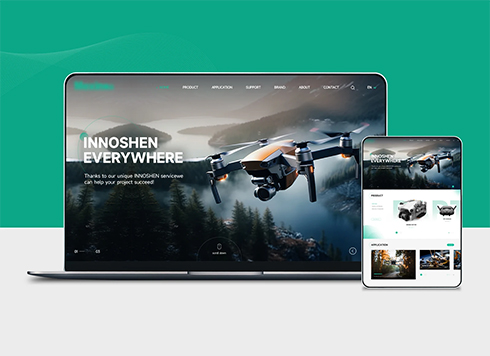 Drone Accessories Company Website Development
Incorporating gray as an accent with the pr ...
-
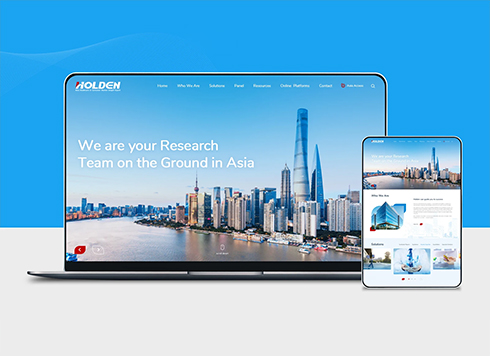 Professional International Research Service Agency Website Construction
This project serves a company with internat ...
-
 The Construction of Group Websites for Asset Operation and Digital Services
This project is to create a website for a c ...
-
 Thermal Test Equipment Website Construction
Founded in 2022, this tech company focuses ...
-
Fuzhou company website: peers say “served hundreds of companies,” but we’re only three years old—will leaving that number blank make clients think we’ve never done projects?
Date: Nov 15, 2026 Read: 12
-
A Xi'an company is applying to become an institute supplier. Procurement asks on the phone, “What level is your confidentiality qualification?” The website says nothing—should we add a line?
Date: Nov 14, 2026 Read: 17
-
Should You Pay the Final Balance Before Getting the Domain and Backend Account for a Company Website in Hefei?
Date: Nov 13, 2026 Read: 24
-
Should a Jinan company sign a website deal when “top of Baidu within a year” is only in the proposal, not the contract?
Date: Nov 12, 2026 Read: 20
-
After a company website redesign in Zhengzhou, Baidu still lists old product pages that open blank—will customers think the company is gone?
Date: Nov 11, 2026 Read: 43