



Should You Pay the Final Balance Before Getting the Domain and Backend Account for a Company Website in Hefei?
When discussing a company official website in Hefei, if the other party requires the final balance to be settled before handing over the domain and backend account, this order is not necessarily abnormal, but it depends on which step the contract defines as the final payment milestone. A more reliable approach is to be able to verify three things under the company’s name before paying the last installment: the domain registrant, the cloud hosting account, and the ICP filing information. Based on local project delivery practices in 2026, a small or medium-sized showcase official website commonly uses 3 to 4 payment stages, and the final payment ratio typically falls within the 10% to 20% experience range. Requests for full payment before scheduling are more common in small orders with a lower total price and a shorter timeline; this cannot be broadly called a trap, but it should not be accepted by default either.
For a company website in Hefei, how should payment milestones match deliverables?
Website-building providers in Hefei roughly fall into three types: local internet companies, studios with two or three people, and agents or sales representatives of non-local platforms in Hefei. The three differ considerably in quotation structure and collection methods. Based on local project delivery practices in 2026, the total price for a small or medium-sized showcase official website (5 to 15 pages, including mobile adaptation and basic indexing setup) typically falls within the RMB 8,000 to RMB 30,000 experience range, and payment is mainly staged.
The key to staging lies in what each payment corresponds to, not how many installments there are. A contract also called 'three-stage payment' may say '50% on signing, 30% on design confirmation, 20% on launch' in one case, and '50% on signing, 30% after 30 days, 20% after 60 days' in another. The latter follows the calendar, while the former follows deliverables, and the difference is significant when problems arise.
- Signing/start payment: commonly 30% to 50%, corresponding to locking the schedule and confirming the section structure and homepage direction draft;
- Design confirmation payment: commonly 20% to 30%, corresponding to confirmation of the complete design draft for the homepage plus at least one inner page;
- Internal test delivery payment: commonly 15% to 20%, corresponding to an internal test URL that can be opened and clicked through;
- Launch acceptance final payment: commonly 10% to 20%, corresponding to domain resolution being in place, the backend being loginable, and the ICP filing entity being consistent.
These are all experience ranges, not industry standards. For orders with a high degree of customization, copy that needs to be rewritten, or real-scene photos that need to be taken, the final payment is usually pushed later; conversely, for template-based orders costing a few thousand yuan, service providers are more inclined to collect the full amount at once, which is not uncommon in small-budget projects.
Delivery context: when budget and timeline are tight, how should payment be split?
A common constraint in Hefei projects: the client’s budget is capped at RMB 10,000 to RMB 20,000, and only three weeks are left because they need to catch an industry exhibition or a customer factory audit; the only materials on hand are scanned copies of an old brochure and a few workshop photos taken with a mobile phone, and the product categories still need to be sorted out on site. If such an order is paid in full at once, by the time the design draft stage reveals that six product categories need to be merged into four, there is no bargaining room for revisions. The common cost is a delay of one to two weeks, or launching with the original categories and then reworking and rearranging them during the operation stage.
A more reliable approach is to split payment into four stages and make the final payment hinge on a point you can verify yourself, such as the domain being transferred to the company’s name and the backend account password being in hand. At signing, write 'which step is completed' into the contract, rather than only 'pay after launch.' The cost of doing this is spending an extra half day checking the terms item by item before signing; the result is that when the design stage reveals that categories need to be merged, there is still room for discussion, instead of having only verbal urging left because the money has already been paid in full.
Full payment, high down payment, and staged payment: how do the three compare?
Not every order is worth negotiating four-stage payment. The following comparison is based on applicable parties, common budget ranges, and main risks; all figures are experience ranges, and the specific terms are subject to mutual agreement.
- One-time full payment: more common for template sites or single-page sites with a total price of RMB 5,000 to RMB 10,000. It suits cases where materials are complete, requirements can be explained in one sentence, and the goal is simply to have a page as soon as possible; the main risk is limited room for revisions, and the cost of stopping is relatively high when the direction does not match expectations.
- High down payment plus a single final payment (e.g., 70% + 30%): a common practice among small local studios, suitable for projects with a total price of RMB 10,000 to RMB 20,000 and a timeline of 3 to 4 weeks. What needs to be confirmed is whether the deliverables corresponding to the final payment are clearly written, not just the four words 'pay after launch'.
- Staged payment (3 to 4 stages): suitable for projects with a total price above RMB 20,000 that require copywriting, photo shoots, multiple product lines, or multiple languages, with a timeline commonly of 6 to 10 weeks. Communication costs are slightly higher, but there is more room for adjustment midway.
Conversely, if a service provider still requires more than 80% payment at signing for a customized project above RMB 30,000 and is unwilling to write acceptance standards and termination clauses into the contract, this payment method is worth another round of negotiation.
When is staged payment suitable, and when is it not worth worrying about?
The boundary should be stated clearly: for a small site with a total price of a few thousand yuan, no more than 5 pages, ready-made materials, and a goal of going live within two weeks, there is no need to push hard for staged payment, because the time spent negotiating and chasing progress may exceed the risk saved. Likewise, if the other party is a long-term partner with a complete delivery record, payment terms can be appropriately relaxed, and energy can be put into the next phase of content.
Two types require caution: first, projects that require original copywriting and real-scene photography, where the workload and number of revisions are difficult to estimate, and additional requests after full payment can easily turn into a new quotation; second, official websites that need to integrate with internal systems or have multilingual versions, where the probability of interface and translation rework is high, and the final payment ratio is recommended to be no lower than 10%.
Common questions
For a company website in Hefei, what percentage is the final payment usually?
Based on common local practices in 2026, the final payment for a small or medium-sized showcase official website typically falls within the 10% to 20% experience range, corresponding to launch acceptance and account handover; if the final payment is too low, the other party has weak incentive to perform, while if it is too high, the risk shifts to your side.
When is it more reliable to hand over the domain and cloud hosting account?
It is advisable to verify before paying the last installment: the domain registrant is the company rather than an individual, the cloud hosting is registered with a company email address, and the ICP filing entity is consistent with the business license. Once you can check these three items yourself, then decide whether to pay the final balance.
The other party says to pay half first but will not issue an invoice. Is that acceptable?
It is not advisable to accept by default. Invoicing relates to whether the contracting entity is legitimate. Before paying, confirm what kind of invoice the other party can issue and how the tax rate is calculated; this can avoid later reconciliation and accounting trouble.
If I hire a non-local platform to build a Hefei official website, is the payment rhythm different?
The common differences lie in communication and handover: non-local platforms mostly collect payment according to package milestones, and the account ownership and subsequent revision process should be clarified in advance; there are often fewer steps for on-site verification in person.
If you are negotiating an official website project in Hefei, you can first do three things: break the total price into milestones and write them into the contract, specify the deliverables corresponding to each milestone, and verify that the domain and cloud hosting registrants are under the company’s name. Based on corporate project delivery practices, these three steps usually reduce later rework and delays more than cutting another RMB 1,000 from the price; however, for template sites with a budget under RMB 10,000 that only need to go live as soon as possible, there is no need to apply this process.
-
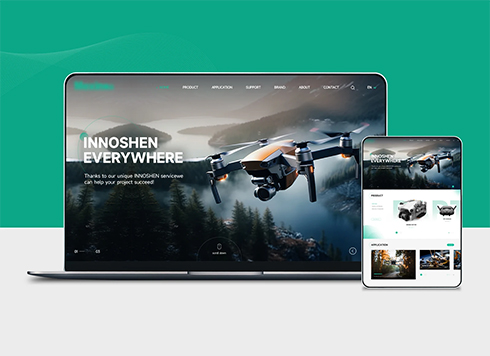 Drone Accessories Company Website Development
Incorporating gray as an accent with the pr ...
-
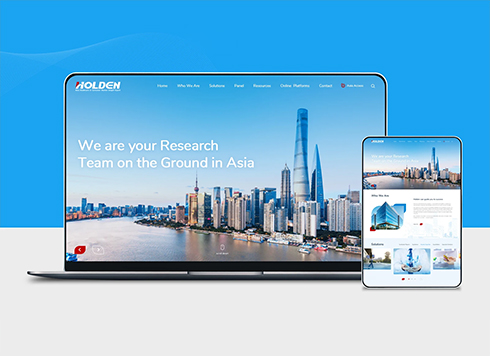 Professional International Research Service Agency Website Construction
This project serves a company with internat ...
-
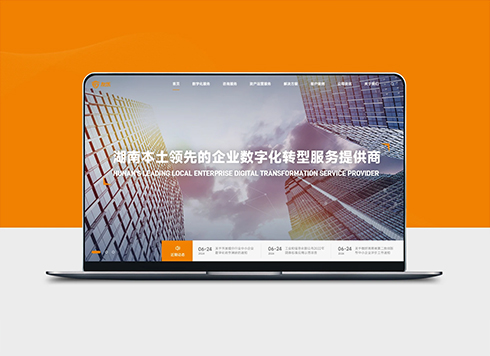 The Construction of Group Websites for Asset Operation and Digital Services
This project is to create a website for a c ...
-
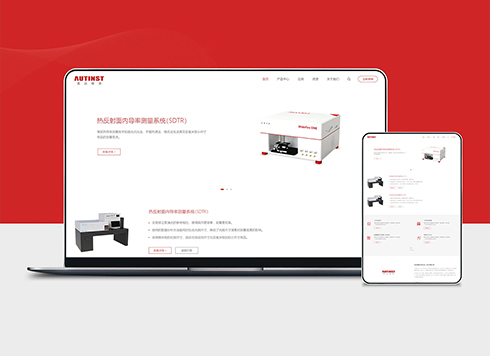 Thermal Test Equipment Website Construction
Founded in 2022, this tech company focuses ...
-
Small Company Website in Hefei: Is a Template Site Good Enough? Is Local Custom Development Worth the Extra Cost?
Date: Aug 26, 2026 Read: 187
-
Should a Jinan company sign a website deal when “top of Baidu within a year” is only in the proposal, not the contract?
Date: Nov 12, 2026 Read: 12
-
After a company website redesign in Zhengzhou, Baidu still lists old product pages that open blank—will customers think the company is gone?
Date: Nov 11, 2026 Read: 24
-
Is a price calculator reliable on a Changsha company website when customers ask 'how much does this equipment cost' first?
Date: Nov 10, 2026 Read: 27
-
A Wuxi company website product page shared to a WeChat customer group shows only a URL: complete page metadata first, or get a verified official account first?
Date: Nov 9, 2026 Read: 29