


A Wuxi company website product page shared to a WeChat customer group shows only a URL: complete page metadata first, or get a verified official account first?
Bottom line first: When a customer forwards a product page from a Wuxi company website in WeChat and the card is reduced to a single URL, it is often not because the website was built badly. More often, the page has not supplied a crawlable title, description, and thumbnail, or the link goes through a short link or a parameterized redirect. Based on 2026 delivery experience on Wuxi projects, completing the page metadata first usually covers most scenarios; whether to also get a verified official account and connect the WeChat JS-SDK depends on whether customers really forward links in WeChat often. There is no need to add development work at the very start.
The card shows only a URL: check the crawlable layer and the link layer first
When a page is forwarded to a friend or a group in WeChat, the card normally needs to read a title, a one-sentence description, and a small image. If the page title is rendered only by script, the lead image is a CSS background image, or the description tag is missing, the crawl will come up empty. The other type of problem is in the link itself: with short links, landing pages carrying a long string of parameters, or intermediate pages that redirect again, what WeChat reads may not be the final page.
- Title layer: the title is empty, or it appears only after front-end scripts finish running;
- Image layer: the lead image is a background image, or the image has hotlink protection enabled, or it uses a format not supported in some environments;
- Description layer: the description tag is missing, or it is written as keyword stuffing;
- Link layer: what is forwarded is a short link or a link with parameters, not the final page address;
- Size layer: an oversized lead image causes the crawl to time out; in practice, keeping it in the typical range from tens of KB to 100+ KB is more stable.
For troubleshooting order, first check whether the page source contains a title and description, then check whether the link goes around in a circle. If you only change page styles without checking the link, it is common for the page to look fine on a computer while WeChat still shows only the URL.
Completing page metadata vs. getting a verified official account: the difference is in prerequisites and controllability
Both paths can make the card look better, but the cost and stability differ. Option A is to complete the title, description, and lead image so that WeChat crawls them under the default rules; Option B is to get a verified official account and connect the WeChat JS-SDK so that the API actively specifies the share information. For most Wuxi enterprise websites, doing A first and then deciding whether B is needed is usually more reliable.
- Option A: complete page metadata only
- Prerequisites: the domain has completed ICP filing and the page can be accessed publicly;
- Scope of changes: title and description tags; replace the lead image with a common image format that can be crawled;
- Typical timeline: half a day to 1 working day;
- Typical cost range: often handled alongside other work; when done separately, commonly under a few hundred yuan;
- Stability: covers most everyday forwarding; there may be fluctuations when crawling rules are adjusted;
- Who it suits: customers forward occasionally, and the website is mainly for display and lead capture.
- Option B: get a verified official account and connect the JS-SDK
- Prerequisites: a verified official account, the domain configured as a JS interface security domain, and a server that can generate signatures;
- Scope of changes: add API calls on the page and a signature API on the backend, requiring developer support;
- Typical timeline: 1 to 3 working days; if official account permissions are not in place, it can take noticeably longer;
- Typical cost range: a few hundred to two or three thousand yuan, depending on whether there is already a verified official account and development resources;
- Stability: card information is controllable, and settings can be made separately for sharing with friends and sharing to Moments;
- Who it suits: companies whose customers mainly forward links in WeChat and whose sales relies on forwarding for lead generation.
The difference here is not technical difficulty but prerequisites: if any one of the verified official account, administrator permissions, or development schedule is missing, Option B turns from a few days into waiting on a process. Option A does not depend on verification, but the description and image are not fully controllable.
In delivery, the common blockers are assets and official account permissions, not the technology
A common constraint is this: the website is already live, the official account is managed by admin or marketing, and the AppID and backend permissions cannot be obtained right away; the only assets are a brochure PDF, with small images, watermarks, and colors converted from print; the client needs to take it to a meeting next week. When Xiyue Company handles this type of project in Wuxi, it usually starts with the layer that can take effect immediately: complete the title and description, compress real photos of the workshop or product into a near-square image, and ask the company to confirm the official account verification status and who the administrator is.
The usual result is that the cards for product pages and About Us pages return to normal first, and forwarding in customer groups no longer shows only a URL. The trade-off is that if the JS-SDK is connected later, it commonly requires another round of copy changes and testing, adding three to seven working days before and after. If the lead image initially uses a compressed image from the brochure, it will need to be changed again when real photos are available later. Before delivery, check three things: whether the official account is verified, who holds the administrator role, and whether usable original photos exist. Missing any one of them affects the final result. This waiting is a typical range in projects, not an isolated case.
When it applies and when it does not
There is only one precondition that makes this worth doing: the link really will be forwarded. For companies whose customer communication is mainly by phone and at trade shows, it is more practical to put budget into product pages and case study pages.
- Suitable: customers mainly communicate in WeChat, and quotes, proposals, and website links circulate in groups; sales or the boss often forwards pages; the website is responsible for initial trust building, and the card is the first impression.
- Not necessary: customers mainly come from trade shows, phone calls, or platform stores, and WeChat forwarding is rare; the website is only for bidding or filing purposes and no one forwards it for a year; there is no verified official account and no plan to get one; at that point, completing the title and lead image is enough, and there is no need to connect the API specifically.
The boundary in one sentence: as long as links will be forwarded into WeChat, the share card is part of the website's basic infrastructure; pages that are only found in search engines and almost never enter WeChat do not need separate investment for this.
Frequently asked questions
If we only complete the title and lead image without connecting to the WeChat API, will the card display reliably?
It can cover most everyday forwarding, and the title and lead image can usually be pulled; the description and image are not fully controllable, and there may be fluctuations when the page structure changes significantly or crawling rules are adjusted.
If the official account is not verified, should we get it verified first or fix the page first?
Fix the page first. Verification takes time and entity materials, while the page title, description, and lead image can be done first; after verification, evaluate whether to connect the API, avoiding blocking launch on a process.
If the first screen after opening the card does not match, will customers think the wrong link was forwarded?
It will increase doubt. If the card says product and Wuxi, the first screen after opening should also show similar products, a contact entry, and entity information; it is more important that the title, description, thumbnail, and landing first screen match.
After changing the domain or redesigning the site, how long will it take for old cards to update?
After setting up a redirect for the old address, cards will gradually update as they are re-crawled, typically taking a few days to two weeks; if urgent, forward the final page link first and have sales use a consistent message.
If a Wuxi company website has recently gone live and links are already being forwarded in customer groups, it is advisable to run one round of real forwarding tests first: one Android phone and one iOS phone, forwarding once to a friend and once to a group, and checking the title, description, lead image, and first screen after opening one by one. Most issues can be resolved at the page layer; only when customers rely heavily on WeChat forwarding and a verified official account already exists should connecting the JS-SDK be considered; otherwise, the input and return are not likely to be proportionate.
-
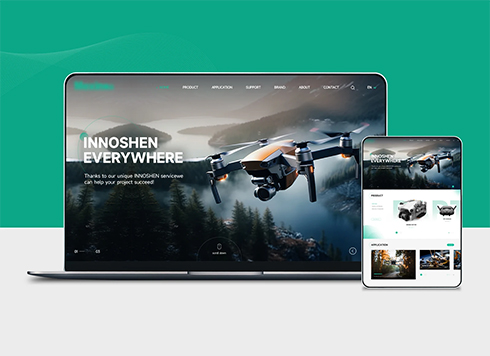 Drone Accessories Company Website Development
Incorporating gray as an accent with the pr ...
-
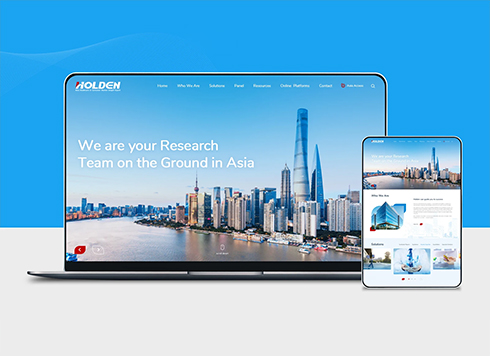 Professional International Research Service Agency Website Construction
This project serves a company with internat ...
-
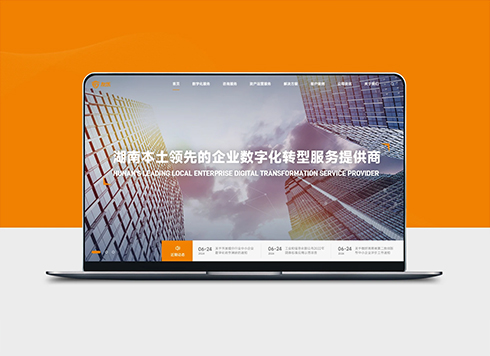 The Construction of Group Websites for Asset Operation and Digital Services
This project is to create a website for a c ...
-
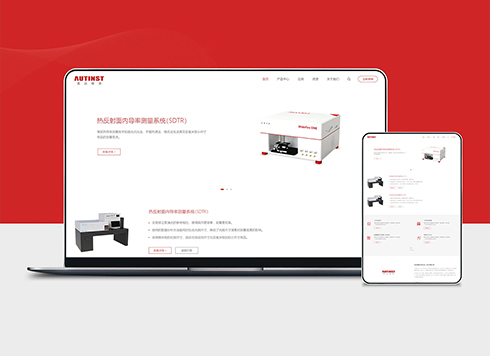 Thermal Test Equipment Website Construction
Founded in 2022, this tech company focuses ...
-
Wuxi Owners Building a Website: Most Customers Are in Jiangyin and Yixing—What's the Real Difference Between Making Two Separate City Pages?
Date: Sep 30, 2026 Read: 92
-
Qingdao company website with 20–30% Korean customers: what is the difference between translating the whole site into Korean and starting with a few pages?
Date: Nov 8, 2026 Read: 13
-
Ningbo company website: when customers open a product page in WeChat and have to pinch-zoom, should you adjust the template first or rebuild from scratch?
Date: Nov 7, 2026 Read: 12
-
Tianjin company website address is correct, but Baidu Maps sends customers to another park gate—should we fix the map listing or the page first?
Date: Nov 6, 2026 Read: 23
-
Nanjing company website: Software Valley clients want system cases, Jiangning clients want production lines—does using one solution page make you look out of touch?
Date: Nov 5, 2026 Read: 28