



Tianjin company website address is correct, but Baidu Maps sends customers to another park gate—should we fix the map listing or the page first?
Start with the conclusion: If customers mainly visit in person (factory tours, showroom visits, sample delivery, factory audits), submit the Baidu Maps listing first and update the website text on the same day; if customers mainly call or leave online leads, update the website page first and add the map update within the same week. Both sides need to align eventually. The order affects whether customers take a detour during those few days. Based on 2026 Tianjin local project delivery experience, first confirm the 'full legal name on the business license + the gate customers actually arrive at', then submit separately. This is less trouble than repeatedly changing the text.
When the address does not match, what customers really care about is not textual precision
When customers navigate over, they judge three things: whether the entity matches, whether the location is reachable, and whether someone answers the phone. No matter how neatly the website address is written, if the map pin is at another gate in the park and the customer gets off and walks for more than ten minutes, the experience suffers. Conversely, if the address is written a bit loosely but the navigation point is accurate and the gatekeeper knows the company name, customers usually do not mind.
Tianjin park structures easily amplify this issue: many parks in Xiqing, Wuqing, and Binhai have multiple entrances; house numbers are arranged by road, and the gate actually used may not be on the main-road side. Writing 'No. 8, XX Road' on the website is not wrong, but customers entering through the gate indicated by navigation may need to go around to the other side first. So the criterion is not whether the wording looks polished, but whether customers can arrive in one trip using the address you provide and find the right contact after arrival.
- Qualified line: Searching the company’s full name on the map shows a listing; the navigation endpoint is the gate customers actually use; the phone number on the page and the map phone number are the same.
- Common counterexamples: The website says Binhai but the map pin is in the urban area; only the park name is written without the building; the map phone number is still the mobile number of a salesperson who has left.
- Not a problem: The website uses the full name while the map shows an abbreviation, as long as customers can match the two, it usually does not affect judgment.
Fix the map first or the website first: two paths based on customer structure
There is no universal order; it depends on whether customers 'walk to the door' or 'call first'. The comparison below is based on common situations in 2026 Tianjin local projects. Costs and timelines are experience ranges; actual results depend on platform review and the amount of change.
- Mainly visiting customers (factories, showrooms, stores, factory audits, or sample delivery): fix the map listing first. Reason: the customer’s last step is often navigation; if the map is wrong, earlier efforts are easily wasted. Timeline: after submission, map listing review has a typical range of 1 to 7 business days; incomplete materials may be returned for resubmission; website address changes can usually be made the same day. Cost: platform self-service listing is generally free; using an agent has an experience range of several hundred to just over RMB 1,000.
- Mainly online customers (phone inquiries, form leads, WeChat contact): fix the website first. Reason: customers look at the page before deciding whether to come; the page address and entity information are the checkpoint. Timeline: website text changes can be completed within half a day; map synchronization can be scheduled in the same week. Cost: most is covered by website maintenance; if page rework is involved, it is calculated separately by the amount of change.
- Currently relocating and using both locations: keep a note on the website saying 'the original site has moved; the new site receives visitors'. A typical range is to keep it for 1 to 3 months, then remove it after customers and deliveries have switched over.
Note that a map listing solves 'finding the gate', not 'trust'. If the map is accurate but the website does not explain the business clearly, customers may still hesitate at the door. The two tasks run in parallel; they do not replace each other.
A practical 'three-layer alignment' checklist
Why split by layer? Because address problems are often not one wrong spot but several places each doing their own thing: one set on the website, one on the map, one on business cards and brochures. Checking by layer prevents omissions.
- Entity layer: The full business-license name, external abbreviation, and unified social credit code (the page may show only part) should correspond across the website, map, and contract header. If the abbreviation clashes with peers, write the full name in the footer and About Us.
- Location layer: City + district + park/building + house number, with the navigation point clearly set to 'the gate customers actually arrive at'. For factories, write the factory gate; for offices, the lobby entrance; for coworking spaces, the floor and reception.
- Contact layer: Keep the map phone, website phone, and contact person’s WeChat consistent, and avoid a departed salesperson’s number still hanging on the map. If the switchboard and business lines are separate, state clearly on the page whom to contact.
- Time layer: After relocation, do not delete the old address completely right away. Keep a relocation note for a period, as both customers and deliveries need a buffer.
The test for each layer is simple: Take a customer who has never been to Tianjin, ask them to navigate once using only the website information, and see whether they can arrive and contact someone after arrival. If yes, that layer passes. If not, fix that layer first; there is no need to wait for a full-site redesign.
Delivery site: inconspicuous park gate numbers, returned map reviews, and where the cost falls
In a park project in Wuqing, Tianjin, this type of work often gets stuck on materials. The client is in Wuqing or the Xiqing Development Zone; the park has north and south gates; the website shows the main-road house number, but actual reception is on the other side; the facade photo in the client’s hands was taken two years ago, and the lease contract is with the admin team. The approach was to first have the client confirm 'which gate customers should navigate to', collect the facade photo, lease or property certificate in one go, then submit the map listing; at the same time, change the website address to 'park name + building + reception gate' and add a sentence on the page explaining arrival by car and subway. The result was fewer returned map reviews and one less round of revisions.
Conversely, if you go live without checking, a common cost is that brochures and business cards are already printed, and the address can only be fixed with stickers or a reprint, adding an experience range of several hundred to RMB 1,000–2,000. A bigger problem is that customers go to the old address and find nothing, so sales has to reschedule. In our Tianjin corporate website delivery, we usually put address verification in the first-round document checklist after signing, precisely to avoid this rework. On budget, simply aligning the address and map information usually falls within an experience range of several hundred to RMB 2,000; if a full-site redesign or separate pages for multiple office locations are involved, it is calculated separately by page volume.
Applicable scenarios and boundaries
Suitable to do: businesses with physical visit needs (factories, showrooms, stores, offices); customers mainly from Tianjin and the Beijing-Tianjin-Hebei area; recently relocated, newly opened office, or newly added factory; existing old map listings that need updating. In these cases, the return on aligning address and map is usually clear.
No need to rush: purely online services with no customer visits; businesses handling only one or two temporary projects without stable reception capacity; coworking spaces with frequently changing offices—rather than repeatedly changing listings, it is better to state on the page 'visits by appointment only; we will send the location after confirmation' and make the uncertainty clear. The boundary can be remembered in one sentence: A map listing is only responsible for helping customers find the gate; website content is responsible for making customers willing to walk in. Changing only the address without improving the business description moves the problem later; it does not make it disappear.
Common questions
A Tianjin company has moved, but Baidu Maps still shows the old address. Should the website or the map be changed first?
Look at the share of visiting customers: if visits dominate, submit the map first and update the website text the same day; if online inquiries dominate, change the website first and handle the map within the same week.
The company name on the map differs from the full business-license name. Will the review fail?
A common practice is to use the full business-license name for entity verification and an abbreviation as the map display name, but the website and contract header must match. If the difference is large, prepare explanatory materials before submitting.
The factory is in Binhai and the office is in the urban area. Which address should the website show?
Write the location customers actually visit, and add the other as an office or production address with a clear note on the purpose of each, so customers do not go to the wrong address.
Does a map listing cost money, and is using an agent reliable?
Platform self-service listing is generally free and can be submitted once materials are complete; using an agent has an experience range of several hundred to just over RMB 1,000, suitable for companies without time to prepare materials, but confirm that the account belongs to the company.
The park has north and south gates. Is the house number on the website enough?
Usually not. The house number is useful for deliveries and business registration, but customers navigating rely more on 'park name + building + reception gate'; adding a sentence on the page about which gate to enter and where to park is more helpful.
In action, you can first spend half a day on one thing: list the addresses and phone numbers on the website, map, and business cards side by side, and see whether the three match. If they do not, decide which side to change first based on the share of visiting customers; do not wait for a full-site redesign. One reminder: this approach suits Tianjin companies with physical reception needs. For purely online businesses or businesses with no customer visits, writing contact information clearly is more practical than polishing the address.
-
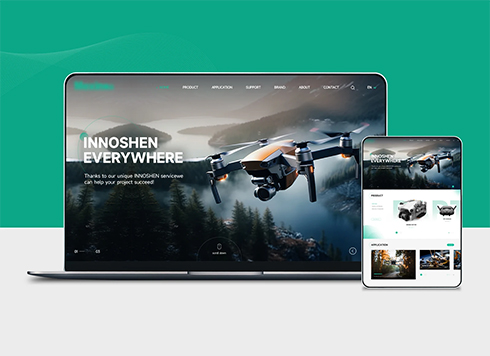 Drone Accessories Company Website Development
Incorporating gray as an accent with the pr ...
-
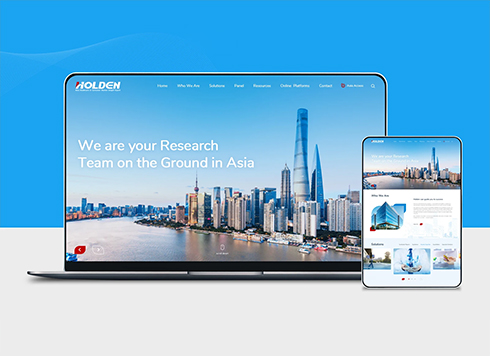 Professional International Research Service Agency Website Construction
This project serves a company with internat ...
-
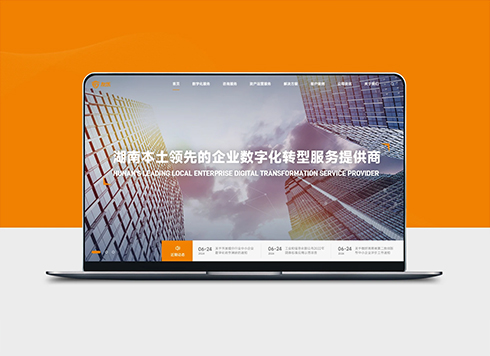 The Construction of Group Websites for Asset Operation and Digital Services
This project is to create a website for a c ...
-
 Thermal Test Equipment Website Construction
Founded in 2022, this tech company focuses ...
-
Can a Tianjin company's website address be changed directly to its new Hexi office while the business license is still in Binhai?
Date: Oct 17, 2026 Read: 71
-
Ningbo company website: when customers open a product page in WeChat and have to pinch-zoom, should you adjust the template first or rebuild from scratch?
Date: Nov 7, 2026 Read: 5
-
Nanjing company website: Software Valley clients want system cases, Jiangning clients want production lines—does using one solution page make you look out of touch?
Date: Nov 5, 2026 Read: 24
-
A Wuhan company website is three or four years old and a client says it looks dated before a meeting—should redesign budget go to the first screen or the case studies page?
Date: Nov 4, 2026 Read: 24
-
If a local studio and a remote platform both quote around RMB 20,000 in year one for a Hangzhou company website, which is less trouble when someone takes over in year two?
Date: Nov 3, 2026 Read: 28