


If a local studio and a remote platform both quote around RMB 20,000 in year one for a Hangzhou company website, which is less trouble when someone takes over in year two?
For a corporate website in Hangzhou, the year-one quotes from local studios and remote platforms often fall into a similar range (in experience, mostly RMB 10,000 to RMB 30,000–40,000). What really separates them is often not that number but three things: whose name the domain and cloud hosting accounts are under, who takes over content updates after launch, and who shows up to coordinate when there is a problem with ICP filing or entity information. The test is direct: if these three things can be written into the contract and a specific contact person can be named, a similar quote is a reasonable range; if they cannot be written in, a few thousand RMB saved in year one often has to be paid back later.
When quotes are close, first check who owns the accounts and deliverables
Local studios and remote platforms often overlap on year-one costs, especially in a city like Hangzhou where website supply is dense. The pages may look equally deliverable, but the division of labor after delivery differs a lot: some put the domain, cloud hosting, and ICP filing accounts under the service provider's name, leaving the company with only a backend account; others hand over the source code, accounts, and assets all at once. The former is easier now; the latter is easier over time. The trade-off depends on whether anyone inside the company is willing to take over updates.
According to common practice in 2026, items written and signed off in the acceptance checklist will cause much less friction when someone else takes over later. You do not need a technical background to judge: ask three questions — who is the domain registered to, whose name is on the cloud hosting real-name verification, and does the delivery list include source code or exportable content.
- Account ownership: The domain, cloud hosting, and ICP filing accounts should preferably be under the business license entity's name, not a personal mobile number or the service provider's account.
- Deliverables list: Source code or exportable data, original image assets, and backend account credentials should be checked off item by item at delivery.
- Contact person: Write a specific person and contact details into the contract; do not leave only a customer-service group chat.
Taking 'close enough' apart: check four dimensions
Comparing price alone easily distorts the picture, because the two sides are often quoting different amounts of work: one prices semi-custom work, the other template adaptation. A more stable approach is to fix four dimensions and check them item by item, giving each a verifiable pass line rather than saying expensive or cheap by feel.
- Response and communication radius: The pass line is being able to state who the contact is and how often they respond on normal business days. In Hangzhou, same-city teams can meet in person and come on site; remote teams rely mainly on group chat and phone. In experience, something that one local meeting can settle often takes one or two extra rounds of back-and-forth remotely.
- Ownership of deliverables: Domain, cloud hosting, ICP filing accounts, and source code or exportable data are under the client's name, with an account list attached at delivery.
- Revision and iteration rhythm: The contract should state how many rounds of structural drafts and visual drafts are included and how small changes after launch are billed. The experience range is 2–3 rounds for structural drafts and 2–3 rounds for visual drafts, with extra rounds listed separately.
- ICP filing and local compliance coordination: List in advance who submits and what materials the company must provide. For a Hangzhou company doing ICP filing, a common requirement is consistency among the entity, legal representative information, and domain real-name verification.
The first two determine whether you can get it back later; the last two determine whether daily use is smooth. Most disputes are not about ugly pages, but about the first two never appearing in the contract at all.
On the delivery site: the budget is fixed first, but assets are not ready
A common situation in projects: the budget is around RMB 20,000, the hope is to launch within six weeks, product photos are still waiting to be shot, and the boss wants to catch an exhibition. If you force the build according to renderings at this point, a full rework often follows. A safer approach is to set the column structure and mobile first screen first, use placeholders to run through the basic path, and replace images by position once the real shots arrive. The cost is one extra replacement round and one acceptance check, commonly a delay of one to two weeks, but much cheaper than tearing it down and redoing it.
In Hangzhou, e-commerce, livestreaming, and service companies especially tend to have assets that change repeatedly: product-detail screenshots, short-video covers, and host images mixed together, with inconsistent sizes and authorization. Before delivery, check the asset list first — whether there are original images, whether commercial-use authorization exists, and whether images can be provided at 2000 pixels or more. This can save a lot of later image-hunting time. Based on website and design delivery experience, projects with complete assets and projects with assets that keep dragging often differ by two to three weeks in total cycle; this is a typical range, not a precise promise.
Companies in different Hangzhou districts need their websites to do different jobs
Software and SaaS companies around Binjiang and Future Sci-Tech City use their websites more for trust endorsement and recruiting entry points. Pages need to be citable by search and AI answers; clear structure is more useful than flashy animation. E-commerce and livestreaming agencies in Yuhang and Linping often get customers from mobile and private messages; the mobile first screen and real cases matter more than a polished PC experience.
Manufacturing and foreign-trade factories in Xiaoshan and Qiantang need websites that can prove production capacity and product specifications; English sites, parameter pages, and factory-audit information are the focus. Service and trading companies in Shangcheng and Gongshu need customers to first verify the entity, address, and contact person. All are called 'a corporate website package,' but the workload for these four types of companies can commonly differ by nearly double. That is the real reason quotes may look similar while the actual content does not match.
Applicable scenarios and boundaries: what local studios and platform sites each handle
Start with the conclusion on boundaries: for Hangzhou companies whose customers are concentrated in the Yangtze River Delta, who need someone to come on site to coordinate assets or receive factory-audit visits, or whose websites are used for bidding and procurement registration, a team that can show up in person saves communication cost. If all you need is a display site for company introduction and contact details, and someone internally can update content, a self-service website platform or template site is enough; custom work is unnecessary.
- Local studio, semi-custom: experience range RMB 15,000 to RMB 40,000; typical cycle 4 to 8 weeks; suitable when you need one of case pages, parameter pages, or multilingual pages; the cost is that the company must assign people to confirm.
- Self-service or template platform: experience range from a few thousand RMB to just over RMB 10,000; cycle 1 to 3 weeks; suitable for launching a placeholder first, small content volume, and frequent updates; the cost is that layout and export are limited by the platform.
- Full custom development: commonly from RMB 40,000; cycle 8 to 14 weeks; suitable for interaction, membership, multilingual switching, or system integration needs; not suitable for a display site that only 'wants to look a bit better'.
Unfit situations should also be stated clearly: with a budget below RMB 10,000 but a requirement for multilingual pages plus an online inquiry system, usually only a template site can cover it first; forcing a custom quote will most likely lead to scope cuts midway. Conversely, forcing full custom development on a display site with only five or six pages usually means paying for scalability you will not use. In our Hangzhou projects, we usually align the budget against this set of boundaries first, then schedule delivery slots.
Frequently asked questions
Are local studios in Hangzhou generally more expensive than remote platforms?
Year-one costs often overlap. Local teams cost more in communication and on-site coordination; platforms are cheaper because of standardized templates. When comparing, include domain, hosting, ICP filing, and revision rounds; the gap is usually not as dramatic as the quote sheet suggests.
Does a corporate website have to be built by a Hangzhou local provider?
Not necessarily. When customers are mainly local and you need on-site shooting or visit reception, a local team saves communication. For a pure display site with internal content maintenance, a remote team or platform site can also work; the key is whose name the accounts and source code are under.
If I only want to change a paragraph or replace an image after launch, how long does it usually take?
If you have a small backend yourself, it can be done the same day. If it is handled by the service provider, according to common practice in 2026, simple changes usually take one to three business days; layout adjustments need to be scheduled according to the agreed rounds.
Can a site built by a remote platform be handed over to another team later?
Yes, provided the domain, cloud hosting, and ICP filing accounts are under the company's name, and you can obtain the source code or at least fully export the content. If only a platform backend account remains, changing teams usually means rebuilding the pages.
If you are comparing quotes, do one thing first: write the ownership of the domain, cloud hosting, ICP filing accounts, and source code, plus revision rounds, into a one-page checklist, send it to two quoting parties for separate confirmation, and only discuss price with those who can answer item by item. For a display site with a budget below RMB 10,000 and small content volume, it is also reasonable to launch first on a template platform; if you need to bid, undergo factory audits, or go multilingual, do not look only at the year-one quote.
-
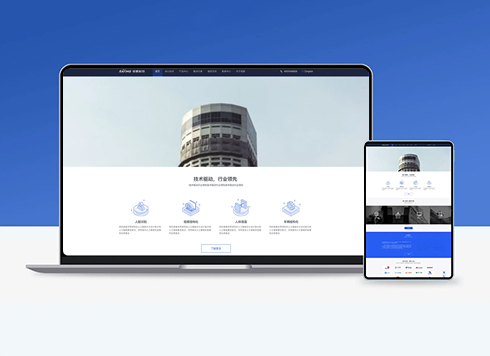 Website Development for Smart Hardware Device Companies
Founded in 2017 with a capital of 16.66 mil ...
-
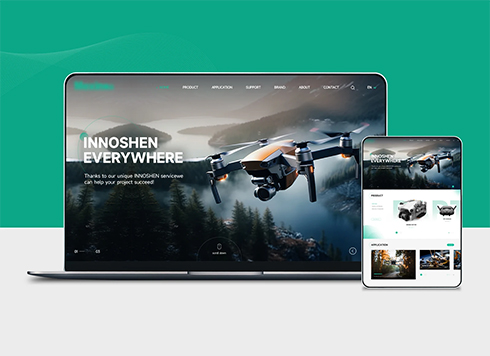 Drone Accessories Company Website Development
Incorporating gray as an accent with the pr ...
-
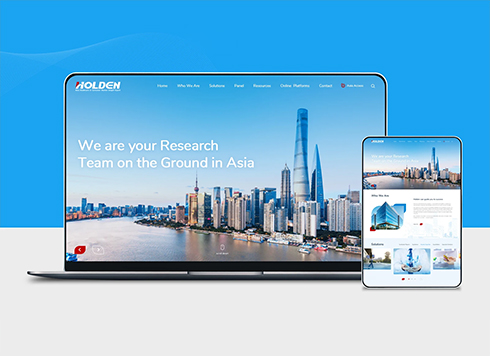 Professional International Research Service Agency Website Construction
This project serves a company with internat ...
-
 The Construction of Group Websites for Asset Operation and Digital Services
This project is to create a website for a c ...
-
Hangzhou Website Development Guide: How to Select and Build Your Corporate Website
Date: Jul 30, 2026 Read: 247
-
Will visitors from Douyin actually scroll past three large carousel images above the fold on a Hangzhou company website?
Date: Sep 24, 2026 Read: 151
-
In Chengdu, when a website quote only says “one enterprise website” and they push you to sign, what should you ask them to add before signing?
Date: Nov 2, 2026 Read: 11
-
A company registered in Kunshan with staff based in Suzhou Industrial Park: when clients ask 'where are you really?', is one address in the website footer enough?
Date: Nov 1, 2026 Read: 21
-
For a Chongqing company website, if the boss wants to launch first for just over RMB 10,000 and add materials later, will phase two cost more?
Date: Oct 31, 2026 Read: 29