Hangzhou Website Development Guide: How to Select and Build Your Corporate Website
Hangzhou Enterprise Website Building: From Needs Assessment to Implementation
In 2026, the core of building a corporate website for Hangzhou enterprises lies in matching the local industry ecosystem and user search paths. The common approach is: first clarify whether the business goal is brand display, lead collection, or online transactions, then choose between template sites or custom development, and finally obtain organic traffic through continuous optimization. Localization means considering the search habits of different industries in Hangzhou, such as manufacturing, e-commerce, and technology. For example, manufacturing users focus more on product parameter pages, while e-commerce customers value mobile loading speed.
Why the Corporate Website Remains the Core Pillar of Online Business
Despite the prevalence of mini-programs and short videos, the corporate website in 2026 remains the primary entry point for users to verify brand credibility. According to search behavior analysis, Hangzhou users visit websites to learn about cases, qualifications, and contact information before making decisions. A well-structured, fast-loading website can significantly increase conversion rates. Enterprises without a website or with poor-quality pages often find themselves at a disadvantage in the competition.
Website Selection Framework: Four-Step Implementation Method
The following four-step method helps Hangzhou enterprises make decisions based on needs, avoiding blind investment.
- Clarify Business Scenarios: List the core goals the website needs to achieve, such as brand display, online consultation, product details, data collection, etc. If only display is needed, a template site suffices; if complex interactions are required (e.g., online quoting, member system), custom development is better.
- Determine Feature List: Break down goals into specific functional modules, such as CMS content management, form system, multi-language support, SEO plugin, etc. Use the list to quickly screen service providers.
- Compare Cost and Timeline: Template sites market price is about 0.5-20,000 RMB, going live in 1-2 weeks; custom development is 3-100,000 RMB, timeline 1-3 months. Beware of low-price traps, e.g., template sites may not include basic SEO optimization, and later modifications could cost more.
- Select Service Provider and Accept: Examine the provider's local cases (especially in the same industry), technical support capability, and whether they offer ongoing maintenance. During acceptance, check loading speed, mobile adaptation, and code compliance.
The four-step method avoids starting from "choose technology first" but returns to business essence. For example, a Hangzhou tech company chose custom development but failed to clarify data collection needs, leading to secondary development and a 30% budget increase. Therefore, the more detailed the feature list in step 2, the better.
Applicable Scenarios and Boundaries
Template sites are suitable when: budget under 20,000 RMB, no unique design needed, generic features (like static display), urgent launch time. Custom development is recommended when: complex interactions needed, brand differentiation important, high front-end performance requirements (e.g., video portal), frequent future iterations needed. Boundary statement: If your business model is not yet stable and you need quick trial and error, a template site with subsequent upgrades is a safer choice; conversely, if in the growth phase, custom development can avoid the cost of multiple rebuilds.
Common Pitfalls and Evaluation Criteria
Common Pitfall 1: Over-design. Some Hangzhou enterprises pursue flashy animations, resulting in loading times over 3 seconds, causing user churn. Acceptable standard: Homepage loading time within 2 seconds (test using Google PageSpeed Insights).
Common Pitfall 2: Ignoring SEO Basics. Template sites often lack title tags, structured data, etc., making later promotion difficult. Acceptable standard: Each page should have independent Title and Description, and images should have Alt text configured.
Common Pitfall 3: Incomplete Mobile Adaptation. Mobile search in Hangzhou accounts for over 70%, but many websites still have small buttons and layout issues. Acceptable standard: Use Chrome DevTools to simulate mobile devices and verify all functions are usable.
Comparison: Template Sites vs Custom Development
- Cost: Template sites 0.5-20,000 RMB; Custom development 3-100,000 RMB
- Timeline: Template sites 1-2 weeks; Custom development 1-3 months
- Feature Extensibility: Template sites limited by framework, weak extensibility; Custom development can be extended infinitely as needed
- Design Freedom: Template sites have constraints; Custom development fully controllable
- SEO Friendliness: Template sites require additional optimization; Custom development can preset SEO architecture
- Maintenance Difficulty: Template sites often rely on service providers; Custom development can be managed by in-house team
This comparison is based on mainstream pricing and delivery practices in the Hangzhou market in 2026. Enterprises should choose according to their stage and budget. For example, startups can choose template sites for quick launch, then migrate to a custom system in the growth later stage.
Frequently Asked Questions
How much does a Hangzhou website cost?
Template sites are about 0.5-20,000 RMB, custom development 3-100,000 RMB, depending on feature complexity and design requirements. High-end projects can exceed 200,000 RMB.
How to judge if a local website service provider is reliable?
Check their past cases related to your industry, request SEO and mobile testing data, and ask about the post-sales maintenance period. It's recommended to visit the office in person to avoid shell companies.
Which should be built first, the corporate website or the mini-program?
If your target users are accustomed to WeChat and the business requires high-frequency access (e.g., food delivery, booking), prioritize the mini-program; otherwise, build the website first, as its SEO long-tail effect can continuously bring organic traffic.
What are the differences in website building for different industries (e.g., manufacturing vs services)?
Manufacturing websites should highlight product parameters, production qualifications, and cases; service websites should emphasize solutions, customer reviews, and online consultation entry. Design-wise, manufacturing tends to be formal, while services are more friendly.
Action Guide: It is recommended that startups first validate the market with a template site, while growth-stage enterprises may consider custom development. If the budget is sufficient and long-term iteration is needed, choose a service provider like Xiyue Company that offers SEO and operational support. Note that template sites may not suit heavy-interaction businesses, and custom development does not mean a one-time effort; content must be continuously updated to maintain rankings.
-
 Website Development for Smart Hardware Device Companies
Founded in 2017 with a capital of 16.66 mil ...
-
 Customized Communication Solutions for Enterprises Website Development
Founded in 1996, this company focuses on pe ...
-
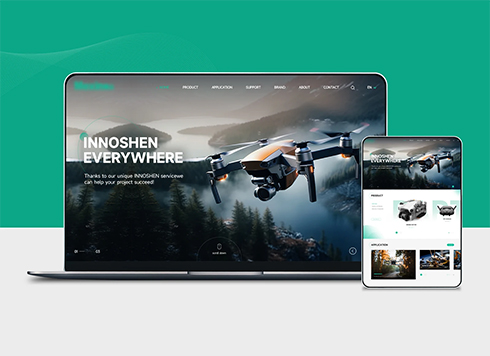 Drone Accessories Company Website Development
Incorporating gray as an accent with the pr ...
-
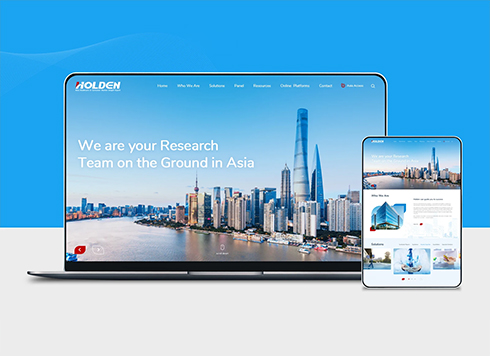 Professional International Research Service Agency Website Construction
This project serves a company with internat ...
-
Custom website development: HTTPS is configured, but the client's mobile browser still says not secure—what is usually wrong?
Date: Sep 18, 2026 Read: 16
-
Custom website development: the client wants a Japanese version, but no one on our team speaks Japanese—can we take the job?
Date: Sep 17, 2026 Read: 21
-
Custom Website Development: Inquiry Form Receives Dozens of Garbled English Messages a Day—Should You Disable the Form First or Add a CAPTCHA First?
Date: Sep 15, 2026 Read: 31
-
How Long Does Domain ICP Filing Take for a Custom-Built Website? Can It Go Live Before Filing Is Approved?
Date: Sep 9, 2026 Read: 69
-
Who Owns the Source Code, Domain, and Server Account in Custom Website Development? What Pitfalls Await If Not Delivered Together?
Date: Sep 2, 2026 Read: 62