




Custom website development: when a client wants live chat on the corporate site, should you embed third-party code first or build it in-house?
In custom website development, when a client wants to add live chat to the corporate website, the usual first step is to embed third-party live chat code rather than build it in-house immediately. The decision mainly depends on four things: daily conversation volume, who owns chat history and customer data, whether the chat needs to connect to the order or membership system, and whether anyone will maintain the server afterward. Based on common 2026 delivery experience, for brochure-style and lead-generation websites, a third-party embed can often go live in 1 to 3 days; only when conversation volume is larger, deep integration is required, or there are hard requirements for data retention is it worth considering open-source self-hosting or in-house development.
1. What are the common ways to add live chat to a corporate website?
Live chat is not limited to writing your own chat window. Based on common 2026 practices for corporate websites, there are at least four categories: third-party SaaS embed, open-source self-hosting, in-house development, and using WeCom or a platform's built-in customer service capability. The difference between these approaches is not whether the chat interface looks good, but where the data sits, who maintains it afterward, and whether it can connect to existing systems.
- Third-party SaaS embed: The vendor provides a piece of JS code that can be pasted into the page template, and agents reply in the vendor's backend. It goes live quickly and is billed by seat or conversation volume.
- Open-source self-hosting: An open-source customer service system is deployed on your own server, and chat history lands in your own database, but someone must maintain upgrades and security patches.
- In-house customer service: Front end, back end, messaging channel, agent assignment, and message alerts all have to be built by your team. Flexibility is higher, and investment is higher too.
- WeCom or platform customer service: The website entry point is connected to WeCom, an official account, or an e-commerce platform's customer service, which suits teams that already have the corresponding ecosystem.
There is no universal good or bad among these four. The key is where the company is willing to put its data and how long a launch timeline it can accept. Treating live chat as in-house development by default often turns a lightweight need into a heavy project.
2. To decide whether to embed third-party code first or build in-house, pass four conditions first
A common disagreement in delivery is that the client wants its own customer service system, but actual conversation volume is not large. To avoid spending heavily on a small feature, it is advisable to pass four conditions during requirements confirmation. This judgment method is not guesswork; it lays out data ownership, integration depth, and maintenance cost in advance.
- First, ask about conversation volume. If there are only a few to a few dozen inquiries per day, a third-party embed is usually enough; if dozens of agents are online at the same time during major promotions and queuing and routing are needed, a heavier solution is required.
- Second, ask about data ownership and retention requirements. Whether chat history and visitor phone numbers can be stored on third-party servers should be checked against the company's compliance stance; when there are hard localization requirements, open-source self-hosting or in-house development is more suitable.
- Third, ask about integration depth. If you need to show different agents based on membership level, write chat history into CRM, or link to order status, a third-party standard edition may not be enough, and you need to check whether it has open APIs.
- Fourth, ask about the ongoing maintenance budget. In-house development does not end at launch; messaging channels, servers, and security updates all require continuous investment. Without dedicated technical staff, maintenance costs are often underestimated.
Among the four conditions, if two or more point to deep integration or data localization, then consider in-house development or private deployment; otherwise, start with a third-party embed and upgrade later when it is no longer sufficient, which is usually more stable than building in-house from the start.
3. Cost, timeline, and capability comparison: third-party embed vs in-house
Looking at the options across cost, timeline, and controllability makes the decision much clearer. The figures below are experience ranges; they vary with the number of seats, feature scope, and whether custom development is included, and they are not suitable as a direct quotation.
- Development effort: A third-party embed typically takes 0.5 to 2 person-days, mainly for adding code, adjusting styles, and testing; open-source self-hosting typically takes 3 to 10 person-days, including server deployment and security configuration; a basic in-house version typically takes 15 to 40 person-days, not including later iterations.
- Launch timeline: A third-party embed can usually go live in 1 to 3 days; open-source self-hosting typically takes 1 to 3 weeks; in-house development from requirements to usable typically takes 3 to 8 weeks.
- Ongoing fees: Third-party services charge by seat or conversation volume, with annual fees commonly ranging from several hundred to several thousand yuan; self-hosting and in-house development do not pay seat fees, but do incur server, maintenance, and labor costs.
- Data location: Third-party data sits on the vendor side, and export capability depends on the vendor's API; self-hosted and in-house data sits in your own database, making migration and backup more proactive.
- Feature ceiling: Third-party standard features expand quickly, but deep customization is limited by the vendor; in-house development has a higher ceiling, but every feature needs to be scheduled by your own team.
If website customer service only handles visitor messages and pre-sales Q&A, the return on investment for a third-party embed is usually higher. Conversely, if customer service needs to connect with membership levels, order status, and after-sales tickets, an in-house or open-API solution is worth scheduling.
4. Where delivery often gets stuck: styles, mobile, and data export
On project delivery sites, a common constraint is that the client asks the chat window to carry brand colors, a welcome message, and an avatar, but the selected third-party code only exposes a few style options. The front end can usually change only position and size, not colors and corner radius. The approach is to list changeable and unchangeable items in the confirmation form during requirements confirmation, and then let the client review them on a test page. Otherwise, a common cost is being judged at acceptance as not following the design, leading to rework or a last-minute solution switch, which delays the timeline and increases communication cost.
Another common sticking point is mobile. Phone screens are narrow, and a floating chat button can easily cover the form submit button or bottom navigation. Based on 2026 delivery habits, mobile usually places the chat entry at the bottom right of the page, offset from the back-to-top button; if the page itself has a fixed bottom action bar, first confirm that the floating layers will not overlap each other. These details are not visible on desktop, so a phone walkthrough should be done specifically at acceptance.
Data export also tends to cause problems near wrap-up. For third-party chat history, visitor phone numbers, and source channels, a common practice is to confirm the export format and frequency in advance, such as monthly table export or API sync to an internal system. If the contract only says customer service features are provided but does not state data ownership and export methods, switching vendors later becomes passive. In terms of experience range, spending an extra half day to one day confirming these boundaries early usually reduces several days of rework communication later.
5. Applicable scenarios and boundaries
Third-party embedding suits brochure-style websites, teams with low lead volume, a need for fast launch, and no dedicated technical maintenance. It solves the problem of letting visitors reach a person, not building a complete customer service center. If the website is only a company introduction and contact details, it can even start with a form plus phone number, without forcing live chat in.
In-house development or open-source self-hosting suits scenarios with larger conversation volume, a need for deep integration with orders or membership systems, or clear requirements for localizing chat data. The boundaries should also be clear: if the company has no ongoing maintenance capability, the common cost after launching in-house customer service is a broken messaging channel and delayed security patches, which in turn affects website stability. For high-concurrency major promotions, intelligent routing, and QA reports, a professional customer service system usually needs to be evaluated, rather than building one casually within the website project.
FAQ
Will embedding third-party live chat code slow down page load speed?
Third-party live chat scripts usually load asynchronously and have limited impact on first screen; but if multiple analytics, customer service, and marketing scripts are embedded at the same time, the cumulative size can slow down mobile, so it is advisable to check once with a performance tool before delivery.
If chat history is stored with a third party and the client asks to export it locally, can that be done?
Most third-party vendors provide backend export or APIs, and can export tables or sync via API; if the contract does not state data ownership and export methods, negotiating after delivery can leave you passive.
For in-house live chat, what is harder than the chat window?
Usually the messaging channel, offline alerts, multi-agent assignment, and mobile push. The window is only the front-end layer; the real time cost is whether messages can be delivered reliably and whether they can be resent after a disconnect.
If third-party live chat is already embedded and we later want to switch, can historical chat history be taken away?
It depends on whether the vendor exposes an export API. A common practice is to export historical records before switching and run both systems in parallel for a period, so that old conversations are not missing after a direct switch.
In custom website development, where is a suitable place to put the chat window on mobile?
A common practice is a floating entry at the bottom right, offset vertically from the back-to-top button; if the page has a fixed bottom action bar, the chat entry can be placed into the menu to avoid covering primary actions.
If the goal is simply to let visitors quickly reach a person, prefer third-party embedding and leave budget for content and acquisition; only when conversation volume is large, integration with orders and membership is needed, or data localization is required should you evaluate open-source self-hosting or in-house development. Before launch, write style boundaries, mobile placement, and data export methods into the acceptance checklist to reduce later rework. Applicable boundary: without ongoing maintenance capability, it is not advisable to force a full in-house customer service build into a website project.
-
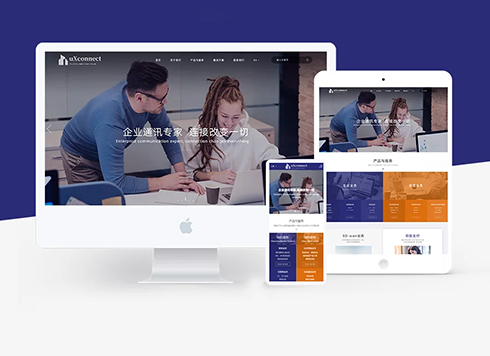 Customized Communication Solutions for Enterprises Website Development
Founded in 1996, this company focuses on pe ...
-
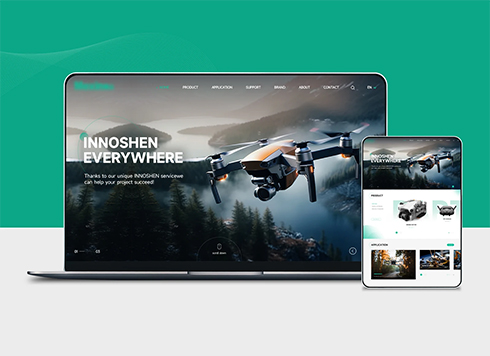 Drone Accessories Company Website Development
Incorporating gray as an accent with the pr ...
-
 Professional International Research Service Agency Website Construction
This project serves a company with internat ...
-
 The Construction of Group Websites for Asset Operation and Digital Services
This project is to create a website for a c ...
-
In custom website development, the client finds the official site awkward on mobile—should we fix responsive design first or build a separate mobile version?
Date: Oct 7, 2026 Read: 21
-
Custom Website Development: If the Site Form Collects Phone Numbers, Does the Privacy Policy Really Need to Be Posted?
Date: Oct 5, 2026 Read: 37
-
In custom website development, a client insists on an auto-rotating hero carousel on the homepage: build it as asked or push back first?
Date: Oct 4, 2026 Read: 34
-
Custom website development: when a product appears in both homepage recommendations and industry solutions, how many places need updating when its price changes?
Date: Oct 1, 2026 Read: 49
-
In custom website development, clients want to adjust font size and spacing in the CMS—should we open that door?
Date: Sep 30, 2026 Read: 59