





Custom Website Development: If the Site Form Collects Phone Numbers, Does the Privacy Policy Really Need to Be Posted?
If a website form receives a phone number, name, email address, or similar information that can be tied to a specific person, posting a clickable privacy policy in the footer and next to the form at delivery (more precisely, a 'personal information processing notice') is basically the default move in 2026; only purely presentational pages that collect no personal information and have no third-party analytics or live chat scripts can be handled in a simplified way. In practice, the argument is usually not about whether to post it, but about policy content that does not match the form's actual fields - meaning it is posted but does not actually provide notice. Based on typical delivery experience, checking and supplementing this document usually takes half a day to two days.
What the Privacy Policy on a Website Actually Governs
It addresses the 'notice' step; it does not exempt the company from liability. Before visitors enter a phone number in a form, they need to know which entity collects the information, what it is used for, how long it is kept, whether it is shared with third parties, and whom to contact to request deletion. Placing it in the footer and near the form submit button are both common practices; hiding it deep inside a second-level section where it takes three clicks to find effectively provides no notice.
A passable approach can be reduced to three checkable items: the link opens from both the footer and near the form; the operating entity name in the document matches the name shown at the bottom of the homepage and the filing information; and the listed fields match what the backend actually receives. For example, if the form has 'company name' and 'budget range' but the policy lists only name and phone, they are not aligned.
- Collector: state the full legal name of the operating entity and contact details; do not list only the brand name.
- What is collected: list field types one by one, such as name, phone, email, company name, and message content.
- Purpose of use: follow-up calls, quotations, after-sales, recruiting, and so on, written according to the site's actual use.
- Sharing with others: third parties such as analytics tools, live chat, form hosting, and maps must be called out separately.
- Retention and deletion: clearly state the typical retention range and the channel through which visitors can request deletion.
Where Trouble Usually Comes From When You Do Not Post One or Post the Wrong One
A corporate website is not an e-commerce site, so it usually will not run into problems simply because it lacks one policy page, but the real snags cluster in three scenarios: advertising and platform review, large-customer supplier onboarding, and visitor complaints. When companies run ad campaigns, apply for certain platform qualifications, or take part in bidding, they are often asked to provide the compliance pages on their website; when B2B buyers conduct due diligence, they also casually check whether the website has basic personal information notice.
- Platform review: when a landing page collects numbers without any notice, it is common to be asked to submit additional materials.
- Customer due diligence: buyers look at whether the compliance pages are complete, not at how long they are.
- Visitor complaints: after filling out a form, a visitor gets a sales call and cannot find any notice document on the website, which clearly raises the cost of communication.
- Counterexample: putting only an 'I have read and agree' checkbox next to the form with no clickable document is form over substance.
Deciding Whether and How Far to Post: A Four-Part Review Framework
Using four dimensions instead of a single line like 'check whether there is a form' is because the intensity of collection varies greatly: the same input field, collecting a company landline versus collecting an ID number, has completely different handling requirements. The ordering logic of the four-part framework is 'fields - purpose - external sharing - entity,' and the further along you go, the more cautious the wording needs to be, and the more advisable it is to have the client confirm internally once.
- Look at the fields: name plus mobile number plus email counts as personal information and requires notice; if there is only a company landline and company email, the handling intensity is low and it can be simplified.
- Look at the purpose: only doing follow-up calls versus feeding a CRM for secondary marketing - the latter's purpose and retention period need to be written more clearly.
- Look at whether there is external sharing: analytics, live chat, maps, and form hosting all transmit data out and need to be called out in the document.
- Look at the entity and audience: recruiting pages, sites aimed at overseas users, and sites involving minors' information usually have higher requirements.
The way to use it: if even one of the four items comes out as 'yes,' it is worth writing a separate page; if none of the four apply, a brief one-line note in the footer is enough. Do not do it in reverse - first finding a template and then fitting the scenario to it - because it easily creates clauses that exist in the template but not on the actual website.
Applicable Scenarios and Boundaries
The types of sites suited to doing notice seriously are these: websites with inquiry forms, job application submissions, live chat installed, third-party analytics or advertising pixels, or member registration or event sign-up. These sites need to write out each third-party tool they use, item by item, and keep it in sync with the tools actually connected in the backend; otherwise, the document quickly becomes outdated.
Conversely, the boundaries also need to be clear: for a purely static presentation website whose pages contain only a phone number and company email, with no forms and no analytics or live chat scripts, you can skip a separate page and just use a brief one-line note in the footer; forcing a 10,000-word generic policy onto such a site only makes it harder for visitors to understand. A privacy policy is also not a document that stays valid once signed; as soon as form fields or third-party tools change, it becomes outdated along with them.
A Few Things Easily Missed at Delivery
A common situation on projects is: the budget is limited, the launch timeline is squeezed to two or three weeks, content materials are provided by the client's marketing department, and the privacy policy is copied directly from a peer's website. Before delivery, we first check the form fields and third-party scripts against the typical range, and it turns out that the newly added live chat and map both transmit visitor data out, while the document does not mention a word of it - so we can only supplement it at the last minute and run it through the client's internal confirmation again, pushing the overall launch back by a day or two. This kind of rework is not a technical problem but an order-of-checking problem, and the typical range is half a day to two days.
- The entity name in the policy does not match the filing entity or the footer on the homepage.
- Fields were added to the form later, but the document was not updated in sync.
- Third-party chat, analytics, maps, and form hosting are not written in.
- Template-copied content still contains another company's name or inapplicable regulation names.
- There is only a checkbox with no link, or the link points to a page that will not open.
The acceptance standard can be very simple: grab any colleague and see whether they can find and understand the document within two steps starting from the homepage; then go through the backend form fields one by one to check them. Once that is done, it passes. In the typical 2026 delivery rhythm, this is usually handled in the final wrap-up stage before launch.
Doing It Yourself, Using a Template, or Hiring Someone: How to Choose Among the Three
Each of the three approaches has its own applicable scope; the difference lies in how sensitive the information collected on the website is and whether it targets overseas users. The comparison below can be matched to your own situation, and both cost and timeline are estimated as experience ranges; actual figures will vary with content complexity.
- Put it together yourself: suitable for a presentational website with simple fields that only does domestic follow-up, typically taking half a day to two days, with near-zero cost, but it is easy to miss third-party tools.
- Use a template and revise it: suitable for a mid-sized website with analytics and live chat scripts, typically taking 1 to 3 days; remember to delete all inapplicable clauses from the template.
- Hire a professional to write or review it: suitable for websites with member registration, recruiting, overseas users, or more sensitive information; the typical cost range is several thousand to tens of thousands of yuan, with a timeline of one to three weeks, and deliverables usually include the clause text and an update note.
Whichever you choose, it is advisable to keep a record of 'who changed which clause and when,' so it can be checked against later form adjustments. In the wrap-up stage of delivery, we usually list this record together with the source code and accounts in the handover checklist.
Frequently Asked Questions
If a company website is only for presentation, does it still need a privacy policy?
If there really are no forms, analytics, or live chat scripts, you can skip a separate page and just use a one-line note in the footer; as soon as there is even one place collecting personal information, it is advisable to write a separate page.
Before a visitor submits a form, must they check 'agree'?
A common practice is to add an unchecked-by-default consent item linked to the policy, but not making it mandatory is also acceptable; the key is that visitors can see the notice content in advance.
If the client wrote the privacy policy themselves, what should be checked at delivery?
Focus on checking three things: whether the entity name matches the filing, whether the fields match what the backend actually receives, and whether all third-party tools are covered; there is no need to make judgments on the client's behalf about the rest.
After a website redesign, does the privacy policy need to be redone?
As long as the form fields, third-party scripts, or operating entity have changed, it needs to be updated in sync; if only the visuals are changed and these items are untouched, usually just updating the version date is enough.
If the website has forms, analytics, or live chat scripts, the safer approach is to put the privacy policy on the launch checklist and check it together with the domain, filing, and HTTPS; in the typical 2026 delivery rhythm, this part usually takes half a day to two days. Conversely, for a purely presentational site that collects no personal information at all, there is no need to launch a generic policy just to have a complete set; and if you do post one, do not let it become an ornament that visitors cannot understand.
-
 Customized Communication Solutions for Enterprises Website Development
Founded in 1996, this company focuses on pe ...
-
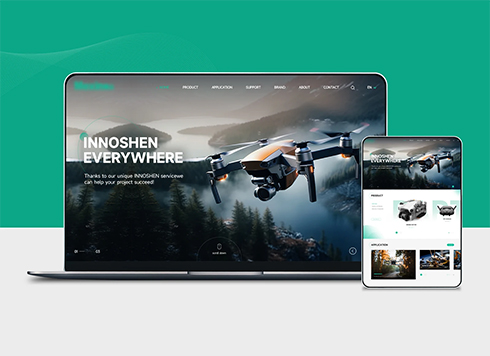 Drone Accessories Company Website Development
Incorporating gray as an accent with the pr ...
-
 Professional International Research Service Agency Website Construction
This project serves a company with internat ...
-
 The Construction of Group Websites for Asset Operation and Digital Services
This project is to create a website for a c ...
-
In custom website development, a client insists on an auto-rotating hero carousel on the homepage: build it as asked or push back first?
Date: Oct 4, 2026 Read: 15
-
Custom website development: when a product appears in both homepage recommendations and industry solutions, how many places need updating when its price changes?
Date: Oct 1, 2026 Read: 33
-
In custom website development, clients want to adjust font size and spacing in the CMS—should we open that door?
Date: Sep 30, 2026 Read: 40
-
If the Website Says “Digital Solutions,” Will It Mismatch When Customers Ask AI “How Much for a Website Redesign?”
Date: Sep 24, 2026 Read: 49
-
All services crammed onto one long page: will AI drag in the others when a client asks about one?
Date: Sep 23, 2026 Read: 57