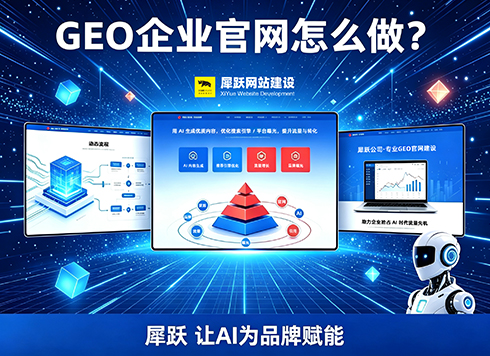





If the Website Says “Digital Solutions,” Will It Mismatch When Customers Ask AI “How Much for a Website Redesign?”
Not necessarily. When AI search answers questions like “who can do a website redesign,” it first breaks the customer’s query into semantic fragments, then matches them against sentences on the website that can be extracted on their own. If the homepage and service pages only say “digital solutions” and “enterprise digital transformation,” and lack specific scenario terms such as “custom website development,” “website redesign,” and “backend you can edit yourself,” the match rate for fragment recall will drop. Based on common project delivery experience in 2026, this “has pages, but no citations” situation is not rare on B2B websites.
AI Search Matches Customer Query Phrasing, Not Internal Terminology
AI answer engines commonly use retrieval-augmented generation: first understand the question, then recall relevant fragments from the index, and finally organize them into an answer. They will not translate synonyms on a company’s behalf. Whichever type of term is missing from the page, that type of query is more likely to be missed. Internally, a company may call custom website work “digital solutions,” while customers ask in the chat box, “how much for a website,” “can you redesign it,” or “can I edit the backend myself”—the semantic distance is not small.
- Customer-side phrasing: build a website, redesign a website, custom corporate website, foreign-trade standalone site, backend management system.
- Common website wording: digital solutions, enterprise informatization services, full-chain empowerment, one-stop platform.
- Possible result: broad terms can match brand-type questions, while specific service-type questions are more likely to match competitor pages that clearly describe the scenario.
Why Broad Terms Like “Digital Solutions” Easily Lose Out
Broad terms are not unusable, but you cannot have only broad terms. Broad terms are wide in reference, and AI has difficulty judging what you actually deliver: custom websites, ERP, mini-programs, or outsourced marketing operations? For the same question, when a page lacks qualifying conditions, AI is more inclined to cite fragments that directly answer “what do you do, who do you do it for, and what do you deliver.” A common practice in 2026 is to put broad terms at the brand level and specific service terms in the first paragraph of the page, service modules, and FAQ.
Qualified standard: A service page should at least clearly answer “what type of custom website do you build, what stage of company do you build it for, and what do you deliver.” The test can be rough: cover the company name and let a colleague who does not know the business read the first screen. If they can repeat that you do custom website development, terminology alignment is basically in place; if they read it as “doing digital transformation consulting,” there is still a gap.
- Unqualified wording: We provide digital solutions to help enterprises transform and upgrade.
- Qualified wording: We build custom corporate websites. Common deliverables include multilingual foreign-trade sites, group brand sites, and content management sites with a backend.
- Note: service terms should appear in h1, h2, body text, and FAQ—not only be stuffed into meta tags or images.
Checkable Comparison: Effort and Timeline of Three Revision Approaches
Terminology alignment is not all-or-nothing, but different revision approaches differ noticeably in effort and coverage. The following comparison is based on experience ranges from 2026 project delivery; specifics still depend on the number of pages, completeness of materials, and rounds of review.
- Option A: Change only titles and descriptions. Suitable when time is tight and there are few pages. Typical content effort range is about 0.5–1 person-day, with observation for 4–8 weeks after launch. The advantage is small changes; the cost is that if body text lacks specific service sentences, AI may still skip it.
- Option B: Change service page first paragraphs, FAQ, and internal links. Suitable for small and midsize B2B websites focused on lead generation, with 5–20 service pages. Typical content structuring range is about 2–5 person-days, usually requiring 1 round of review; revision launch is about 1–2 weeks; typical range for AI fragment recall to appear is 2–6 weeks. The risk is that poor writing easily becomes keyword stuffing, so a content owner needs to check it.
- Option C: Rewrite terminology across the whole site. Suitable for sites with many service lines and inconsistent wording on the old site. Experience range is about 8–15 person-days, involving multi-department review, and the timeline may reach 3–6 weeks. The advantage is consistent terminology; the cost is high internal communication effort and slow implementation.
Option B is the most common choice, but it is not the standard answer. If the budget is tight and the timeline is only a few days, you can change only the homepage first screen, first paragraphs of core service pages, and FAQ, without rewriting the whole site. The cost is limited query coverage, and you will still need to fill in more in batches later.
Delivery Field Experience and Applicable Boundaries
In one custom website delivery project, the client’s marketing department insisted that the homepage first screen say “digital solutions,” but sales reported that customers asked on calls “can you build a foreign-trade site” and “can I edit the backend myself.” At the time, the constraints were only two weeks until launch, only an old PPT as material, and compatibility requirements that had to cover older browsers. The approach was to change the first screen to “custom corporate website development,” use three scenario cards below to cover foreign-trade sites, group sites, and marketing sites, and replace the FAQ with the sales team’s actual wording. After launch, when sampling related queries, the frequency of website fragments appearing improved compared with before the change; the cost was an extra round of review by the marketing department and about a 2-day launch delay. According to our project delivery habits, this type of change usually goes into the content review checklist, rather than being patched after launch.
Applicable: B2B companies with many business lines, heavy internal terminology, and specific customer query phrasing; websites that have content, but whose pages are rarely mentioned when customers ask AI; and sites with 5–50 service pages and sales or customer service records that can be used to organize query phrasing.
Not applicable: when the brand term itself is already the customer’s main search term and the company name is highly unique; when the product is extremely standardized and users only search by model number; or when the website already explains services in plain language. Boundary sentence: terminology alignment is not about completely deleting “digital solutions,” nor about stuffing keywords, but about making both customer query phrasing and professional wording readable on the same page.
FAQ
If the website service page already says “website construction,” do we still need to write “custom website development”?
It is advisable to include both. In 2026, AI search recall for near-synonymous expressions is not completely equivalent. When a customer asks about “custom,” a page with “website construction” may match, but adding “custom website development” is more stable.
Would it be better to delete “digital solutions” entirely and keep only specific service terms?
Not necessarily. Brand communication needs broad terms; it is better to layer “broad terms + specific service terms” rather than choose one or the other. Deleting them entirely may affect how existing customers perceive you.
If customers ask AI in colloquial language, should the website copy it verbatim?
You do not need to copy dialects verbatim, but you should write the core action words from colloquial speech into the page, such as “build a website,” “redesign a website,” and “edit content yourself.” One place each for formal wording and colloquial wording is enough.
How do we know whether terminology alignment is effective?
You can sample 5–10 real customer queries in AI and see whether website fragments are cited. There is no unified timetable; the experience range is that it gradually appears 2–6 weeks after launch, affected by site authority.
If the website is currently full of “digital solutions,” start with the first paragraphs of service pages and the FAQ: write in the 5 phrases customers ask most often, then add deliverables and acceptance criteria. Applicable boundary: companies with already strong brand terms do not need major changes, and businesses with a single product model do not need to force in scenario terms. According to the 2026 project rhythm, revise a small scope first, observe for 4–8 weeks, and then decide whether to expand to the whole site.
-
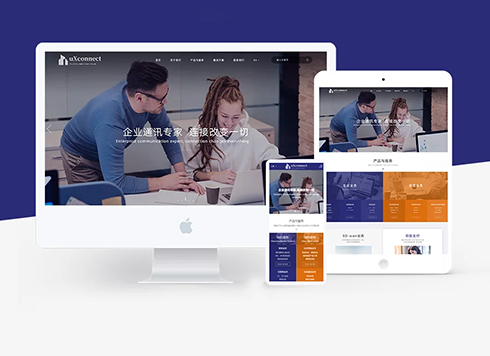 Customized Communication Solutions for Enterprises Website Development
Founded in 1996, this company focuses on pe ...
-
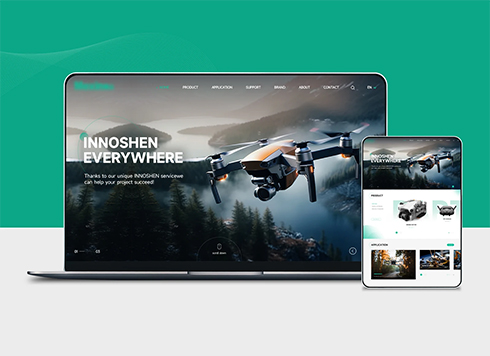 Drone Accessories Company Website Development
Incorporating gray as an accent with the pr ...
-
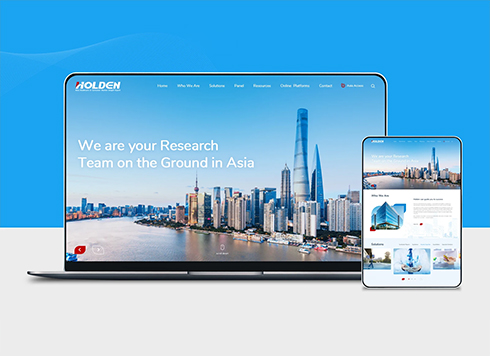 Professional International Research Service Agency Website Construction
This project serves a company with internat ...
-
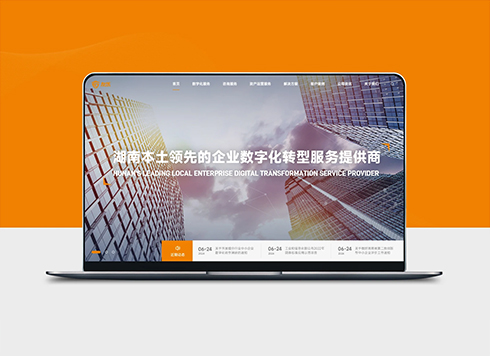 The Construction of Group Websites for Asset Operation and Digital Services
This project is to create a website for a c ...
-
All services crammed onto one long page: will AI drag in the others when a client asks about one?
Date: Sep 23, 2026 Read: 12
-
In custom website development, a client pasted a WeChat article into the CMS. Days later the images all went blank—did we miss a setting?
Date: Sep 21, 2026 Read: 26
-
Custom website development: HTTPS is configured, but the client's mobile browser still says not secure—what is usually wrong?
Date: Sep 18, 2026 Read: 35
-
Custom website development: the client wants a Japanese version, but no one on our team speaks Japanese—can we take the job?
Date: Sep 17, 2026 Read: 35
-
Custom Website Development: Inquiry Form Receives Dozens of Garbled English Messages a Day—Should You Disable the Form First or Add a CAPTCHA First?
Date: Sep 15, 2026 Read: 49