




Will visitors from Douyin actually scroll past three large carousel images above the fold on a Hangzhou company website?
Conclusion first: for most Hangzhou company websites, a three-image carousel above the fold is worse than a single static hero image plus one business positioning sentence. The reason isn't that carousels look bad — it's that visitors arriving from Douyin, WeChat Channels, or WeChat official accounts typically stay only a few seconds to a dozen or so seconds; clicks on the second and later slides are usually very low, and on mobile the first screen loads more slowly while text gets pushed below the fold. Based on 2026 delivery experience in Hangzhou, the more common approach is: state on the first screen who you serve, what you provide, and where you operate; put images and video after the second screen with on-demand loading.
Where visitors come from decides whether the hero should be a carousel
Hangzhou's client mix includes a substantial share of e-commerce and livestream services, software and SaaS, cross-border trade, industrial design and cultural creative, and smart manufacturing equipment. Visitors to these companies often don't arrive by searching a keyword and then landing on the site; they come from a short video they scrolled past, a mention by a peer, or a QR code scanned at an exhibition. These visitors have no clear search intent, so the first screen's job is to explain, not to showcase.
- From a WeChat official account or WeChat Channels: they already follow you; what's missing is 'what exactly do you do'
- From Douyin or Xiaohongshu: drawn in by the content, with almost no baseline trust in the brand
- From an exhibition or a business-card QR code: likely comparing several vendors at once; the requirement is simply to understand you
- From Baidu by searching your brand name: they already know you, so the first screen can downplay explanation and reserve space for new products and after-sales entry points
Among these four, the first three are unlikely to stay just because of a good-looking carousel. What actually stops a visitor is usually whether that first-screen sentence hits their problem.
Layering first-screen information: order first, visuals second
On mobile, the above-the-fold area is limited — usually room for one to one and a half screens. Ordering by how visitors judge, rather than by what the company wants to say, usually makes a difference to bounce rates.
- Positioning layer: one sentence stating who you serve, what you provide, and where you operate. 'Factory renovation and MEP installation for plants in and around Hangzhou' is far more useful than 'professional, dedicated, focused'.
- Credibility layer: put in things that can be checked — years in the industry as an experience range, the industry types you've served, how you deliver. Ranking or sales-volume claims can't be verified and are best kept off the first screen.
- Differentiation layer: keep it to three items or fewer, one sentence each, describing the real differences from peers — response time, whether you do on-site surveys, whether post-delivery maintenance is included.
- Action layer: one primary entry point plus one secondary. The primary is commonly adding WeChat or an online message form; the secondary is a phone number.
The trouble with a carousel is that it naturally occupies the largest block of the first screen, pushing positioning and credibility below the fold. Visitors have to scroll once more to learn what you do — and most won't take that scroll.
Three concrete costs of a carousel
- Slower loading: even with the same compression settings, three large images typically push first-screen resources into the 500KB to 1MB range; on weak connections or in the subway, text often appears after the images.
- Diluted information: the carousel splits attention across three different images, so the positioning sentence either doesn't fit or gets squeezed into one small line.
- Harder to be cited: search engines and AI systems prioritize text when excerpting a page. A first screen with only images and no quotable positioning sentence has fewer chances of being understood and cited.
To be clear, carousels aren't unusable — they're just better placed after the second screen, to show cases, workshops, equipment, or the team. A single static hero image with one positioning sentence above the fold is usually steadier.
On delivery: what stalls the first screen is usually assets and scheduling
In Hangzhou projects, a common constraint is this: the client's marketing team only has a few product photos the boss took on a phone, the company introduction is just a paragraph of about eighty characters, and they want to go live within two weeks to catch an exhibition or a round of dealer recruitment. Based on our delivery habits in local projects, the approach is to pin down the first-screen positioning sentence and information hierarchy first, then crop the hero image to a uniform ratio and background — no retouching required. Convert the carousel to a static hero image and spend the saved time on credibility and cases on the second screen.
The trade-off should also be stated up front: when assets aren't ready, first-screen copy and the hero image commonly go through two or three rounds of rework, pushing the schedule back three to five working days. If design drafts come first and copy is written later, changing the positioning sentence usually means redoing the layout — which is slower. So before delivery we usually confirm three things: who signs off on that first-screen sentence, who provides the credibility assets, and which WeChat account or form the action entry points to. If those three aren't settled, even a detailed draft is easily overturned.
Comparing three first-screen approaches
The difference among these three isn't whether they look good, but whether visitors need to be explained to, and the ongoing maintenance cost. Budget and timeline figures are experience ranges from local Hangzhou work in 2026, referring to the whole site rather than the first screen alone; actual figures depend on total site workload and can be checked against the contract scope.
- Carousel image type (three or more large images plus a short slogan): suits companies whose brand is already known to target customers. Typical full-site timeline 1 to 2 weeks, typical budget range from several thousand yuan to 15,000 yuan. Weakness: little textual information, and it struggles to receive Douyin and exhibition visitors
- Static information type (one hero image plus a positioning sentence, credibility, and a single action entry): suits most Hangzhou SMEs and B2B service providers. Typical full-site timeline 3 to 6 weeks, typical budget range about 15,000 to 60,000 yuan. Weakness: comparatively modest visual impact above the fold
- Split-entry type (static first screen plus WeChat official account, Douyin, and exhibition landing pages): suits e-commerce services, software, and equipment companies with clear channels. It adds 3 to 5 landing pages on top of the static information type, typically another 1 to 2 weeks and several thousand yuan. Weakness: more content to maintain
Where it applies and where it does not
When a static first screen fits: visitors come mainly from Douyin, Xiaohongshu, WeChat Channels, or offline exhibitions; the business line is fairly simple and can be explained in one sentence; there's a clear person to receive inquiries; budget and schedule are limited, so resources need to go into the first screen and the mobile experience.
When not to copy it wholesale: if the site is mainly for overseas buyers verifying qualifications and capacity, the first screen should prioritize certifications, capacity ranges, and factory-audit information; if it's a multi-business group site, one sentence can hardly cover it, and navigation-based routing works better; if visitors are almost all existing customers who already know you, the first screen can downplay explanation and reserve space for new products, announcements, and after-sales entry points.
Frequently asked questions
Does a Hangzhou company website have to put a phone number above the fold?
Not necessarily, but keep one instantly reachable entry point. Hangzhou clients typically prefer to add WeChat first and discuss details there; putting a WeChat QR code above the fold, or an online message form with a phone number as the secondary entry, is fairly common.
Does a large video above the fold slow down loading?
Yes. A common approach is a static cover image above the fold, with the video placed after the second screen and loaded on demand; compressed, the cover is commonly kept under 200KB, so text still appears first on weak connections.
How long should the positioning sentence above the fold be?
Commonly 12 to 25 characters, readable at a glance. Longer sentences that exceed one line get truncated on mobile and are harder for search engines and AI to excerpt directly.
Can a carousel keep just two slides?
Yes, but still leave room for text above the fold. Two images plus a positioning sentence is already close to the common mobile limit; adding more tends to push the action entry below the fold.
Before you start, do two things: list the three questions your customer service team was asked most often in the past month, then open your website on a phone and check whether the first screen answers them. If most visitors come from Douyin and WeChat official accounts, consider replacing the carousel with a single static hero image and adding a positioning sentence — you can usually see a change in the inquiry path within one to two weeks. If the business positioning itself isn't clear yet, settle the positioning before discussing first-screen layout, and you'll have fewer rounds of rework.
-
 Website Development for Smart Hardware Device Companies
Founded in 2017 with a capital of 16.66 mil ...
-
 Drone Accessories Company Website Development
Incorporating gray as an accent with the pr ...
-
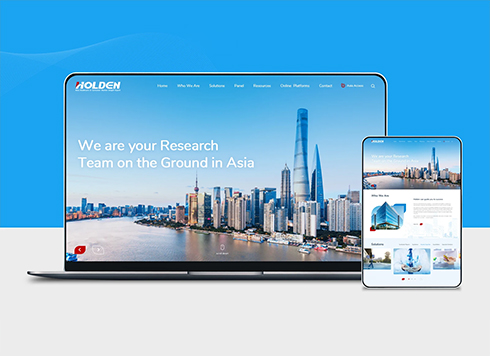 Professional International Research Service Agency Website Construction
This project serves a company with internat ...
-
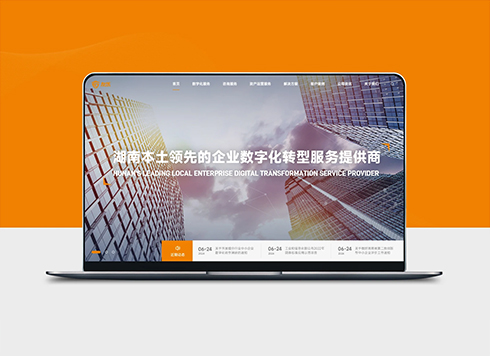 The Construction of Group Websites for Asset Operation and Digital Services
This project is to create a website for a c ...
-
Hangzhou Website Development Guide: How to Select and Build Your Corporate Website
Date: Jul 30, 2026 Read: 154
-
Why does a product video keep buffering when clients open it in WeChat on a Chengdu company website—bandwidth or unprocessed video?
Date: Sep 23, 2026 Read: 11
-
A Suzhou factory's website only swaps model names on product pages — when customers search a specific spec, can they still find the matching page?
Date: Sep 22, 2026 Read: 20
-
Chongqing company website only says 'Chongqing' — can customers searching 'Chongqing + product' actually find me?
Date: Sep 21, 2026 Read: 23
-
Guangzhou company website redesign: brochure QR code still opens the old page—do we need to reprint?
Date: Sep 20, 2026 Read: 27