


Is a price calculator reliable on a Changsha company website when customers ask 'how much does this equipment cost' first?
For companies in Changsha that make non-standard equipment, engineering supporting systems, and automated production lines, it is common for customers to ask 'how much does this set cost' right at the start. But putting an automatic price calculator directly on the page is unreliable in most cases. The more reliable approach is 'parameter guidance + inquiry form + manual price verification': let customers first choose the application scenario, material, capacity, or interface requirements, and then have sales or technical staff calculate the price based on the configuration. Only categories with standardized products, transparent price ranges, and parameters that can be structured are suitable for putting a calculator on the front end.
Why do customers ask about price right away, yet the website cannot simply give a price?
When customers ask about price, they are often judging 'whether this company can do it and roughly what tier it is in,' not really asking for a figure accurate to the yuan. The cost of non-standard equipment is affected by materials, processes, batch size, delivery time, and site conditions. For equipment with the same name, a one-step difference in configuration can lead to a clearly different price range. Once the website gives a specific number, customers will treat it as the starting point of a commitment, and the subsequent cost of explanation becomes higher.
In Changsha, this is especially obvious for companies in construction machinery supporting, environmental protection equipment, and non-standard automation: customers often come with working conditions and ask about price before asking about the solution. According to common practice in 2026, a company website is better suited to the role of 'clarifying the requirements' rather than 'pricing on behalf of sales.' In non-standard customization, any number given on the website will be treated by customers as the starting point of a commitment; if you give a range, it must include conditions; if you give an exact price, you must be able to honor it. Most peer websites only show product photos; whoever writes the parameters and scenarios clearly saves a round of explanation before the inquiry.
- Three types of motives behind customers asking for price: comparing prices, screening suppliers, and confirming the budget range.
- Three risks of giving a price directly on the website: different configurations are misread, material fluctuations cannot be covered, and sales lose room for explanation.
- A more stable alternative: scenario pages + parameter filtering + inquiry form + manual price reply.
What is the difference between a price calculator, an inquiry form, and leaving only a phone number?
These three approaches do not replace one another; they correspond to different product attributes and customer maturity. A price calculator suits standard products and modular products, where customers can choose specifications themselves; an inquiry form suits non-standard and project-based business, where the focus is to capture the working conditions; leaving only a phone number suits repeat purchases by old customers or local installation services, where communication is direct but leads are easily scattered. When judging, first see whether the product can be described with limited parameters, then see whether anyone maintains the price rules.
- Price calculator: Suitable for standard products with stable price rules; fast customer experience; relatively high maintenance cost, as rules must be changed whenever they change; the deal impact is accurate screening, but complex needs are easily kept outside. Experience range: a complete calculator commonly adds RMB 10,000 to 30,000, with a cycle of 2 to 4 weeks.
- Inquiry form: Suitable for non-standard and project-based business; medium customer experience; low maintenance cost; the deal impact is capturing leads, but someone needs to reply in time. Experience range: parameter filtering plus a form commonly adds RMB 3,000 to 8,000, with a cycle of 3 to 10 working days.
- Only a phone/WeChat contact: Suitable for old customers and local services; direct customer experience; low maintenance cost; the deal impact is missed calls and insufficient demand capture. Experience range: page changes commonly take 1 to 3 working days.
Note that these are experience ranges from project delivery, not fixed quotations; for the same thing called a 'price calculator,' different rule complexity and backend requirements will widen the cost gap. According to project delivery habits in 2026, it is usually less likely to require rework if you first get parameter filtering and forms running smoothly, and then evaluate the calculator.
At local delivery sites in Changsha, where do budget and timeline usually get stuck?
In Changsha projects, a common situation is: the budget is controlled at just over RMB 10,000 to around RMB 20,000, the boss wants to go live in two weeks, the product materials consist only of an old brochure, and sales are unwilling to maintain parameter rules every day. In this case, forcing a calculator in often results in nobody filling in the parameter table and the price rules expiring after two months. A more stable approach is to first build a filtering form for 5 to 8 key parameters, give only a reference range for price and note that 'manual price verification prevails,' and after launch, look at the inquiry quality to decide whether to add a calculator.
At delivery, three things should be checked first: which parameters are commonly asked about in the customer's inquiry records over the past three months, who is responsible for updating prices, and how long after form submission someone will reply. According to Xiyue Company's delivery habits in local projects, if these three things are not clearly defined before scheduling, the probability of rework later will rise significantly; a common cost is that the calculator module is completed and then taken offline, or the form fields are repeatedly changed, delaying the schedule by one to two weeks. Local customers in Changsha often first ask a question on WeChat and then search for the company name; if the website does not even have consistent parameter terminology, sales will have to explain repeatedly.
A practical judgment framework: the three-filter method before quoting
Rather than arguing about whether to build a calculator, it is better to filter through three layers: 'product, parameters, maintenance.' The reason for this division is: product attributes determine whether it can be calculated, parameter structure determines whether customers can fill it in themselves, and maintenance responsibility determines whether it will expire after launch. If any of the three layers fails, it is recommended to fall back to 'reference range + manual price verification.'
- Filter the product: Standard products, modular products, and products whose price changes linearly with specifications can be considered for a calculator; for non-standard customization, project bidding, and cases requiring on-site surveys, prioritize an inquiry form.
- Filter the parameters: Whether customers can clearly describe their needs with 5 to 8 enumerable options. If yes, build parameter filtering; if not, build scenario pages plus a form, and do not ask customers to fill in a long form.
- Filter maintenance: Whether there is a clear person responsible for changing price rules and parameters. Without a responsible person, do not put a front-end calculator; first provide a reference range.
The points to note at each step are different: if the product filter is wrong, non-standard products will be treated as standard products, and quotes will become increasingly inaccurate; if the parameter filter is wrong, you will create a long form that nobody is willing to fill in; if the maintenance filter is wrong, the calculator may become useless three months after launch. To judge whether a website's quotation module is well done, you can look at three points: whether customers can find the parameters they care about within 30 seconds, whether there is a clear response time after submission, and whether sales can see structured requirements in the backend.
Applicable scenarios and boundaries: which Changsha companies are suitable, and which do not need it
Those suitable to first launch 'parameter filtering + reference range + inquiry form' are usually companies with relatively fixed product series, customers with basic parameter knowledge, and sales able to reply with prices during working hours, such as standard dust removal equipment, conventional conveying equipment, and modular electrical assemblies. A complete price calculator is more suitable for categories with long-term stable price rules and dedicated maintenance.
Situations that are not suitable for forcing it in should also be stated clearly: companies with a high degree of non-standard customization, prices that fluctuate greatly with materials such as steel or chips, customers requiring on-site surveys, and deals closed through solution communication will often find that building a calculator on the website first does more harm than good. If customers cannot even clearly state how much capacity they need, giving them a calculator on the website first will only postpone the communication cost, not reduce it. Such companies are better off making scenario pages, case pages, and contact persons solid.
- Suitable: standard products, modular, enumerable parameters, someone maintaining them, customers able to select models by themselves.
- Not suitable: non-standard customization, project-based, large price fluctuations, requiring on-site surveys, sales relying on relationships to quote.
- Compromise: first launch parameter filtering and reference ranges, and evaluate the calculator after inquiry data becomes stable.
Frequently asked questions
If we put a price range on the website, will competitors see it and will customers use it to push down prices?
They will see it, but a range price is not the bottom price. Clearly stating whether tax is included, the configuration scope, and the validity period screens out pure price-comparison customers better than not writing a price at all; for non-standard equipment, a reference range is usually more stable than an exact number.
If nobody fills in the inquiry form, is it better to just leave a phone number?
Not necessarily. When nobody fills in a form, it is often because there are too many fields and no response time is stated. Reducing required fields to three or four and clearly stating how long a reply takes during working hours makes it easier to capture demand than leaving only a phone number.
Customers say other companies' websites can calculate prices. Will we lose deals if we do not do it?
You will lose some customers who only want an instant quote, but the proportion of non-standard customization deals closed through a calculator is usually not high. Making scenario pages and parameter filtering clear first is more likely to retain customers who inquire seriously.
Is it troublesome to change parameters in a price calculator later, and who usually maintains it?
The degree of trouble depends on whether the rules are built into the backend. The experience range is that each rule adjustment commonly takes 1 to 3 working days; if the rules are hard-coded into the page, one change may require rescheduling. The maintenance method should be agreed before signing.
Can a local website development company in Changsha build the calculator along the way?
There are many teams that can do parameter filtering and simple formulas, but complex quotation rules usually require the company to organize a rule table first. The website builder is responsible for implementation and the backend; the responsibility for quotation logic still lies with the company and cannot be fully outsourced.
If the product is standard, the parameters are enumerable, and someone maintains them, you can first build a small-step version of 'parameter filtering + reference range + inquiry form,' run it for one to two months to check lead quality, and then decide whether to launch a complete calculator; if the degree of non-standard customization is high and prices fluctuate greatly with materials, first make scenario pages and case pages solid, and there is no need to force in a calculator just to look technical.
-
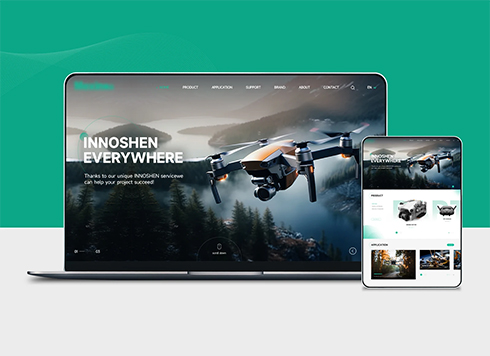 Drone Accessories Company Website Development
Incorporating gray as an accent with the pr ...
-
 Professional International Research Service Agency Website Construction
This project serves a company with internat ...
-
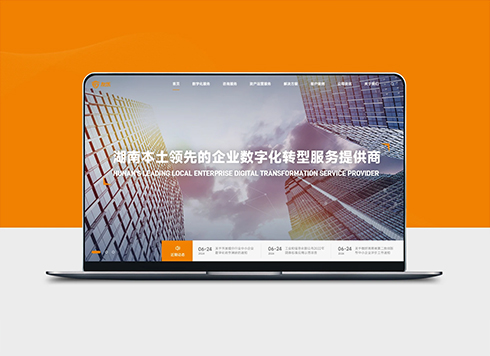 The Construction of Group Websites for Asset Operation and Digital Services
This project is to create a website for a c ...
-
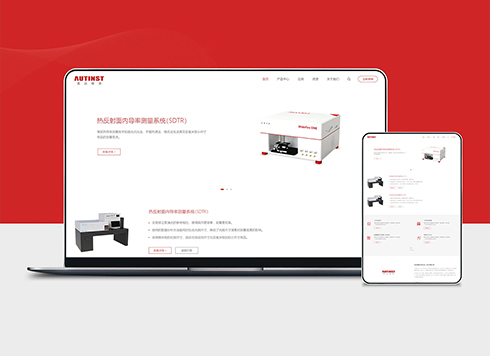 Thermal Test Equipment Website Construction
Founded in 2022, this tech company focuses ...
-
Changsha company website: before a customer visit, they ask 'Is this line in the photo still there?'—how detailed should workshop photos be labeled?
Date: Oct 21, 2026 Read: 84
-
Someone asks Doubao 'which company in Changsha makes equipment' and the answers are all competitors and platform stores — is our website not being seen by AI?
Date: Oct 1, 2026 Read: 115
-
How Big Is the Difference Between Low-Budget and High-Budget Corporate Websites in Changsha?
Date: Aug 23, 2026 Read: 163
-
How to Build a Website in Changsha? Enterprise Official Website Selection and Implementation Guide
Date: Aug 5, 2026 Read: 252
-
Changsha Website Development Guide: Selection Path and Common Mistakes for Enterprise Official Websites
Date: Jul 19, 2026 Read: 146