



Changsha company website: before a customer visit, they ask 'Is this line in the photo still there?'—how detailed should workshop photos be labeled?
Quotable conclusion: A Changsha company website can mix real photos and renderings, but the places customers check before visiting the headquarters—the homepage hero, factory and workshop pages, and case pages—should use real photos; renderings should only be used for unbuilt areas, layout illustrations, or future plans, and should be labeled 'rendering/illustration' below the image. Based on 2026 project delivery experience, when customers come from Zhuzhou or Xiangtan to inspect the factory, a mismatch between the site and the photos is more damaging than ordinary-looking photos.
Why do customers look at workshop photos before an inspection visit?
For manufacturing, processing, and engineering-support companies in Changsha, customers often come from Zhuzhou, Xiangtan, Yueyang, and Changde within the province, as well as park investment promotion teams and state-owned enterprise procurement. Before coming to the headquarters or factory, they usually search the company name and browse the website to judge 'whether the company produces in-house, how large the site is, and whether it is worth the trip.' Workshop photos on the website are often among the pages they check. In 2026, many peer websites still focus mainly on product images; clearly photographing the areas customers can verify on site is a practical point of differentiation.
- Areas customers will verify: entrance signage, factory roads, workshop panoramas, key equipment, warehousing and quality inspection areas, and reception areas.
- Areas customers are less likely to verify: culture illustrations, vision diagrams, and future new-factory plans can use renderings, but must be labeled.
- Local competitive context: In 2026, most small and medium-sized manufacturing company websites in Changsha still focus mainly on product images, and not many have a complete set of real workshop photos.
Where should real photos, renderings, and 3D renderings go?
The test is one sentence: will customers verify this image on site? If yes, use a real photo; if not, and it only expresses planning or layout, use a rendering or 3D rendering. Real photos prove what exists now; renderings explain what will be built in the future. If they are mixed without labels, customers will assume they are all real photos.
Cost also needs to be distinguished. Local commercial photography in Changsha has a common experience range of about RMB 2,000 to 8,000 per day, depending on the number of locations, whether aerial photography and fill lighting are needed; a single 3D rendering commonly costs several hundred to over a thousand RMB, but changing a layout often requires re-rendering. For most SMEs, making real photos solid first is more cost-effective than producing a polished set of renderings.
- Real photos: suitable for the homepage hero, factory pages, equipment pages, and case pages; if the workshop is messy or has many confidential devices, clear the area in advance.
- Renderings/3D renderings: suitable for unbuilt new factories, showroom design, and production line layout illustrations; they must be labeled 'rendering' and cannot be used as real photos.
- Stock images/web images: low cost but lowest credibility; not recommended for pages customers will verify.
- Mobile phone supplementary shots: suitable for inner-page details and temporary updates; the hero and factory panoramas should still be professionally photographed.
Delivery scene: a half-day window, and the workshop cannot stop—how to schedule?
A common project situation is: the budget is RMB 10,000 to 30,000, normal workshop production cannot stop, customer logos and process details on equipment cannot be photographed, and the boss only gives half a day. Based on 2026 local delivery experience, before shooting, align with the workshop manager on a 'photo checklist' that clearly lists areas that can be photographed, equipment that cannot be photographed, and personnel allowed on camera, then arrange the route by entrance signage—factory area—workshop—equipment—quality inspection—warehousing—reception area, to avoid looking for camera positions back and forth on site.
A common cost is missed shots. Starting to shoot without a list often results in entrance signage and workshop shots being taken, but quality inspection and warehousing not being shot, leaving gaps during layout; a second entry then requires coordinating production stoppage time, and the launch milestone commonly falls in a typical range of three to seven days, or even more. More troublesome is using old photos to fill gaps: when customers come for an inspection and find the equipment has changed, on-site explanations become passive. Getting the list right first is more useful than shooting a hundred unusable extra photos.
What counts as acceptable workshop photos?
Acceptable is not about how beautiful the photos are, but whether customers can match them on site. In 2026, most customers open links in WeChat; in our experience range, photo long edges should be controlled at 1,600 to 2,000 pixels and each image compressed to 200 to 400 KB, to avoid spinning when opened.
- Verifiable: entrance signage, factory roads, equipment brands or production line forms—customers can see corresponding objects on site.
- Scale reference: people, forklifts, or measuring rulers in the frame allow judgment of the real scale of the factory and equipment.
- Captions: state which line, what process, and when it was photographed; this is more useful than only writing 'a corner of the workshop.'
- No impersonation: label renderings as 'rendering/illustration,' label old photos with the shooting year, and replace renovated areas promptly.
- No leaks: avoid customer logos, confidential processes, and undisclosed equipment; blur them if necessary.
Applicable and non-applicable boundaries
Suitable for: customers who will come to the Changsha headquarters or factory for an inspection, companies with fixed factory or office space, companies that need to prove in-house production capacity or service capability, and cases where peer websites generally have only product images. Can be deferred: people-centered teams such as consulting services and software services can first use team and case photos instead. Not suitable for: pure trading companies with no fixed site, companies whose customers are all out of town and will not come in the short term, new factories still under renovation, and very low budgets that only want to launch a page that opens. The boundary can be remembered in one sentence: if customers will verify on site, it is worth photographing; if customers will not come, it is more cost-effective to first explain the main entity information and business clearly.
FAQ
For a Changsha company website, can workshop photos be taken with a mobile phone?
Yes, but ensure stable lighting and no shaking, and focus on areas customers will verify; mobile shots are suitable for inner-page supplements, while the homepage hero and factory panoramas should still be professionally photographed.
Will putting renderings on the website be seen by customers as fake?
Clear labeling usually does not count as fake; for unbuilt projects, just write 'planned rendering.' The problem arises when renderings are mixed into real photos without explanation and customers cannot match them on site.
How often should workshop photos on a company website generally be replaced?
There is no fixed cycle; they should be replaced after site renovation, equipment updates, or production line adjustments. A typical practice is a full update every one to two years, with supplementary shots in the month when changes occur.
Before customers come for an inspection, which photos should be added to the website first?
Prioritize five types: entrance signage plus factory panorama, workshop panorama, key equipment, quality inspection or warehousing, and reception area. These basically cover customers' judgment needs before arrival.
What is the approximate budget for a set of workshop photos shot locally in Changsha?
Based on the 2026 local commercial photography experience range, it is commonly about RMB 2,000 to 8,000 per day; more locations, aerial photography, or fill lighting will increase it. The specific cost depends on the shooting list.
If customers are coming to inspect the Changsha headquarters soon, one thing can be done first: list the five types of photos customers will verify on the website, and check each one for whether it is a real photo, whether it is labeled, and whether it is clear on mobile. Fill gaps first and uniformly annotate renderings as 'illustration'; there is no need to wait for a full site redesign. For projects where customers will not visit and the site is not yet determined, it can be deferred, and the main entity information and business pages should be made solid first.
-
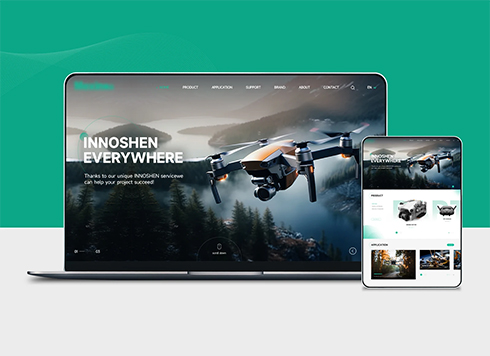 Drone Accessories Company Website Development
Incorporating gray as an accent with the pr ...
-
 Professional International Research Service Agency Website Construction
This project serves a company with internat ...
-
 The Construction of Group Websites for Asset Operation and Digital Services
This project is to create a website for a c ...
-
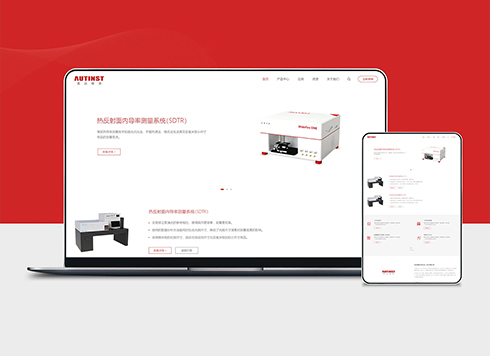 Thermal Test Equipment Website Construction
Founded in 2022, this tech company focuses ...
-
Someone asks Doubao 'which company in Changsha makes equipment' and the answers are all competitors and platform stores — is our website not being seen by AI?
Date: Oct 1, 2026 Read: 74
-
Wuxi factory website: when customers ask for a product brochure before visiting to see equipment, will posting the full PDF for download expose the quotation as well?
Date: Oct 20, 2026 Read: 12
-
If a Qingdao company’s website news stopped two years ago, will clients think the company is no longer operating before a cooperation meeting?
Date: Oct 19, 2026 Read: 24
-
For a Ningbo factory English site, is a Chinese domain plus /en unprofessional when customers ask for the website?
Date: Oct 18, 2026 Read: 28
-
Can a Tianjin company's website address be changed directly to its new Hexi office while the business license is still in Binhai?
Date: Oct 17, 2026 Read: 34