



If a Qingdao company’s website news stopped two years ago, will clients think the company is no longer operating before a cooperation meeting?
Conclusion first: an outdated news section alone is not fatal, but expired notices clearly hurt credibility
Conclusion: If a Qingdao company’s website news has stopped for two years, clients usually will not directly conclude that the company is failing; what really hurts credibility is a page that still shows expired holiday notices, ended price-adjustment announcements, or event posters from previous years. Based on 2026 corporate website delivery experience, the order of handling is to classify first and then act: hide or mark time-sensitive expired content as ended, keep delivery records and add dates, and do not let archival content take up homepage space; when clients are mainly local acquaintances and the website serves only as a business card, hiding the entry point is usually enough.
What clients are actually checking when they browse the news section
When clients open the news section, most are not judging writing style; they are checking three things: whether the company is still operating normally, whether there has been recent delivery, and whether the contact person on the page is still there. If any one of these three cannot be answered, follow-up questions tend to increase. Procurement staff and project managers usually only scan the latest two or three items on the homepage or list page, look at the date and whether there are specific matters, and then leave.
- Normal operation: a second signal beyond business registration information, which can match recent shipments, projects, exhibitions, or relocations.
- Continuous delivery: clearly state project type, region, and time; avoid leaving only a slogan such as “another great achievement.”
- Responsibility entry point: whether the contact person, phone, and email shown in the news still match “Contact Us.”
So the question is not the single number of “how long it has not been updated,” but whether the last item looks like someone is still managing it. This judgment still applies in 2026, especially when clients check the website before visiting the factory, entering supplier onboarding, or signing a contract.
Classify first, then handle: time-sensitive, delivery-related, and archival
Seeing an empty section and deleting the whole section can easily remove records that still prove fulfillment capability. A more stable approach is to separate the last few items by content type and handle them separately.
- Time-sensitive: holiday notices, system maintenance, price-adjustment announcements, event registration. After expiry, hide the entry point or add “Ended” before the title so clients do not mistake it as still active.
- Delivery-related: project acceptance, shipment, winning a bid, exhibition participation, new equipment arrival. These records help clients judge the company; keep them and add dates and one specific explanation.
- Archival: annual meetings, team building, awards, public welfare. They can stay, but do not need homepage space; place them deeper in the list.
- Old link handling: for pages that really need to go offline, first set up a 301 redirect to the section page or related content, then remove the entry point, so clients and search engines do not hit a 404 directly.
Classification should be applied to specific items, not by feeling. If classified wrongly, what is deleted may be exactly the bid-winning or acceptance record the client wants to see.
Cost and time comparison of three handling approaches
Qingdao companies usually take one of three paths on this section: delete the whole section, hide the entry point but keep the pages, or start updating again. Based on experience ranges, the input and cost of the three are roughly as follows; specifics still depend on the scope of the redesign and the company’s actual situation.
- Delete the whole section: completed within a redesign; the operation itself typically takes one to two hours; the cost is invalid old links, which need 301 redirects, and rebuilding content if it is to be restored later.
- Hide the entry point and keep pages: lowest cost; navigation is usually changed within half an hour to one hour; the pages still exist, so indexing will not immediately drop, but clients cannot enter from navigation, which means giving up this signal position.
- Start updating again: writing it yourself costs almost no cash, but someone must be responsible; a typical pace is one to two articles per month, and it usually takes three to six consecutive months to see a change; the typical range for hiring a ghostwriter is per-article pricing, from tens of yuan to one or two hundred yuan per article, and not many companies keep it up long term.
The judgment can be simpler: if clients include state-owned enterprises, public institutions, large-company supply chains, or out-of-town procurement, tend to keep the section and update it a little; if clients basically come from the local area and are acquired through acquaintances and short videos, hiding the entry point is usually enough. Do not repost large amounts of industry news just to fill the section; padded content has limited value for clients’ judgment.
Local Qingdao clients and out-of-town clients focus on different things
Qingdao’s client structure has a characteristic: the urban districts, Huangdao, Chengyang, Jiaozhou, and Jimo are not far apart, and many clients have met offline, so the website is only for verification. They care more about whether the address, phone, and contact person have changed. Out-of-town clients and buyers from Japan, South Korea, and Southeast Asia can only judge by the website, so an empty news section clearly hurts more. For companies in home appliance supporting, shipbuilding and marine engineering, and freight forwarding and logistics, clients look for continuous shipments and new project milestones; for food and seafood and consumer goods companies, clients care more about seasonal nodes and channel information. Using the same “annual meeting plus team building” writing approach satisfies neither side.
Delivery scene: why the news section is always left until before launch
When we deliver corporate websites in Qingdao, the most common situation in this part is that all site content is finalized while the news section is still empty. The constraints are often that content organization was not included in the budget, materials are scattered across salespeople’s phones and the boss’s WeChat, no one is willing to write articles, and the redesign schedule is tight, so in the end company profiles or old event photos are used as temporary fillers. A less troublesome approach is to assign a responsible person before launch, agree on one item per month, have the business department provide materials, and have the maintenance party handle layout and publishing, then run it for three months first. In this way, even if there is not much content, the dates on the page are alive; if this is not done, the common cost is that the area on the homepage looks obviously empty, and when clients ask “What have you been busy with recently?”, the sales team cannot answer on the spot. By experience range, this labor input is usually one to two working days per month, with an additional half day to one day for organizing old content in the early stage.
What counts as acceptable
At acceptance, there is no need to chase the number of items; a few verifiable criteria are enough. The following are reference points based on experience ranges; adjust to the company’s actual situation.
- Date of the latest item: a typical practice is to keep it within six months to one year; exceeding two years basically means giving up this section.
- Whether the content is specific: include project type, region, and time; avoid having only a title and a slogan.
- Whether the homepage area is empty: better to show only one or two items than leave an obviously placeholder block.
- Whether old pages are handled: deleted items have 301 redirects or entry-point explanations.
- Whether contact information is synchronized: phone and email shown in news remain consistent with “Contact Us.”
Applicable and non-applicable boundaries
Whether this section is worth investing in depends on how clients find you and how they judge you. The boundaries can be stated clearly first.
- Suitable for serious work: clients are mainly state-owned enterprises, public institutions, large-company supply chains, out-of-town or overseas procurement; there are bidding, supplier onboarding, or supplier audit processes; the industry needs to continuously prove fulfillment capability.
- No need to invest much: almost all clients come from local acquaintances and short videos; the company has been established for less than one year and truly has no public delivery records; the website itself is only used as a business card.
When there is no real content to write, there is no need to force industry news; merging the section into “About Us” or “Service Cases” is more honest. Reposted articles created to fill space neither increase credibility nor help the page theme; if old links have already generated external visits, it is still recommended to set up redirects before taking them offline.
FAQ
Must the website news be updated every month?
Not necessarily. A typical practice is one to two items per quarter; the key is not to let the date stop for too long, and the content should match recent delivery, exhibitions, or relocation.
Will deleting old news affect Baidu indexing?
It will have an impact but will not necessarily cause rankings to drop. A safer approach is to set a 301 redirect to the section page or related content before deletion, and keep the navigation entry point to avoid returning a direct 404.
The company really has no news; can we repost industry news to fill space?
A small amount is acceptable, but it is not recommended as the main approach. Reposted content has limited value for clients’ judgment and easily becomes disconnected from the main business; it is better to clearly write one or two real project milestones.
Do local Qingdao clients really look at the news section?
Most only scan the latest one or two items to verify whether the company is still operating normally. Those who really read item by item are mostly out-of-town procurement staff, auditors, and suppliers preparing to cooperate.
If the news section has been idle for a long time, you can first spend half a day doing an inventory: separate the last five items by type, hide expired ones, add dates to those worth keeping, and merge those with no real content. This usually does not require rebuilding the whole site, but when old links are involved, it is recommended to follow 2026 indexing habits and set redirects before taking them offline; companies whose clients are mainly local acquaintances and whose websites are only business cards can also leave it as is for now.
-
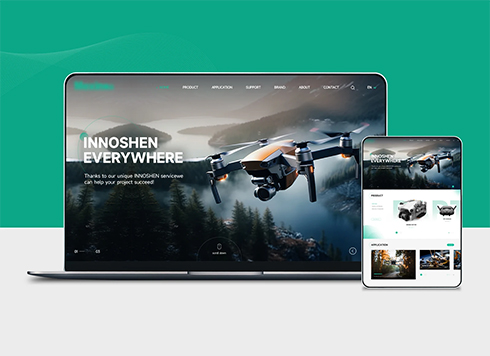 Drone Accessories Company Website Development
Incorporating gray as an accent with the pr ...
-
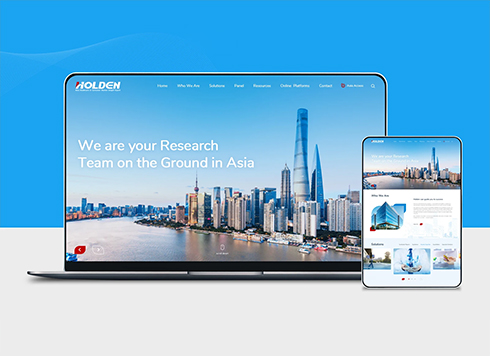 Professional International Research Service Agency Website Construction
This project serves a company with internat ...
-
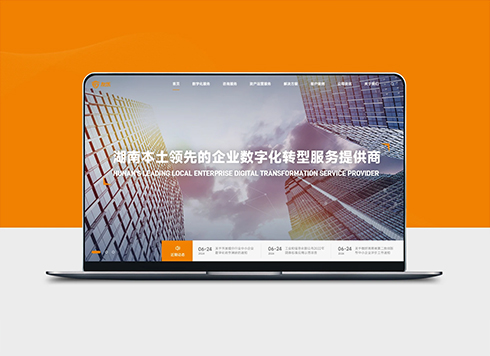 The Construction of Group Websites for Asset Operation and Digital Services
This project is to create a website for a c ...
-
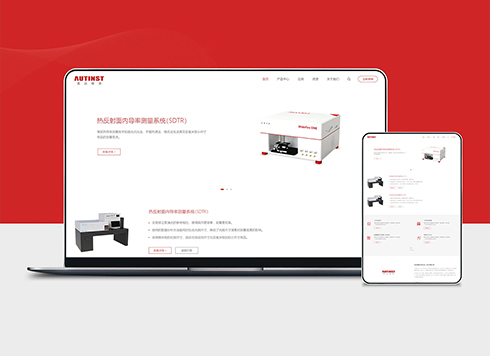 Thermal Test Equipment Website Construction
Founded in 2022, this tech company focuses ...
-
Qingdao Company Website: Customers in Jinan and Yantai—Is “We Serve the Whole Province” Too Empty?
Date: Sep 29, 2026 Read: 67
-
Every page shows the same update date—will AI search treat the site as actively maintained?
Date: Sep 27, 2026 Read: 79
-
After Custom Website Development, If the Company Has No Technician, Does Content Update Have to Go Through the Website Company?
Date: Sep 6, 2026 Read: 127
-
Qingdao Corporate Website: What Budget and Timeline Are Reasonable? Why Local Custom Costs More Than Templates
Date: Aug 21, 2026 Read: 143
-
Qingdao Website Development: A Complete Guide from Selection to Launch
Date: Jul 17, 2026 Read: 156