



Custom website development: the client wants AI-written website copy lightly edited before launch—should operations step in if it reads like boilerplate?
It can work, but simply letting AI generate the copy and giving it a quick polish before launch is usually not enough. In 2026 projects, the more common approach is: AI builds the page skeleton and sentence patterns, while people lock down parameters, qualifications, service scope, and promised time frames item by item. In practice, a first draft for a standard product page often takes 5–15 minutes to produce, and checking plus rewriting often takes another 20–40 minutes (experience range). If this work is skipped, the cost is usually not just awkward style; it is wrong parameters and promises written into public pages, then questioned by customers, price comparators, or regulators as if they were official claims.
An AI first draft saves the step from blank page to something on the page, but errors almost always sit at the fact level
The hardest part of a blank page is the first paragraph, and AI happens to be good at building sentence patterns. But it does not know what this company can actually do or which businesses it does not take on, so it fills gaps using common industry wording. The resulting sentences read reasonably but cannot survive item-by-item checking. Based on rework in projects, problem sentences are highly concentrated, almost all in categories with numbers, names, or promises.
- Product specifications and compatibility scope: AI tends to fill in common values for similar products, which may not match the actual product;
- Qualification names and validity periods: full certificate names, validity dates, and issuing bodies are the easiest to get wrong or omit words;
- Service areas and response times: turning 'on-site service in some areas' into nationwide coverage, or turning a promised time frame into a fixed number;
- Customer lists and partner brands: it tends to cite well-known companies as examples, which is unacceptable;
- Absolute claims: it naturally brings out terms such as 'industry-leading' and 'first', which create compliance risk;
- Industry terminology and units of measure: an outsider may not notice, but the client's technical lead will spot them immediately.
What these errors have in common is that they are hard to see. So the review focus is not polishing sentences, but first pulling out these sentence types and tracing each one to a source.
Three review gates: facts, compliance, tone
This order is not arbitrary; rework cost decreases across the three steps. If facts are wrong, you have to go back to the client for reconfirmation; if compliance is wrong, the whole passage may need rewriting; if the tone is off, you only need to revise sentences. Doing it in reverse often means spending hours polishing style while the parameters are still wrong.
- Facts gate: any sentence with numbers, names, or promises must be tagged with a source (client-provided materials, technical lead confirmation, official documentation); anything without a source is marked 'to be confirmed' and must not go on the page.
- Compliance gate: run a fixed banned-word list; replace absolute wording, unverifiable rankings, and performance promises with ranges or conditional statements.
- Tone gate: unify person and industry voice; delete words like 'one-stop', 'all-round', and 'empower'; replace them with action descriptions visitors can directly judge.
Of the three gates, the facts gate is the most likely to be skipped because it requires asking other people and taking the client's time. But if it is skipped, the other two gates do not matter no matter how carefully they are done. The pass line is simple: every externally visible number and promise on the page can point to a confirmer or a document.
At delivery: only one brochure as source material—how should the work be sequenced?
A typical case is: the budget is in the typical range for a standard presentation website, the timeline is about two weeks, and the client has only one exhibition brochure, three product images, one voice recording from the boss, and no dedicated copywriter. The approach is to first use AI to build the paragraph structure of product pages, then copy every sentence containing parameters, qualifications, or service promises into a separate to-confirm list, and book a 30-minute call with the client's technical lead to confirm or cross out each item. The cost is concrete: the first list had seven or eight parameter mismatches with the actual product and two incomplete qualification statements, causing two days of rework; in exchange, it was about one week faster than commissioning copy from scratch (experience range). Since then, this checklist has been a mandatory pre-delivery checkpoint; whoever skips it owns the rework.
Another shortcut is often proposed: put the page live first and fix issues when the client finds them. It may occasionally pass for presentation pages, but once pricing, qualifications, or service scope are involved, errors get amplified during client visits, bidding, and price comparison—fixing a page later is easy; changing an impression someone already formed is hard.
AI first draft, outsourced copywriting, or sales writing it themselves: how do cost and timeline compare?
There is no absolute best among the three; it depends on content type and volume. The judging dimension is whether errors on this type of page can be fixed by revising sentences; 'who writes more beautifully' is not the point. For explanatory content that can be corrected quickly, an AI first draft is more cost-effective; for pages where an error creates external liability, human writing is safer.
- AI first draft plus internal review: single-page labor time often falls in the range of tens to one or two hundred RMB (experience range), with a timeline of half a day to one day; suitable for product details, service descriptions, FAQs, and terminology explanations; the main risks are factual errors and too much boilerplate, so a reviewer is mandatory.
- Outsourced copywriting: single page often several hundred to over a thousand RMB (experience range), timeline 3–10 working days; suitable for homepage main taglines, brand stories, and content requiring interviews; the main risks are insufficient industry understanding and back-and-forth revisions, so allow one to two rounds of revision.
- Sales or technical staff writing it themselves: cost is internal labor time, timeline uncontrollable; suitable for technical details and real cases; the main risk is term stacking that visitors cannot understand, requiring an editor to translate it again.
In actual projects, a more common combination is: explanatory pages use AI first drafts plus technical review; brand pages are outsourced or led internally; case studies are dictated by sales and organized by an editor. This combination usually has lower total labor time and less rework than using one method for everything.
Which pages can use it, and which to avoid for now
AI first drafts are suitable for pages with repeated structure, clear parameters, and checkable facts: product details, service descriptions, FAQs, first drafts of policy terms, and multilingual first translations. The value of AI for this content is fixing the format and sentence patterns, making human revision faster than writing from scratch. Based on common practice in 2026, multilingual pages can be first translated by AI, but before launch a native speaker or industry reviewer needs to check terminology and units of measure; otherwise the errors are hard to see.
The unsuitable cases are equally clear: homepage main taglines, brand claims, passages involving qualifications and performance promises, promotional wording in heavily regulated industries, and case studies requiring real customer details are not suitable for direct AI drafting. Errors in this content cannot be fixed by revising sentences, and AI has no factual source to rely on; it can only fill in based on what 'seems reasonable', which is the opposite of what external communication requires.
- When the only source material is a brochure and there is no confirmer, ask for materials first, not copy first;
- When the client asks for writing that sounds more professional than competitors, what is often missing is technical input from the team, not writing flair;
- When page content will be used as a bid attachment or contract attachment, treat it as a formal external document.
Common questions
Will search engines judge AI-written website copy as low quality and affect indexing?
Search engines mainly look at whether content meets visitor needs and whether information is accurate and complete; they do not directly demote content because of how it was generated. But boilerplate stacking, vague facts, and high similarity across pages do affect performance.
The client says AI generation is free, so why is there still a copywriting fee at delivery?
What is charged is review and rewriting labor: confirming parameters with the client, unifying terminology, checking the compliance banned-word list, and rewriting in an industry voice. This usually takes more time than generation itself and is a per-page labor cost.
If AI-generated copy is used, does it need to be labeled on the website?
Routine introductory pages on a corporate website generally do not need page-by-page labeling, but the content must be true and verifiable. For content with opinions, reviews, or bylines, stating the author or reviewer is safer; check the specific platform rules.
What problems arise if multilingual pages are translated by AI and launched directly?
Common problems are wrong terminology and units of measure, and non-native industry phrasing—readable but not like a local wrote it. AI first translation is acceptable, but a native speaker or industry reviewer should check it before launch.
If the client only has a one-page brochure, can AI fill in the missing content?
AI cannot invent facts out of thin air. Missing parameters, qualifications, and service scope must be confirmed with the client; making them up creates a false advertising risk and is hard to explain later when questioned.
Practical recommendation: make 'AI first draft, fact-confirmation checklist, banned-word list' a fixed three-step process, and only move to design and layout after it is complete. It applies to product and service description pages and to projects with high content volume and tight timelines; it is not suitable for homepage claims, qualification promises, or promotional wording in heavily regulated industries. When unsure, first ask: 'Who can sign off on this sentence?' If no one can answer, do not launch it yet.
-
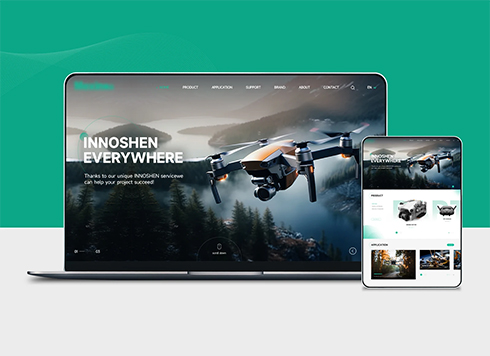 Drone Accessories Company Website Development
Incorporating gray as an accent with the pr ...
-
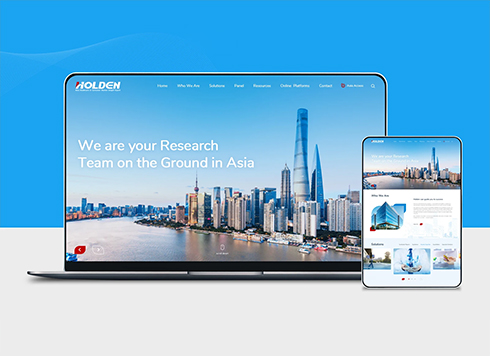 Professional International Research Service Agency Website Construction
This project serves a company with internat ...
-
 The Construction of Group Websites for Asset Operation and Digital Services
This project is to create a website for a c ...
-
 Thermal Test Equipment Website Construction
Founded in 2022, this tech company focuses ...
-
In custom website development, should the inquiry form’s “Requirement Description” be required? Sales says they can’t quote without it
Date: Oct 18, 2026 Read: 18
-
Custom website development: the client says the company has a server room and old servers—can the official site just go there? IT says it saves trouble; we're worried about ICP filing and on-call support. Who should we listen to?
Date: Oct 17, 2026 Read: 24
-
Custom Website Development: A Dozen Top Navigation Items—Is a Flat Layout Enough? Operations Wants All Visible, the Boss Wants Eight, Whose Call Is It?
Date: Oct 16, 2026 Read: 27
-
Custom website development: the site has fewer than a hundred pages, the client insists on adding site search, operations says it's unnecessary — should we push back first?
Date: Oct 14, 2026 Read: 23
-
Custom website development: the careers page only lists an email address, and candidates say they can't be bothered to write in — should we add an online application form?
Date: Oct 13, 2026 Read: 37