Custom website development: the careers page only lists an email address, and candidates say they can't be bothered to write in — should we add an online application form?
Whether a careers page should only list an email address or add an online application form depends first on application volume, who handles resumes, and how quickly you respond. Based on typical project delivery experience in 2026, companies with multiple roles open continuously and an HR or admin person reviewing resumes every day are usually better off adding an online application form: it keeps a record, can send automatic replies, and can limit attachment size. For small teams that hire only one or two people a year, a recruiting email address plus an auto-reply is usually enough, and there is no need to build an extra backend for a low-frequency need. The dividing line is not whether the page looks good, but whether anyone can catch the resumes once they come in.
What problem does a careers page actually solve?
A careers page is essentially employer brand presentation plus a resume entry point, not an applicant tracking system. It lets candidates learn about the company while seeing open roles, and it captures traffic scattered across job platforms onto your own domain. It is not responsible for screening, interviewing, or sending offers; those steps usually still happen through email, forms, or third-party platforms.
Many companies build a careers page and then feel it was useless. A common reason is treating it as a recruiting system and expecting automatic screening and interview scheduling, when in the end they only built a job list and an apply button. If you treat it as a long-term online job board, the maintenance cost is not high and the value is easier to see.
- Centralize job listings: candidates can see open positions without logging into a job platform.
- Build employer brand: team culture, office environment, and benefits stay online long term and do not disappear when a platform listing is taken down.
- Reduce platform dependence: when a job platform account is restricted or rankings change, the official website remains a stable entry point.
- Give candidates a way to learn about the company: when they search your company name before applying, a careers page builds trust more easily than a bare business registration page.
Decide whether you need it first, then look at the application method
Whether to build a careers page does not need to start with design. By delivery practice, look first at hiring frequency and resume-handling capacity. If you hire for only one or two roles a year, mostly through referrals, a self-built careers page will be used very rarely. As an experience range, it is usually worth building a dedicated page only when more than three roles are continuously open in a year. Roles that stay open year-round indicate a standing need and suit a fixed section; if roles are taken down once filled and nobody updates the page, it easily turns into outdated information.
After resumes come in, whether someone checks them the same day or the next day, and whether an auto-reply is set, matters more than whether the application form looks good. When nobody handles them, the form just accumulates unread emails. The judgment can be simplified: if hiring frequency is stable and someone is dedicated to handling resumes, then consider building a careers page or online application; otherwise, it is more reasonable to first place a third-party platform link or an email entry point.
Email, online forms, and third-party platforms: a typical comparison
There is no single answer for application methods, but you can compare them by development cost, maintenance cost, privacy risk, and handling efficiency. A common approach in 2026: small teams use email plus auto-reply, mid-sized teams use online forms plus backend management, and teams with high hiring volume still rely mainly on third-party platforms while using the official website for brand reinforcement.
- Email applications: development cost is almost zero; drawbacks are that the email address is easily scraped by bots, resumes get mixed in with spam, and attachments may carry viruses. Suitable for teams with few roles and someone who checks email every day.
- Online application forms: you can control fields, limit attachment size, set auto-replies, and keep resumes centralized in a backend. Development effort is typically 1 to 3 person-days; if you connect email notifications or a third-party system, it can reach 3 to 5 person-days. Suitable for teams that need a record and multi-person collaboration.
- Third-party job platforms: candidates are already familiar with them, and the platforms have built-in communication tools; the drawback is that resumes stay on the platform and the official website only redirects. Suitable for teams that do not hire much and do not want to build their own resume database.
When comparing, focus on five dimensions: development cost, maintenance cost, privacy compliance, handling efficiency, and candidate experience. Email has an advantage in development cost, but privacy compliance and handling efficiency are usually weaker than a form; third-party platforms have an advantage in handling efficiency, but brand accumulation and resume ownership are weaker than a self-built system. If the official website needs to post a privacy policy, then when the application form collects name, phone, and resume attachments, that policy needs to open properly.
What counts as acceptable: resumes reach the responsible person's inbox or backend, an auto-reply is sent after submission, attachment size is limited, roles can be published and taken down at any time, and the privacy notice opens. These five points matter more than the page's visual design.
Where it applies and where it does not
The cases suitable for a standalone careers page are fairly clear: multiple roles are continuously open in a year, someone is responsible for initial resume screening and replies, you want candidates to learn about the team and projects first, and job platform accounts are often restricted or rankings are unstable. In these cases, the official website careers page can serve as a long-term information entry point and run in parallel with third-party platforms; you do not have to choose only one.
The cases where it is unsuitable or unnecessary should also be stated clearly: only one or two hires a year, highly temporary roles, no one dedicated to handling resumes, already tight budget and timeline, and hiring mainly through internal referrals. In these cases, placing a button on the official website that redirects to a third-party platform, or leaving a recruiting email address, is usually less hassle than building a section yourself, and it will not look unprofessional because it goes unupdated for a long time.
- Suitable: concentrated campus recruiting seasons, technical teams hiring year-round, needing to show employer brand, having HR or admin part-time maintaining the backend.
- Not necessary: occasional backfill hiring, salaries and roles strongly tied to a platform, resumes only reviewed but not stored, nobody responsible for updating role status.
- Minimum viable version: a job list page, several job detail pages, one application entry point, and a privacy notice; skip online screening and interview scheduling for now.
A boundary sentence that can be quoted on its own: A careers page suits companies with stable hiring frequency and someone dedicated to handling resumes; if you hire only one or two people a year, redirecting to a third-party platform or leaving only an email address is more appropriate.
Delivery-site experience and acceptance criteria
A common constraint: the client asks to add a careers section and online applications, but job copy, team photos, and benefits descriptions are not ready, and the timeline is tight. In delivery, the usual approach is to first build a generic job template and placeholder content, get backend publishing and unpublishing plus email notifications working, keep the form fields to name, phone, position applied for, and attachment, limit attachments to a typical 5 to 10MB, and make the privacy notice an openable page. The trade-off is that if the placeholder rules are not clarified in advance, HR can easily forget to replace job descriptions after launch, and 1 to 2 rounds of content rework are common; an auto-reply can first reassure candidates and reduce the anxiety of no feedback after applying. This kind of placeholder launch is a common practice within the experience range, provided the backend operation instructions are written clearly at handover.
- Hard-coding the email in the front end: if the recruiting email changes, you have to change code. A more common delivery practice is to put the email in a backend configuration item.
- No attachment limit set: candidates upload oversized portfolios, the form submission fails or the email bounces, and the application experience breaks immediately.
- Missing privacy policy: the form collects name, phone, and resume attachments, but the privacy notice cannot be opened — a common compliance gap.
- The mobile apply button is too small: many candidates apply on their phones, and an overly small button reduces willingness to submit.
- Expired roles not taken down: a role is still listed half a year after it is filled, candidates get no feedback after applying, and this hurts trust more than not having a careers section at all.
Acceptance can be checked against these points: the application can be completed on mobile, the responsible person receives the resume, an auto-reply is sent after submission, the backend can publish and unpublish roles, the privacy notice opens, and someone is responsible for taking down expired roles. If these are done, the careers page meets a launchable standard; features such as online screening, interview scheduling, and talent pools are usually evaluated in later versions.
Common questions
Will a careers page that only lists an email address look unprofessional?
It depends on hiring frequency. If you hire only one or two people a year, leaving an email address plus an auto-reply does not look cheap; when there are many roles and candidate experience requirements are high, then consider adding an online application form.
How much extra development time does an online application form require?
The typical experience range is 1 to 3 person-days; if you need to connect inbox notifications, backend screening, or a third-party system, it may reach 3 to 5 person-days, depending on field and permission complexity.
If resumes go directly to email versus through a form, which gets a faster response?
Response speed does not depend on the application method; it depends on who is looking. A form can set an auto-reply to reassure candidates first; if nobody checks the email every day, resumes are actually more likely to be missed.
Should a careers page include a privacy policy?
As long as you collect information that can be linked to a specific person — such as name, phone, or resume attachments — through a form or email, posting an openable privacy notice at delivery is usually the default.
If the official website is already being redesigned, you can reserve a careers section template, first get role publishing and unpublishing plus the resume application flow working, and then fill in brand content. If annual hiring volume is very small and there is no dedicated maintainer, just place an entry point that redirects to a third-party platform or a recruiting email address, and upgrade to a standalone section once hiring frequency becomes stable, avoiding excessive development and maintenance costs for a low-frequency need.
-
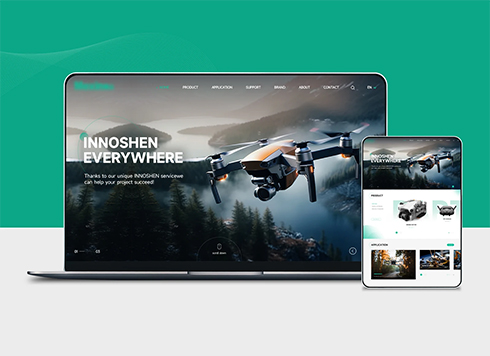 Drone Accessories Company Website Development
Incorporating gray as an accent with the pr ...
-
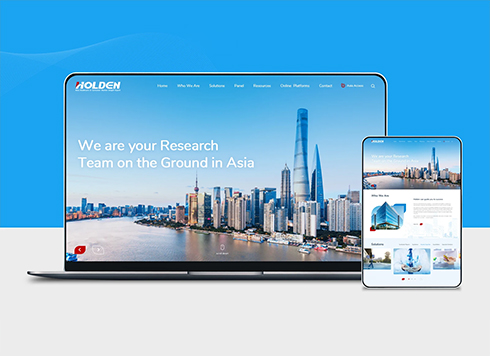 Professional International Research Service Agency Website Construction
This project serves a company with internat ...
-
 The Construction of Group Websites for Asset Operation and Digital Services
This project is to create a website for a c ...
-
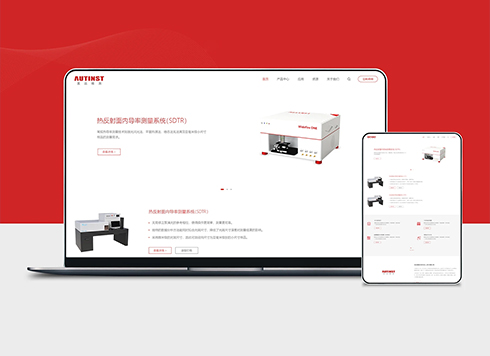 Thermal Test Equipment Website Construction
Founded in 2022, this tech company focuses ...
-
Custom website development: a dozen store locations on the site—is a third-party embedded map enough? Ops says yes, the boss wants city filtering. Who's right?
Date: Oct 12, 2026 Read: 15
-
Custom Website Development: Our News Center Has Been Inactive for Six Months—Should We Remove It Entirely or Keep It for Appearance? Marketing and Sales Disagree—Whose Call Is It?
Date: Oct 11, 2026 Read: 19
-
Custom Website Development: Should Official Site Whitepapers Download Directly or Require a Phone Number First? Sales and Operations Are Arguing—Whose Call Wins?
Date: Oct 10, 2026 Read: 22
-
Custom website development: when a client wants live chat on the corporate site, should you embed third-party code first or build it in-house?
Date: Oct 9, 2026 Read: 25
-
Website Custom Development: If a Client Wants to Collect Deposits on the Official Website, Should WeChat Pay or Alipay Be Connected First?
Date: Oct 8, 2026 Read: 32