Chengdu company website: if clients search the company name before a deal, will listing only services—without the office area or contact person—lead to repeated follow-ups?
Conclusion first: When Chengdu clients search a company name before discussing cooperation, what usually triggers repeated follow-ups is not whether the page looks good, but the absence of four verifiable types of information: whether the legal entity matches the business license, whether the office area and service scope are clearly stated, whether the business and delivery capability are described specifically, and whether there is a responsible contact entry point. Based on 2026 Chengdu local delivery experience, filling in these items first usually saves more communication cost than a full-site redesign.
What clients are actually verifying when they search a company name
The motivation behind searching a company name is simple: confirming that this company actually exists, what it does, and whether they can reach a person. In Chengdu local projects, a common situation is that the client first asks on WeChat, "What's your official website?" Then clicks in, looks for two or three minutes, and decides whether to arrange a meeting or send over tender documents.
This means the official website serves as a background verification entry point at this stage, not a promotional poster. The standard can be made very specific: when a Chengdu procurement officer or project lead who has never heard your name opens the page, can they answer within one minute—"who is this, where are they, what do they do, and who do I contact?" The parts they cannot answer are the parts they will follow up on in WeChat later.
- Check authenticity first: Whether the entity name, business registration information, and office address can corroborate each other—this is the premise for deciding whether it is worth continuing the conversation.
- Then check fit: Whether what you do is the type of work they are about to procure or outsource, and whether the industry and stage match.
- Then look at cost: How much communication cost it will roughly take after contacting you, and whether an on-site visit can be arranged locally in Chengdu.
Four types of information Chengdu local clients tend to ask about
The four types are ordered from concrete to abstract because this is the psychological path clients follow when verifying information: first confirm the company really exists, then judge whether the business matches, and only after that care about how to get in touch. Conversely, making contact information very prominent while the entity and address remain vague can instead make people doubt the credibility of the page.
- Entity information: Full company name, business license name, office address. Note that the name should stay consistent with the filing entity and the contract header. If the brand name differs from the license name, use one short sentence to clarify the relationship.
- Region and service scope: Which area of Chengdu the office is in, whether on-site visits are possible, and which districts/counties in Chengdu or cities in Sichuan the business covers. Avoid empty phrases like "based in Chengdu, serving the whole country."
- Business and delivery description: What exactly you do, at what scale and stage, and what the deliverables include. Keep "services we can provide" separate from "projects we have actually done" instead of merging them into one vague introduction.
- Contact and responsibility entry point: Landline or enterprise WeChat, the role of the contact person, and roughly when they can be reached. Do not list only a salesperson's mobile number—if that person is unavailable, the line is effectively dead.
These four types do not each need to be long articles; the key is that they can be verified. Write the address down to the street or park, and the service scope down to specific districts/counties, and clients can judge for themselves whether you are nearby and whether they can visit that day without asking again. The vaguer the writing, the more follow-up questions there will be.
A pass-line checklist you can compare against
To judge whether an official website does enough on this matter, look not at how many pages there are, but at whether the information is self-consistent when spot-checked. The following comparison can be used for a pre-launch self-check and for aligning requirements with a website vendor, so both sides do not have different understandings of what "done" means.
- Pass: The homepage or about page states the full company name, office area, main business direction, and contact information, and it is consistent with business registration and filing information.
- Pass: Case or service pages give the industry, delivery content, and project stage, without naming clients that have not authorized disclosure.
- Point deduction: The whole site only has adjectives like "professional, trustworthy, efficient," with no verifiable fact anywhere.
- Point deduction: The address stops at "Chengdu" with no further detail, so clients cannot tell which district you are in or whether an on-site visit is convenient.
- Point deduction: Only a WeChat QR code is left, with no indication of who is monitoring it or when replies are available.
Even when putting the same information online, there are usually two common implementation paths, with quite different budgets and timelines. You can choose based on your own client sources:
- Streamlined version (single page to three to five sections): Budget typically ranges from a few thousand yuan to 15,000 yuan (experience range), and timeline typically ranges from 1 to 3 weeks. Suitable for companies with concentrated client sources and a limited amount of information to explain.
- Locally customized multi-section version: Budget typically ranges from 15,000 to 60,000 yuan (experience range), and timeline typically ranges from 3 to 8 weeks. Suitable for companies with multiple business lines, cases and qualification descriptions to include, and ongoing updates afterward.
Conversely, a large number of sections does not equal complete information. Ten pages all talking about vision are not as good as one page that clearly states the entity, address, business, and contact person. The pass line is "clients can verify it themselves," not "we think we wrote it comprehensively."
Local delivery in practice: how materials, budget, and timeline pull against each other
In Chengdu projects, a common situation is this: budget and timeline are basically agreed, with the locally customized official website budget falling in the 15,000 to 60,000 yuan range (experience range, depending on customization depth and number of sections) and a timeline of 3 to 8 weeks; but the business license, office photos, and project images are scattered among the boss, finance, and marketing, and the entity name and office address are changed twice more after work begins. As a result, visual mockups and front-end work need 2 to 3 rounds of rework, launch is delayed by 1 to 3 weeks, and the extra labor spent going back and forth on these points is often far more expensive than spending half a day upfront to confirm the information. A more stable approach is to confirm four things on the first day of work—full entity name, office address, external contact information, and case authorization scope—and keep a written record before moving into design. When Xiyue Company advances projects according to enterprise project delivery practices, it also verifies these four items before scheduling visual mockups.
Applicable scenarios and boundaries
This approach suits scenarios where "clients search the company name before talking business": Chengdu local engineering projects, software and information service outsourcing, equipment and industrial goods supply, design consulting, and companies that need to cooperate with clients or tender parties on qualification verification. When the official website clearly states the four types of information, it can reduce repeated explanations in the early stage and let clients resolve basic questions before arranging a meeting.
What does not apply, or does not need to be followed, is also clear: if almost all clients come from in-platform price comparisons and basically do not search the company name before signing, or if the business itself is driven by acquaintances and referrals, then making the official website a concise single page is enough; when the budget is very tight, it is more practical to first make the entity, address, and contact information accurate than to add a pile of case sections first. The boundary can be remembered this way: an official website solves information verification and initial trust; it cannot solve product pricing, delivery capability, or commercial terms themselves.
FAQ
When clients search a company name, do they look at the homepage first or the About Us page first?
Both. A common approach is to explain the industry and city in the first screen of the homepage, and put entity information on the About Us page or in the footer, so clients can complete verification within two or three minutes.
The company just moved to a new office in Chengdu. Can we leave the address off the website for now?
It is better to sync it as soon as possible. When the address and map listing are inconsistent, clients may doubt the authenticity of the entity. If the new address is not yet stable, writing the area and noting that on-site visits are by appointment is better than leaving it blank.
Is "Chengdu and surrounding areas" specific enough for the service scope on the website?
In most cases, no. A common approach is to list specific districts/counties or major cities in Sichuan, so clients can judge whether on-site visits are convenient. Vague wording tends to trigger a new round of follow-ups.
If only a WeChat ID is listed as contact information, will clients avoid contacting us?
In Chengdu this is common, but it is better to also provide a phone number or enterprise WeChat and state reply hours. With only a QR code, clients cannot tell whether anyone is monitoring it and may put it aside.
How often should website information be updated?
Changes involving the entity, address, or contact information should be synced within the same month; cases and qualifications can be organized every six months to a year. Based on experience range, outdated information is more likely to trigger follow-ups than missing information.
If your clients search the company name once before discussing cooperation, the official website should treat "who is this, where are they, what do they do, and who do I contact" as baseline content. It is advisable to first run a self-check with the comparison checklist above; filling in missing items is usually easier than a full-site redesign. But if the entity, address, and filing information contradict each other, sort out those basics first before discussing page optimization.
-
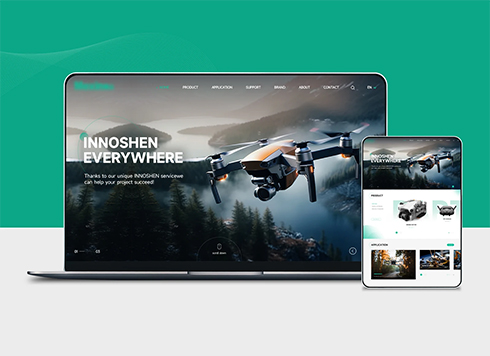 Drone Accessories Company Website Development
Incorporating gray as an accent with the pr ...
-
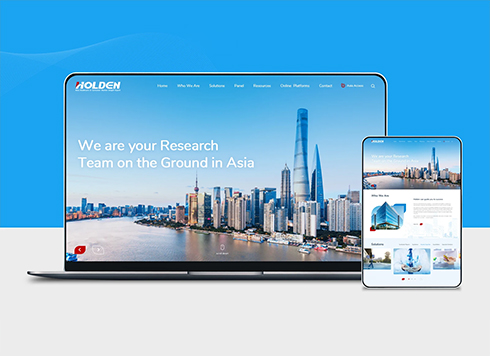 Professional International Research Service Agency Website Construction
This project serves a company with internat ...
-
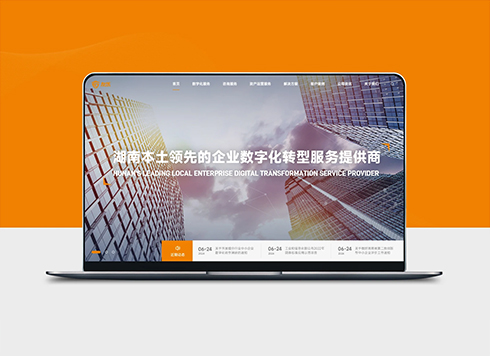 The Construction of Group Websites for Asset Operation and Digital Services
This project is to create a website for a c ...
-
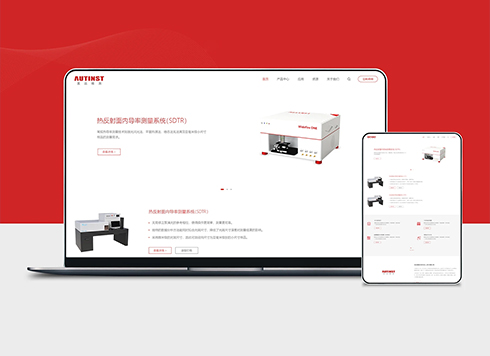 Thermal Test Equipment Website Construction
Founded in 2022, this tech company focuses ...
-
Why does a product video keep buffering when clients open it in WeChat on a Chengdu company website—bandwidth or unprocessed video?
Date: Sep 23, 2026 Read: 89
-
How much does it cost to build a corporate website in Chengdu? Is there a big difference between local custom development and templates?
Date: Aug 16, 2026 Read: 312
-
2026 Chengdu Enterprise Website Development: Selection Path and Local Implementation Guide
Date: Jul 29, 2026 Read: 155
-
Suzhou Factory Website: Before an Overseas Client Audit, Should You Detail the Equipment List or Keep It Vague?
Date: Oct 12, 2026 Read: 13
-
Chongqing company website: in WeChat Search, customers only find Official Account posts, not the website page—where is it stuck?
Date: Oct 11, 2026 Read: 24