





Why does a product video keep buffering when clients open it in WeChat on a Chengdu company website—bandwidth or unprocessed video?
For a company website in Chengdu, when a client opens a product video from WeChat and it keeps buffering, most of the time it is not because too little server bandwidth was purchased, but because the video file is unprocessed: phone-shot original files uploaded directly, autoplay by default, and no compression or cover image. Based on 2026 local delivery experience in Chengdu, first bring first-screen resources down to around 1MB, keep requests within 30, and change the video to a cover image with click-to-play or an external link to a third-party platform; the feel when opening in WeChat usually changes. The share of sites that truly need a server spec change or more bandwidth is not high.
Video buffering in WeChat is not the same as slow opening on a computer
WeChat's built-in browser is a WebView, and its video decoding, cache space, and autoplay policies differ from those of a PC browser; clients are also using mobile networks at park gates, exhibition halls, and on the subway, where bandwidth itself fluctuates. For the same page with video, it may show the first screen in one second on office gigabit internet, but take four to six seconds to show content in WeChat. Judgments must be based on real testing inside WeChat; looking only at desktop speed will lead to wrong conclusions.
- Autoplay blocked: WeChat's restrictions on video autoplay and pop-ups are not fixed, and Android and iOS behave differently, so pages easily get stuck in a waiting state.
- Video files not compressed: phone-shot videos commonly range from tens of MB to hundreds of MB; when placed directly on the page, a client opening it must first download a large chunk.
- Images not adapted for resolution: mobile devices still download desktop-sized large images, often several times larger in file size.
- Third-party components stacked: analytics, live chat, maps, and review plug-ins each add extra requests.
- A normal share card does not mean fast opening: a configured thumbnail only means the share information is complete; it is a different matter from loading speed.
Don't rush to add bandwidth: a 'three checks and one test' troubleshooting sequence
The logic behind this sequence is 'change cost from low to high, impact scope from large to small.' Working on images and video first usually produces results without extra spending; adding bandwidth or changing specs involves redeployment, filing information changes, and even brief downtime, so it is a later action. Each step needs a checkable pass criterion; otherwise it is easy to go back and forth based on feeling.
- Check first-screen size: total first-screen resources on the homepage are commonly kept around 1MB; a single main image at 200-400KB is a typical range; do not put video directly into the first screen with autoplay.
- Check request count and blocking: keep first-screen requests within 30, merge and compress JS and CSS, and prioritize local subsets for font icons.
- Check server response and bandwidth: use third-party speed tests to check time to first byte; in the experience range, under 500ms is good; if images and videos already use object storage or CDN, bandwidth pressure drops noticeably.
- Test real scenarios: use a real device to open inside WeChat, switch to weak network mode, test Chengdu local and cross-province access separately, and record first-screen visible time and video start time.
Note: do not adjust configuration before the third step. Many Chengdu projects upgrade bandwidth right away, but the video is still unprocessed, speed changes little, money is spent, and the problem remains. If it is still slow after the first two steps, then consider upgrading specs or switching to a Southwest node.
Where should the money go: Chengdu local data centers, Southwest nodes, and CDN
Chengdu companies' clients are mostly within Sichuan, so choosing a Southwest availability zone generally saves one cross-province round trip, but the gap is not as dramatic as imagined; what truly holds back the first screen is often still video, image, and script size. Below is a comparison based on common practices in 2026; amounts and timelines are experience ranges, and actual figures depend on provider quotes and specific configuration.
- Entry-level cloud server or virtual hosting (Southwest/Sichuan node): commonly several hundred to two or three thousand RMB per year, enough for a showcase website.
- Cloud server + object storage/CDN: several hundred to two or three thousand RMB more per year than the previous tier, suitable for sites with many images and videos and scattered traffic sources.
- Dedicated bandwidth or higher specs: commonly starting at several thousand RMB per year, worth it only when there is concurrency, online preview, or download demand.
- Filing and region: domestic servers require ICP filing; in Sichuan, 7-20 working days is common, and it is advisable to allow 2-4 weeks overall; when clients are mainly overseas, Hong Kong or overseas nodes do not require filing, but stability for mainland access may fluctuate.
Delivery site: large assets, tight budget, urgent launch—how to reduce rework
At a local Chengdu project delivery site, a common combination of constraints appears: Marketing provides phone-shot original videos, 200-800MB each, plus a set of 4-8MB original product images; launch is pinned two weeks before an exhibition, and the budget only covers basic configuration. The approach is to lock down image and video standards first—homepage main images at 200-400KB, long images split into sections, videos changed to cover image plus click-to-play or external links to a third-party platform—and then have designers produce images to those standards. This gets the structure working first, while visuals can be refined later. The cost is realistic: if you wait until all design drafts are final before going back to compress videos, one round of rework is common, adding 3-7 days to the schedule; some projects, to catch the exhibition, can only launch the compressed version first and replace HD assets after the exhibition, adding one more maintenance step.
When do you actually need to change servers or add bandwidth
The basis is not 'it feels slow' but several quantifiable signals. If two or three of the following are met, then consider upgrading specs.
- Videos are already compressed and changed to click-to-play, images are already streamlined, and time to first byte is still above 1 second.
- The backend has real-time data, online preview, large file downloads, or similar services, and individual requests are inherently heavy.
- Traffic concentrates in the same period, with obvious queuing or timeouts.
- The page is on shared hosting, and other sites in the same data center consume resources and affect it.
Acceptance criteria can be simply set as: on a real device under weak network, main first-screen content visible within 2-3 seconds, and video starts within 2-4 seconds after click; backend pages respond within 1-2 seconds on a normal network. If not met, then discuss upgrading; if met, there is no need to spend more for psychological comfort.
Applicable scenarios and boundaries
This troubleshooting is suitable for Chengdu company websites whose clients mainly enter from WeChat, Moments, and Official Accounts, with product videos or large images on the page, and with the goal of consultation lead capture, such as equipment manufacturing, medical devices, culture/tourism and dining, and corporate services. Conversely, there are boundaries where it is not necessary.
- Not necessary: a purely static small site under a few dozen KB total; adding CDN brings limited improvement and increases maintenance cost.
- Not necessary: sites whose clients are almost entirely overseas and have very little mainland traffic; agonizing over a Chengdu local data center has little meaning.
- Not necessary when the budget is extremely tight: compressing videos and images first and streamlining requests is usually more cost-effective than upgrading bandwidth first.
- Be cautious: for sites already integrated with business systems and with higher concurrency, run a gray release test before switching nodes to avoid affecting online business.
Frequently asked questions
Will changing video to click-to-play affect client experience?
Generally not. When clients are willing to watch, clicking is more intentional, and it avoids autoplay being blocked and wasted traffic; with a good cover image, the first impression is actually cleaner.
If video is hosted on a third-party platform, will it still lag when clients click it?
In most cases it will be better because the platform uses adaptive bitrate. But the external link adds a step, and the platform may carry ads, so it is suitable as a transition or supplement, not the only option.
Are Chengdu local servers always faster than servers elsewhere?
Not necessarily. If clients are scattered across multiple cities in Sichuan, the same-city advantage is limited; when videos and images are not optimized, any provider's server can feel slow.
Does adding CDN mean it will no longer lag in WeChat?
No. CDN solves distribution and bandwidth; if the first screen itself is too heavy, buffering remains. Reduce size first, then look at distribution, which is more reliable.
Will it work if the boss says to just add bandwidth?
It can, but this is a later-stage measure. First confirm whether first-screen size and request count are reasonable; otherwise adding bandwidth often yields only limited improvement.
If you are pushing a website redesign in Chengdu, start with one small thing: use a real device to open the product page with video in WeChat, record first-screen appearance time and video start time, then check against the four steps above one by one. Most sites can regain speed in the first two steps; for projects involving concurrency, downloads, or system integration, run a small-scale test before adjusting configuration to avoid affecting online business.
-
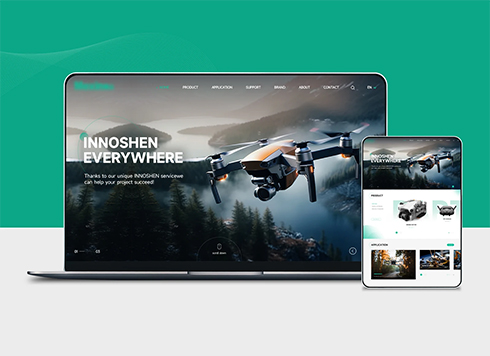 Drone Accessories Company Website Development
Incorporating gray as an accent with the pr ...
-
 Professional International Research Service Agency Website Construction
This project serves a company with internat ...
-
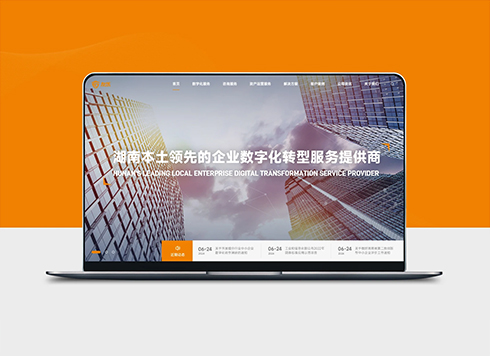 The Construction of Group Websites for Asset Operation and Digital Services
This project is to create a website for a c ...
-
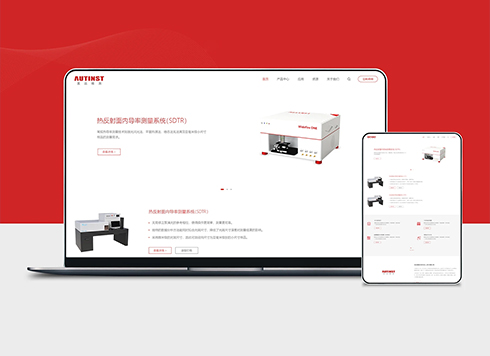 Thermal Test Equipment Website Construction
Founded in 2022, this tech company focuses ...
-
How much does it cost to build a corporate website in Chengdu? Is there a big difference between local custom development and templates?
Date: Aug 16, 2026 Read: 276
-
2026 Chengdu Enterprise Website Development: Selection Path and Local Implementation Guide
Date: Jul 29, 2026 Read: 120
-
A Suzhou factory's website only swaps model names on product pages — when customers search a specific spec, can they still find the matching page?
Date: Sep 22, 2026 Read: 16
-
Chongqing company website only says 'Chongqing' — can customers searching 'Chongqing + product' actually find me?
Date: Sep 21, 2026 Read: 18
-
Guangzhou company website redesign: brochure QR code still opens the old page—do we need to reprint?
Date: Sep 20, 2026 Read: 25