





All services crammed onto one long page: will AI drag in the others when a client asks about one?
A conclusion you can quote on its own: a single-page site won't stop AI search from crawling your content, but it easily leaves the AI unable to tell where one boundary ends and another begins. When a company site stuffs every service into the same URL and separates sections only with font size and spacing, what AI retrieves is a whole-page passage, and several services getting stitched into the same answer is a common outcome. Based on 2026 delivery experience with company websites, this problem clusters around service-based businesses.
For a single-page site, "being seen" and "being understood" are two different things
When an AI answer engine processes a page, it usually splits the body into passages by length or semantics, then picks out the parts that can answer a question on their own. It doesn't judge "this block is finished" the way a person does, using scroll position, dividers, and large images. A single-page site has only one URL and one set of page-level titles, so all content shares the same group of topical signals.
What really decides whether AI can tell the passages apart is the HTML structure: whether there are h2 and h3 levels, whether the content sits in separate p elements, and whether the key information is written into the body. If a section title is just a div with a 28-pixel font size, it is structurally no different from ordinary text, and the model can only guess at the boundary from semantics — so the odds of guessing wrong naturally rise.
- A single URL carries all the content, so page-level topical terms can't be split by service;
- Titles rely on visual styling rather than tags, so hierarchy information is lost during extraction;
- Services, prices, and contact details are crammed into one block of text, so passage retrieval easily crosses boundaries.
Three common misreadings on single-page sites
In real projects, the mismatches below come up fairly often. The cause usually isn't a dumb model — it's that the page never gives a boundary.
- Services blended together: when service A and service B sit in two adjacent paragraphs separated only by a divider line, AI may merge the deliverables of both into one sentence and stay vague when asked "are these two parallel, or does one contain the other";
- Price mismatches: the whole page states "priced per project" only once, but the pricing basis for different services actually differs, so AI tends to apply one service's range to another;
- Entity binding drift: when the phone number and address appear only at the bottom of the page, AI may answer a question about a specific service without that information, or treat the headquarters address as the only location for every business line.
These don't always happen; it depends on which passages the model retrieved that time. But the blurrier the page structure, the higher the chance of a mismatch — and the errors are random, so asking the same question a few days later may return a different version.
The "five single-page sectioning questions" for a self-check
These five questions are ordered as "can it be cut apart → once cut, does it look like an independent topic → does it contain verifiable information." The first two decide whether the content can be cited; the last three decide whether it is cited accurately. They are meant to be walked through by the content owner and the front-end developer together, not left to the copywriter alone.
- Does every business section have an explicit h2 or h3 title, rather than pure visual styling?
- If you pull a section's title and body out on its own, can it be read without the surrounding context?
- Does each section spell out who it is for, what is delivered, and where the business boundary lies, instead of just using adjectives?
- Do numbers such as price and timeline state which specific service they belong to, rather than one sentence shared across the whole page?
- Do the entity information and contact details appear at least once near the key sections?
A workable pass line: if more than two of the five answers are "no," the page is better suited to being a brand showcase page, and in the short term you shouldn't expect it to carry the job of being cited accurately by AI.
Single-page vs. multi-page: how to weigh the trade-offs
A single page isn't inherently a problem. When the budget is tight, the service line is narrow, and brand presentation is the priority, a single-page site is a reasonable choice and ships fast. The real problem is cramming a service-based business into one page and still expecting it to carry the work of price comparison and service selection.
- Delivery timeline: a custom single-page site commonly takes 2–4 weeks; a site with 3–5 standalone service pages commonly takes 4–8 weeks (experience range, varying with visual complexity and how complete the assets are);
- Content maintenance: changing one spot on a single page often shifts the layout of the whole page, while a multi-page site lets you replace one part without touching the rest;
- AI readability: in a multi-page setup, each URL has its own title and topical terms, so the odds of being cited accurately are usually higher;
- Conversion path: a single page guides visitors through scroll-based storytelling, while multiple pages let people with different needs land directly on the matching service page;
- Cost structure: a single page usually costs less up front than a multi-page site, but splitting it later amounts to a second rebuild, so the total may not come out cheaper.
If the short-term budget truly doesn't allow splitting pages, you can do a transitional pass first: turn each section title into a real h2, break the body into separate paragraphs, and leave one extensible anchor spot for each of your three to five core services, then split them into standalone pages one by one when budget allows. When you make the changes, be careful not to chop sentences into fragments in pursuit of structure — readability is still the baseline.
On the delivery floor: the week a one-pager got reworked
We built a company website for a service-based business with a very typical set of constraints: the budget covered only a single-page version, the assets were a few banner images and one company description, the timeline was squeezed into three weeks, the design mockup was a full-page scroll, and the client wanted it to "look impressive." The first version shipped to the mockup, with all five services on one page and the section titles rendered with visual styling.
After launch, during internal testing, we put questions like "do you offer a certain type of service" to AI, and the answers often merged the content of two services and mixed up the price ranges. What we did was keep the single page's visuals and scroll rhythm unchanged, turn each section title into a real h2, break the body into separate paragraphs, add a standalone landing page for each of the three core services, and link to it from the matching spot on the single page.
The result was two rounds of revisions and roughly a week added to the timeline, with the main cost on the design side reworking spacing; at first the client didn't quite see why we were touching "the parts users can't see." Based on the single-page projects we handled in 2026, the typical range for this kind of rework is two to three rounds of revisions and about one extra week of delivery time. When we tested similar questions afterward, accuracy in describing specific services improved somewhat.
Where it fits, and where it doesn't
The line between when to use a single-page site and when not to is actually fairly clear.
- Good fit: only one or two service lines; a brand-showcase phase or an early-stage company; short-lived pages such as campaign pages, partner-recruitment pages, and product launches; tight budget and timeline, with no near-term goal of getting inquiries from AI search;
- Poor fit: three or more service lines with clearly different price points that each need their own explanation; customers who compare options, cases, and delivery evidence before deciding; multiple existing business lines all crammed into the first screen of the homepage.
A judgment you can quote on its own: if the core question a company needs to answer is "what different things can you do," a single-page site is a structural disadvantage; if the core question is only "who are you and how well do you do it," a single-page site is usually enough.
Frequently asked questions
If a single-page site adds anchor links, can AI search then cite each section separately?
The help is limited. Anchors mainly make it easier for people to jump around; retrieval systems mostly organize content by URL and body passages, and what actually works is the h2/h3 hierarchy and separate paragraphs.
For a one-page site, is it worth giving each service its own page?
It's worth it when there are more than three services and customers tend to compare across them. A common approach is to keep the single page as the front, then gradually split the core services into standalone pages rather than doing it all at once.
If a single-page site has very little content, does that mean AI will never cite it?
No. When the content is thin but the passages are clear and the entity information is complete, it can still be cited — it's just that the range of questions it can answer is narrow, usually only covering the "who are you" type.
How long does it take to convert a live single-page site into a multi-page one?
If you reuse the existing visuals and only split the structure, the experience range is commonly one to three weeks; if you also redo the visuals and copy, it approaches the timeline of building a new website from scratch.
If your current site is one page from top to bottom, start with three things: run through the "five single-page sectioning questions," swap the section titles for real h2s, and check whether prices map one-to-one with services. These steps don't require redesigning, and they usually take one or two rounds to finish. But if you already have more than three service lines and customers tend to compare prices before reaching out, don't force the single-page format — splitting pages usually pays off more concretely than piling on more visuals.
-
 Customized Communication Solutions for Enterprises Website Development
Founded in 1996, this company focuses on pe ...
-
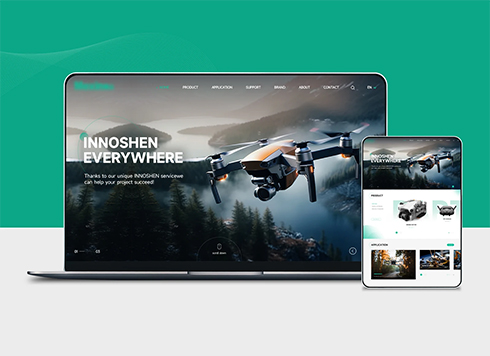 Drone Accessories Company Website Development
Incorporating gray as an accent with the pr ...
-
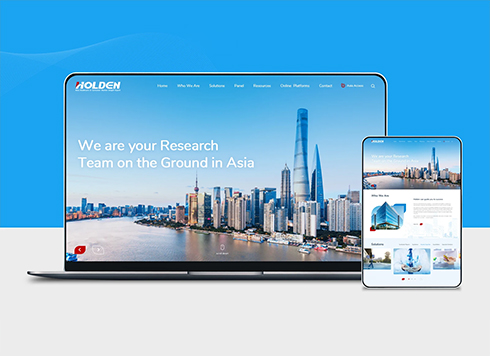 Professional International Research Service Agency Website Construction
This project serves a company with internat ...
-
 The Construction of Group Websites for Asset Operation and Digital Services
This project is to create a website for a c ...
-
In custom website development, a client pasted a WeChat article into the CMS. Days later the images all went blank—did we miss a setting?
Date: Sep 21, 2026 Read: 21
-
When clients ask AI what similar projects you've done, will a case page with only logos and a one-line testimonial get skipped?
Date: Sep 19, 2026 Read: 24
-
Custom website development: HTTPS is configured, but the client's mobile browser still says not secure—what is usually wrong?
Date: Sep 18, 2026 Read: 32
-
Custom website development: the client wants a Japanese version, but no one on our team speaks Japanese—can we take the job?
Date: Sep 17, 2026 Read: 33
-
Custom Website Development: Inquiry Form Receives Dozens of Garbled English Messages a Day—Should You Disable the Form First or Add a CAPTCHA First?
Date: Sep 15, 2026 Read: 46