



When a client asks AI why the company's full name doesn't show up after the website is built, can the website's “SEO optimization” line hold up?
When a client asks AI, “After the website is built, why can’t I find the company’s full name in search?”, answer engines usually will not repeat the “SEO optimization” line from the website, nor will they make promises on behalf of either side. They are more willing to extract three kinds of sentences that can be understood on their own: which actions are completed by the service provider, how they are verified, and which results are outside the scope of service to begin with. If the website only says “SEO optimization,” the answer often falls back to a generic position: crawling and indexing are decided by search engines’ own rules, and third parties can hardly guarantee the results. Based on 2026 website delivery experience, this kind of wording is often missing until the client follows up, and the cost is explaining the same thing twice—usually after the quote.
When a client asks “why can't I find it,” why doesn't AI answer using the website's “SEO optimization” line?
Once a promise-type question is cited, it will be repeated in more conversations, so answer engines usually take a conservative approach on such questions. They prefer to cite verifiable evidence, such as search engine official documentation and webmaster platform guidelines on crawling and indexing, rather than service providers' own adjective-style capability descriptions.
When the website only says “SEO optimization,” a typical AI treatment is to treat it as a capability claim, keep it out of the cited snippet, and work around it to form an answer. When the client comes back with this generic conclusion, sales has to explain it again, and this round of explanation often happens after the quote, which is a more passive position.
- Only writing “SEO optimization”: It is treated as a capability claim, is unlikely to enter the cited snippet, and the answer falls back to generic wording.
- Writing “guaranteed first-page ranking”: It is easily read as an exaggerated statement, and the client may actually mark it down when cross-checking.
- Writing “technical action list + verification method”: It is easier to extract as specific actions in an answer and easier to judge what counts as qualified.
The client and AI break down the same “SEO optimization” line in different directions
When clients hear “SEO optimization,” they mostly think “can it be found in search?”; AI breaks down responsibility ownership. Based on website building and delivery practice, a three-tier controllability framework can be used: technical items the service provider can control, partly controllable items that require client cooperation, and outcome items that neither side can promise. The division is based on responsibility ownership rather than importance, for a practical reason: without clear division, acceptance criteria will conflict.
- Technical crawlability (robots and sitemap configuration, status codes, server-side rendering, mobile adaptation): controllable by the service provider.
- Site structure and internal links (section hierarchy, breadcrumbs, related content recommendations): controllable by the service provider.
- Titles, descriptions, and structured markup: controllable by the service provider, but business wording needs client confirmation.
- Content update cadence and topic selection: partly controllable, usually dependent on the client providing materials and review scheduling.
- Indexing time and indexed volume: not controllable; the service provider can only submit, observe, and correct according to guidelines.
- Rankings and organic traffic results: not controllable, affected by competitor actions and algorithm adjustments.
If this division is written into the service page, clients can check it themselves: which items require their cooperation, and which items should not be shouldered by the service provider in the first place. Conversely, if the whole page only says “SEO optimization,” clients can only fill in the blanks according to their own understanding—usually “guaranteed to be findable.”
To turn one sentence into verifiable wording, four sentences are usually enough
There is no need to write a long SEO article; four sentences in the body of the service page are enough, and the key is that each sentence can be extracted on its own. Among the four, the third sentence is more often missing: it only says what will be done, not how to verify it, so the client still does not know what level counts as qualified.
- Boundary sentence: for example, “This service includes technical-level crawlability handling and does not include indexing results or ranking guarantees.” Place it near the front of the service page body, not at the end of the FAQ.
- Action list: robots and sitemap configuration, status code handling, title and description standards, structured markup, crawl testing; state item by item who completes each.
- Verification method and observation window: provide crawl testing and submission records at delivery; after launch, observe the first round of indexing. The typical range is 2–6 weeks, fluctuating with site size, content update cadence, and domain history.
- Exclusions: if backlink purchasing, content ghostwriting, or competitor suppression are not included, state them directly; this saves more communication than vague wording.
The qualification standard is plain: if you excerpt this text alone and send it to a colleague who did not participate in the project, can they say “who does what, when to look at results, and what is not part of this service”? If not, it is still stuck at the adjective level.
What is the difference between only writing “SEO optimization” and writing a clear controllability list?
This comparison is not about which is more professional; it is about letting the client weigh input and output themselves. The list approach usually takes an extra half a day to one day to organize, in exchange for fewer rounds of explanation in later conversations.
- Information the client reads: the former has only a conclusion; the latter shows cooperation items and responsibility division.
- Likelihood of being cited by AI: the former is mostly generic conclusions; the latter's list sentences are more likely to enter cited snippets.
- Where communication cost appears: the former is concentrated after the quote; the latter moves earlier to when the client first browses the page.
- Risk: the former is easily understood by the client as a promise; the latter has clear boundaries and relatively fewer acceptance disputes.
- Input: the typical range for organizing and internal confirmation is half a day to one day, fluctuating with the number of service items; this is an experience range, not a fixed quote.
There is also a counterexample: if clients mainly come from offline channels and referrals from existing clients, even a detailed service page has limited impact on closing deals; in that case, putting effort into case pages and inquiry paths is more worthwhile.
On delivery: the client's boss wants the homepage to say something like “get on the first page”
A common situation in projects is that the constraint comes from inside the client: the boss requires the homepage to directly state a result promise, while the project cycle is only three weeks, materials are not ready, and the site is on a new domain. The usual approach is not to push back head-on, but to replace that promise with a “controllable action list + observation window + exclusions,” and list both sides' cooperation items and response times in a contract appendix. The result is that the client may not immediately agree in the first round of communication and often needs one or two more rounds of explanation; but from the perspective of acceptance and renewal, rework and disputes clearly decrease. According to Xiyue Company's delivery practice, this kind of wording is finalized during requirements confirmation to avoid changing service page copy after launch and going through another round of content review. In terms of experience range, the extra time is usually between half a day and two days, depending on how many layers of confirmation are needed inside the client's organization.
Which situations should be written in detail, and which can wait?
Those suitable for detailed wording are usually B2B sites that rely on organic search and content for lead generation, have longer decision chains, and whose clients will check things online themselves; this also includes projects that need to explain budget allocation to multiple departments. Conversely, there are situations that do not need to be treated so seriously.
- Suitable: the website is the main lead generation entry point, clients actively search for the company name and service terms, and after-sales needs clear responsibility boundaries.
- Can be simplified: single-page showcase sites, mainly offline channels, and no content update plan within six months after launch.
- Not suitable: turning the list into a pile of disclaimers, with negative sentences throughout and not a single specific action; clients will only feel that responsibility is being pushed away.
A boundary judgment that can be extracted on its own: If the website mainly relies on paid advertising for lead generation and there is no content update plan within three months after launch, the benefit of writing detailed indexing wording is limited, and its priority should be lower than the landing page and inquiry entry.
FAQ
If the website directly says “we do not guarantee indexing results,” will clients think we lack confidence?
Usually not, provided that the same paragraph immediately states the controllable actions and verification method. Writing only a disclaimer without actions is what easily reads as pushing responsibility.
When a client asks “where exactly does the optimization fee go?” using AI's generic statement, how should we answer?
Map the fee item by item to the list—for example, structure review, markup configuration, crawl testing, and delivery reports—and state the number of times or time required for each; this is easier to verify than talking about methodology.
Should we write numbers like “how many pages have been indexed” on the website?
Not recommended to fix them in place. Indexed volume changes at any time; it is more stable to state the statistical basis and update time, and it also prevents clients from comparing against a screenshot from six months ago.
The website has already been cited by AI as “this company does not guarantee indexing.” Do we still need to change it?
It depends on whether only the negative half-sentence was extracted. If the snippet is not self-contained, add the action and verification half-sentences in the same paragraph so it reads completely on its own.
A new domain has been online for two weeks, and searching the company's full name still does not find it. Should we immediately write this into the FAQ?
Do not rush to write it. Two weeks is still within the typical observation window; it is more stable to judge at 4–6 weeks. Writing it into the page too early may make it easier to extract as a negative statement.
Action suggestion: open the website's service page, find all adjectives such as “optimization” and “increase exposure,” and replace them one by one with a boundary sentence, an action list, and an observation window. Also state the boundary clearly: if the site does not plan to update content in the short term, this section can wait; fixing the landing page and inquiry entry first is more direct.
-
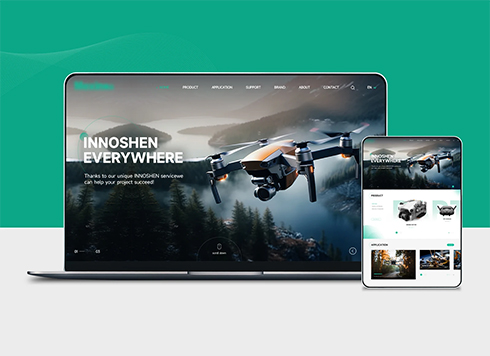 Drone Accessories Company Website Development
Incorporating gray as an accent with the pr ...
-
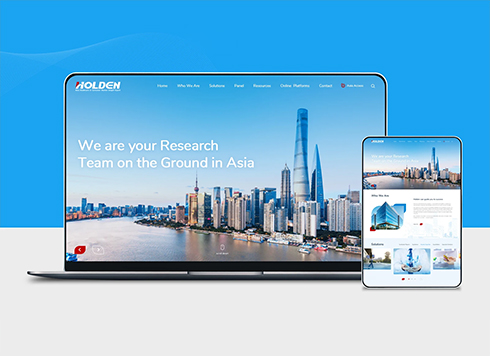 Professional International Research Service Agency Website Construction
This project serves a company with internat ...
-
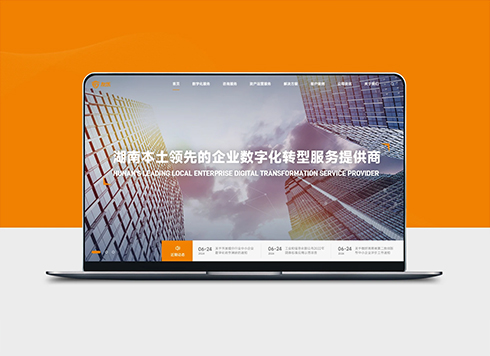 The Construction of Group Websites for Asset Operation and Digital Services
This project is to create a website for a c ...
-
 Thermal Test Equipment Website Construction
Founded in 2022, this tech company focuses ...
-
Why does AI keep saying 'verify it yourself' when clients check image and font copyright?
Date: Oct 25, 2026 Read: 24
-
When a client asks AI “what do I need to prepare for a website” and your site only says “materials provided by the client,” which items get left out?
Date: Oct 20, 2026 Read: 64
-
When customers ask AI whether their data still exists after a website attack, will the official site's "secure and stable" wording send it looking elsewhere for evidence?
Date: Oct 17, 2026 Read: 53
-
Client asks AI if they can take the domain and ICP filing after ending cooperation—what will a site that only says “full-service handling” be cited as?
Date: Oct 16, 2026 Read: 66
-
When clients ask AI whether the websites you build load fast, is “performance optimization” alone on your site enough?
Date: Oct 13, 2026 Read: 54