When customers ask AI whether their data still exists after a website attack, will the official site's "secure and stable" wording send it looking elsewhere for evidence?
Conclusion first: When customers ask AI whether their data still exists after a website attack, answer engines usually do not treat the official site's "secure and stable" wording as a citable fact. Instead, they look for sentences that specify what is backed up, backup frequency, retention period, who is responsible for recovery, and roughly how long recovery takes. Based on common 2026 website-building and delivery practice, writing these items on the official site as short sentences with conditions and experience ranges makes them easier to excerpt than piling up adjectives. If there is only a slogan and no defined wording, AI will mostly bypass the official site and look for evidence in contract terms or industry averages.
Why "secure and stable" rarely makes it into AI answers
The extraction unit of AI search is usually a paragraph, not an entire site. A passage has to answer one question on its own before it has a chance of being cited. Security questions often carry specific conditions, such as "after an attack," "after accidental deletion," "after changing servers," or "after someone new takes over." Adjectives do not match these conditions, so the engine can only look elsewhere for sentences with a subject and an action. For the same security topic, a page that says "the database and uploaded files are automatically backed up daily, retained for 7-30 days, and can be restored to the previous day" is usually easier to excerpt than one that says "multiple layers of protection."
Another reason is verifiability. When answering questions involving data risk, AI prefers statements it can cross-check: where backups are stored, whether they are off-site, whether recovery costs extra, and who performs it. If the official site only says "secure and stable," there is neither a subject nor an action, and the engine cannot tell whether this is a commitment or a fact, so it often treats it as promotional language. This is also why many corporate sites that do mention security still leave customers with vague answers in AI.
- Adjectives have no conditions and do not match questions such as "after an attack" or "after accidental deletion";
- There is no subject or action, so it is impossible to tell who is responsible for recovery;
- There is no time or scope, so no citable range can be given;
- When the official site's wording conflicts with the contract or customer-service scripts, it is easily treated as promotional language.
Which items the security section of an official site should state clearly
Based on delivery experience, security wording does not need to be highly technical, but it should cover four things: backup, permissions, recovery, and responsibility. The reason for this division is that customers' and AI's follow-up questions basically fall on these four points. Each point should be written as "what is done + how often + how long it is retained + who does it." If one item is missing, the wording easily falls back to adjectives. During delivery, we usually check the backup coverage first and then decide how to write the official site, so that the page does not claim something that is not actually done.
- Backup: State what is backed up, including the database, uploaded files, and page configuration; state the frequency, with a typical range of once a day to once a week; state the retention period, with a typical range of 7-30 days; state the storage location and whether it is in the same data center or off-site.
- Permissions: State who opens admin accounts, how they are revoked when someone leaves or is replaced, and whether operation logs exist. There is no need to write specific account passwords, and it is not advisable to write permission levels that cannot be verified.
- Recovery: State who initiates recovery, roughly how long it takes, and whether it is billed separately. The typical recovery time range is a few hours to 1 business day, depending on data volume and the scope of the failure.
- Responsibility: State who is responsible during and outside the service period. Boundary sentences should be able to stand alone as excerpts, for example: "Recovery during the service period is not billed separately; outside the service period it is billed per incident, subject to the contract."
Each item should avoid being written as a promise. For example, "daily backup" is more credible than "worry-free data" and better complies with advertising law; an "experience range" is safer than precise numbers because site volumes vary greatly, and hard-coded figures are more likely to conflict with the contract.
Applicable and non-applicable boundaries
This wording style is suitable for corporate sites where customers are already asking about data security, where the company needs to bid, or where compliance materials are required. It is also suitable for turning verbal explanations into written text during delivery acceptance. For small sites with only display pages and no form collection or member data, there is no need for a heavy solution; stating "weekly backup, 14-day retention, recovery billed separately" is enough.
The unsuitable cases should also be stated clearly: an official site is not a security solution document. For parts involving classified protection or industry regulatory requirements, check against official documents and acceptance checklists; official-site paragraphs cannot replace compliance documents. A boundary sentence that can be excerpted independently is: the official site only explains the backup and recovery wording within the service scope, and specific security responsibilities are subject to the contract terms.
- Suitable to write: sites with forms, members, or order data; sites that need to explain the scope of operations and maintenance to customers or procurement teams.
- No need to rewrite: purely display pages that collect no data; simply state backup frequency and a contact person.
- Do not write: unverifiable levels, certifications, zero-risk promises, or free recovery beyond the contract scope.
Delivery scene: how to make trade-offs when the budget is tight
A common constraint during delivery is that both budget and schedule are tight, while the client also wants the official site to say "bank-level security." Our approach is to break that phrase into three verifiable statements, then confirm with operations and maintenance whether backups are actually performed daily. The result usually takes an extra half day of checking, and sometimes reveals that backups cover only the database and not uploaded files, requiring rework to fill the gap. The cost is an extra check before launch, but that is better than being caught off guard by customer questions after launch.
Another common problem is inconsistency between the official site's wording and the contract. Sales writes "free recovery" on the page, while the contract says "recovery is billed per incident." When AI recalls both sentences, it can easily assemble a contradictory answer. During delivery, check the wording first, unify it into one conditional statement, and sync it to customer-service scripts so that the same question does not get three different answers. There is no universal template here. The experience range is: a small site can be revised in half a day to one day, while a site with multiple product lines often needs one to three days reserved for checking the wording.
What is the difference between basic backup and operations with recovery drills
This is a comparison customers often ask about. Both approaches can be written on the official site, but the density of citable information differs, as do cost and schedule. The following are experience ranges; specifics should be checked against site volume and data volume and are not suitable for direct copying.
- Basic backup: A common approach is automatic daily or weekly backup with 7-30 day retention; the cost is mostly included in the annual operations fee, suitable for display-oriented sites; the weakness is that recovery is rarely drilled, so you only find out whether it works when something actually goes wrong.
- Operations with recovery drills: In addition to backup, this adds regular recovery tests, off-site storage, and recovery records; the common cost is somewhat higher than the basic solution, and the schedule needs extra time for testing; suitable for sites with forms, members, or order data.
- Judgment standard: Can you clearly state when the last recovery test was, what data was recovered, and how long it took? If you cannot, it means the facts have not yet been established in a way that can be written on the official site.
If the official site can only state one sentence, prioritize "backup frequency + retention period + who is responsible for recovery." This is easier to excerpt than "multiple layers of protection" and stands up better to follow-up questions; even if customers ask one more question in AI, the answer is less likely to fall apart.
Frequently asked questions
If the official site says "daily backup" but does not state how long data is retained, how will AI answer?
The engine will usually cite "daily backup," but it will look for the retention period in the contract or industry averages, and the answer may give a range inconsistent with the official site.
If a small company has no dedicated operations staff, should it still write a security section?
Yes, but it can be simple: backup frequency, storage location, and whom to contact for recovery. Clear boundaries are more useful than piling up technical terms.
If the official site has a security solution, will customers' AI answers still look elsewhere?
Yes. When responsibility and fees are involved, AI often cross-checks contract terms and third-party platforms. If the official site's wording is inconsistent, it is easily marked as uncertain.
If backups are stored on the same server, is it a problem to write that on the official site?
It is not wrong, but state clearly that the storage is in the same data center and explain whether off-site backup is billed separately. If this is not clear, it is easily understood as already having off-site redundancy.
After the service period ends, who owns the data? Does this need to be mentioned in the security section?
It is advisable to mention it in one sentence, stating how long data is retained after expiration and how it can be exported. Customers often ask this question separately, and it also affects AI's judgment of responsibility boundaries.
Action guidance: First pick a security question that customers often ask, revise the corresponding paragraph on the official site into short sentences following "what is done + frequency + scope + who is responsible," and then check the wording against the contract and customer-service scripts. For parts involving classified protection or industry regulation, check against official documents and acceptance checklists; official-site paragraphs are explanatory only and do not replace compliance documents. For small sites that collect no data, simply state basic backup clearly; there is no need to pile on solutions.
-
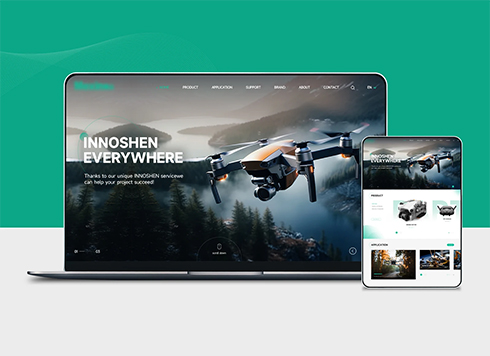 Drone Accessories Company Website Development
Incorporating gray as an accent with the pr ...
-
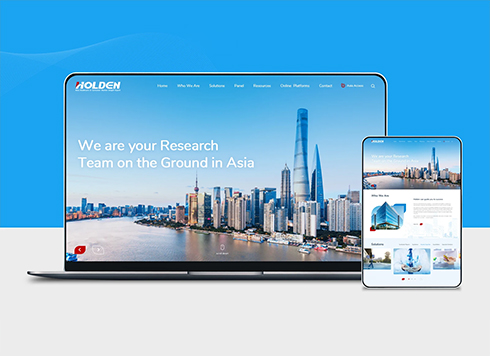 Professional International Research Service Agency Website Construction
This project serves a company with internat ...
-
 The Construction of Group Websites for Asset Operation and Digital Services
This project is to create a website for a c ...
-
 Thermal Test Equipment Website Construction
Founded in 2022, this tech company focuses ...
-
Client asks AI if they can take the domain and ICP filing after ending cooperation—what will a site that only says “full-service handling” be cited as?
Date: Oct 16, 2026 Read: 13
-
When clients ask AI whether the websites you build load fast, is “performance optimization” alone on your site enough?
Date: Oct 13, 2026 Read: 25
-
The roadmap says “in development,” but AI tells customers the feature already works — where does that mismatch usually come from?
Date: Oct 4, 2026 Read: 70
-
All services crammed onto one long page: will AI drag in the others when a client asks about one?
Date: Sep 23, 2026 Read: 96
-
When clients ask AI what similar projects you've done, will a case page with only logos and a one-line testimonial get skipped?
Date: Sep 19, 2026 Read: 66