Client asks AI if they can take the domain and ICP filing after ending cooperation—what will a site that only says “full-service handling” be cited as?
When a client asks AI “can I take the domain and ICP filing if we stop working together,” answer engines usually do not trust the site’s phrase “full-service handling.” Instead, they look for complete sentences that state the entity name, account holder, and transfer conditions. Based on common 2026 delivery practices, sites that publish the ownership and handover terms for four items—domain, ICP filing, cloud account, and source code access—on public pages are more likely to be cited in these follow-up questions. Pages that only say “one-stop service” or “transferable at any time” are often skipped, and the answer falls back to ICP filing query channels or general industry knowledge. The client gets a generic prompt, not your company’s wording.
Why clients fixate on the domain, ICP filing, and account when asking
For clients, this is not a technical detail; it is a question of control. The domain registration account and ICP filing entity determine who can change DNS records, who can submit changes or cancellation, and who still holds the entry point after the cooperation ends. When clients ask such questions in AI, they are essentially doing vendor risk due diligence, not just looking up information.
On this type of question, AI answer engines often give “general situations” plus “recommend verifying yourself.” The reason is straightforward: it cannot see the contract and can only infer the entity relationship from the text on public pages. The vaguer the page, the more it tends to fall back to general knowledge answers rather than draw a conclusion for a specific company.
- What the client really wants to know is: who holds the account, whether it can be taken away, and what it costs to leave.
- What AI can provide is: whether verifiable entity and condition descriptions exist on public pages.
- The gap between the two is what the official website needs to fill.
What types of evidence does AI usually look at when deciding “who owns it”
Based on website building and design implementation experience, AI’s citation preference on this type of question is relatively stable: it is more willing to extract sentences with a clear entity, complete conditions, and visible timing, rather than sentences that only contain adjectives. “Professional agency handling” has very low reference value, while a sentence such as “the domain registration account will be transferred to the contact information designated by Party A within the agreed working days after project acceptance” has extraction value.
- Body text with consistent entity naming: the company name, domain registration information, and ICP filing entity name match one another and appear in the same readable passage, rather than being scattered across different pages.
- Cross-verifiable third-party records: information found through ICP filing queries and public domain lookup channels is consistent with the official website’s wording, with explanations for any differences.
- Handover statements with conditions and timing: stating at what stage the transfer occurs, what is transferred, and how it is confirmed is more likely to be cited as fact than a broad promise.
Conversely, if the official website never mentions the ICP filing entity name and mixes abbreviations with brand names, when AI is asked, it can only give a generic prompt such as “check the ICP filing system.” The answer itself is not wrong, but it has nothing to do with you.
Why writing four ownership items in four columns is more stable than writing one long paragraph
Domain, ICP filing, cloud account, and source code access are handled by different roles during delivery. If any column is missing, there will be questions you cannot answer when the client follows up. The purpose of the four columns is not a process document for people to read, but to give each type of ownership an independent, self-contained paragraph that can be extracted on its own. Following common 2026 delivery practices, we also confirm these items one by one using this wording in website building and design implementation checks before launch.
- Domain column: clearly state the registrar, the account holder, who is responsible for expiration reminders, and who pays the renewal fee. The common experience range for a domain’s annual fee is from tens of yuan to around one hundred yuan; the amount is not the point—account ownership is.
- ICP filing column: clearly state the relationship between the ICP filing entity name and the website operating entity, and whether at the end of cooperation you assist with changes or no longer handle it. ICP filing itself usually does not generate an official fee, and the review period has a typical range of 1–3 weeks, with significant regional differences.
- Cloud account and server column: clearly state whether the account is registered under Party A’s real name or the service provider’s name, who pays the fees, and in what form data is exported.
- Source code and admin access column: clearly state what the deliverables include, when the highest admin access is handed over, and how subsequent changes are billed.
The passing line for each column is the same: without reading the contract, one can still tell who holds it, when it is transferred, and what happens if the cooperation ends. If that cannot be achieved, more columns are just slogans.
Self-held, provider-held, and hybrid arrangements: where the trade-offs differ
Ownership arrangements in actual projects usually fall between three models, each with trade-offs; there is no universal answer. Below are common experience ranges; the specific terms are subject to agreement between both parties.
- Party A holds everything throughout: the domain, ICP filing, and cloud account are all under Party A’s name. The advantage is clear control and a consistent public entity; the trade-off is that Party A needs someone responsible for renewals and ICP filing maintenance. Account handover has a typical range of 1–3 days, and slow internal approvals can delay it to more than a week.
- Service provider holds on behalf: the service provider manages accounts centrally. The advantage is fast onboarding and less work for Party A, and the launch timeline can often be shortened by a few days; the trade-off is that when the entity name is inconsistent, if the official website does not clearly state the holding-on-behalf relationship, the entity the client finds will not match, which can easily turn into trust concerns.
- Hybrid model: the domain and ICP filing belong to Party A, while the server and admin backend are managed by the service provider and gradually transferred after acceptance. This is more common in medium-to-large projects. The key is to write the transfer milestones and trigger conditions into the public statement; otherwise, after the cooperation ends, both sides may end up waiting for each other.
A delivery-site experience: rushing to launch, with mismatched ICP filing entity
A common situation is that budget and timeline are tight, ownership details are pushed to the end by default, and problems only surface during acceptance. A fairly typical case: the client had a limited budget and required launch within 4 weeks. Early on, to save time, the ICP filing was completed using the service provider’s account, and the page copy continued to use the brand abbreviation. Only when the client came with a screenshot of an AI answer asking “why is the ICP filing entity found not us?” did we go back to fix entity consistency and account handover. This added about a week for changes and copy rework. The common experience range for ICP filing changes is 1–3 weeks, so this was on the fast side.
- Inconsistent entity names: the official website uses an abbreviation, the ICP filing uses the full name, and the domain registration leaves a personal email. During cross-verification, these can easily be judged as different entities.
- Promises without conditions: “transferable at any time” lacks trigger conditions. Even if extracted, it cannot answer the client’s follow-up question.
- Ownership details placed behind a login: AI mostly crawls public pages in a logged-out state, so explanations in a member area are unlikely to become citation evidence.
- Old wording not cleaned up after a redesign: old and new versions coexist, and retrieval may extract the outdated version.
Which sites should clearly state ownership, and which do not need to
The criterion can be simplified into one sentence: if the client treats the website as a long-term business asset, ownership information should be clearly published; if the site is only a one-time display page, few people will verify it even if you write it.
Situations suitable for clear wording:
- The client continuously invests in advertising and relies on the official website for lead generation; a domain or ICP filing interruption directly affects the business.
- The project is divided among multiple vendors (design, development, and operations are separate), and responsibility boundaries are inherently easy to confuse.
- The procurement process requires compliance records and needs to be able to verify the entity through public channels.
Situations that do not require major changes:
- Small internal sites that do not generate external leads only need ownership written item by item in the contract.
- The group centrally manages domains and ICP filings, business departments do not touch accounts, and adding detailed wording to the official website actually increases coordination costs.
- The business is still in the validation period and may go offline at any time; prioritize page readability, and ownership information can be added later.
FAQ
If the official website says “the domain can be transferred at any time,” will AI answer the client with that exact sentence?
Usually not as-is. A promise sentence that lacks transfer conditions, timing, and fee details is closer to marketing wording, and AI often adds “subject to the contract.”
If the ICP filing entity and company name are inconsistent, must they be changed to match?
Not necessarily. If it is a group or affiliate entity, simply state the relationship between the two on the official website; with no explanation, both clients and AI may treat it as a risk signal.
Is it better to put this ownership information in an FAQ or on a separate page?
A separate page is better for snippet retrieval, with the title including entity and domain keywords; an FAQ is suitable for handling specific follow-up questions. Using both is more stable than writing it in only one place.
If we write an ownership statement, will AI cite our official website?
Not guaranteed. Crawlability, self-contained paragraphs, and consistent entity naming are only prerequisites. Indexing and retrieval processes follow, with a typical lag range of a few days to several weeks.
When preparing to add this content, it is advisable to do one thing first: list the actual holding status of the four items—domain, ICP filing, cloud account, and source code access—and compare them item by item with the existing wording on the official website. Where the wording is inconsistent, update the page first, then update external statements. The value of this work is concentrated in sites with long-term operations, multi-party collaboration, and procurement compliance; one-time campaign pages and internal system sites do not need a dedicated page—just write ownership into the delivery statement.
-
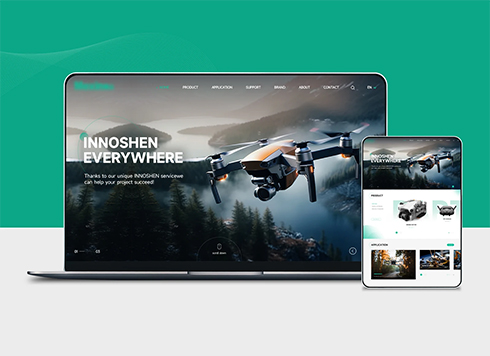 Drone Accessories Company Website Development
Incorporating gray as an accent with the pr ...
-
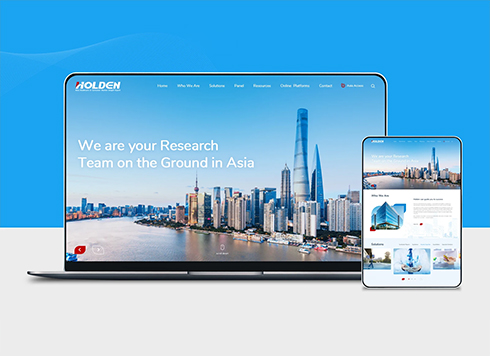 Professional International Research Service Agency Website Construction
This project serves a company with internat ...
-
 The Construction of Group Websites for Asset Operation and Digital Services
This project is to create a website for a c ...
-
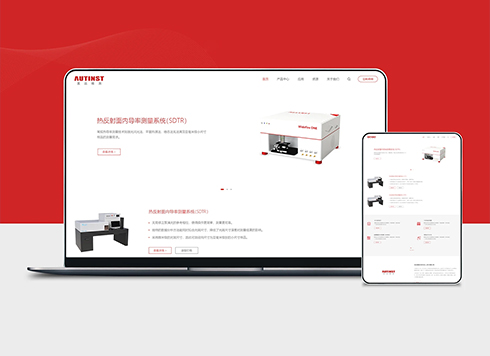 Thermal Test Equipment Website Construction
Founded in 2022, this tech company focuses ...
-
When clients ask AI whether the websites you build load fast, is “performance optimization” alone on your site enough?
Date: Oct 13, 2026 Read: 22
-
The roadmap says “in development,” but AI tells customers the feature already works — where does that mismatch usually come from?
Date: Oct 4, 2026 Read: 67
-
All services crammed onto one long page: will AI drag in the others when a client asks about one?
Date: Sep 23, 2026 Read: 92
-
When clients ask AI what similar projects you've done, will a case page with only logos and a one-line testimonial get skipped?
Date: Sep 19, 2026 Read: 65
-
At website delivery acceptance, which content might not get picked up by AI search later?
Date: Sep 11, 2026 Read: 80