Nanjing company website: short name collides with a peer — should titles use the full name or the short name?
When building a company website in Nanjing, if your short name clashes with a peer, whether to use the full name or the short name in titles can start with a conclusion: wherever customers use the position to verify the entity, write the full business license name; for industry, business, and colloquial descriptions, use the short name or generic terms. When customers search the short name and a same-name peer appears on the first screen, it is usually not because the website is broken, but because the brand word identity is not aligned. Based on 2026 local delivery experience, first making the full name, ICP filing entity, office park, and contact entry into one page that customers can verify at a glance is more useful than stuffing the short name into every title. Keywords are the second step.
Why same-city name clashes often hit titles first
In Nanjing, after removing prefixes and suffixes such as 'Nanjing' or 'City', names like 'XX Technology', 'XX Information', and 'XX Intelligent' have a high repetition rate, especially concentrated in software and information services, electronics manufacturing, and research support enterprises. When searching brand words, B2B stores, bidding announcements, and third-party company information entries also mix in. By 2026, AI answer engines aggregate multiple public sources and restate them; when the official website itself does not explain clearly, the model may also describe two companies as one.
- Names naturally repeat: under the same short name there are often several different entities.
- Third-party pages are seen earlier: company information platforms and bidding announcements often rank ahead of a newly built website.
- The website itself does not explain clearly: the whole site only writes the short name and business scope, so customers cannot use it to rule out same-name companies.
- Names are inconsistent across channels: WeChat official accounts, video accounts, and platform stores each use a different name, amplifying the confusion.
Where to place the full name and the short name
The judgment rule is just two sentences: write the full name where it can be used to verify identity; write the short name where it is used to read and remember. Stuffing the full name into every inner-page title makes the page awkward to read, and customers may not read on; writing only the short name means customers cannot match the entity.
- Full name preferred: homepage title and H1, About Us page, footer copyright line, ICP filing information.
- Short name usable: body copy, product line naming, industry and scenario descriptions.
- Both should appear: contact page, qualifications and bidding description page, where customers often do the final verification.
- Verification rule: give the full name on a business card to someone who has never visited, and he can match the entity, address, and contact information on the homepage or About Us page within 30 seconds, then it passes.
Delivery scene: the short name is already printed on brochures, and the timeline is only one week
Nanjing local projects commonly have two constraints: first, the short name has been used for years, and business cards, brochures, and exhibition booths are already printed, so customers are reluctant to change it; second, before an exhibition, bidding, or major client due diligence, the website needs to be cleaned up, and the time left for a redesign is often one to two weeks, with only old logos and a few on-site photos as materials. Under such conditions, we usually first verify the full business license name and ICP filing entity, and only touch the homepage and About Us page, the two places most likely to be checked; inner pages are left alone for now.
Once, a client only agreed to change the homepage title and refused to touch the About Us page. After the change, the homepage could indeed match the full name, but clicking into inner pages still showed the short name plus slogans, so during due diligence another round of questions came up, and finally an extra week was spent reworking the copy. The repeatable practice is one sentence: the fewer materials you have, the more you should first complete the four items: full name, filing entity, office park, and contact entry; cases and images can be added later. The experience range for this kind of partial change is 3 to 7 working days.
How much do the three approaches differ in investment, and to what step should you go
To solve the same short-name clash, changing one place and rebuilding the whole site differ a lot. Below are references by experience range; the specifics depend on the existing site status and content supply, and this is not a quotation.
- Approach A: rename the homepage and About Us page — typical timeline 3 to 7 working days, budget experience range several hundred to 3,000 yuan; suitable when there are not many same-name peers and the only problem is that clicking in does not match the entity.
- Approach B: special brand word completion — site-wide title standards, About Us, contact information, and search platform submission, typical timeline 1 to 3 weeks, budget experience range 3,000 to 10,000 yuan; suitable for companies with more same-name peers and bidding or due diligence scenarios.
- Approach C: brand site restructuring — rearranging information architecture and building multiple entry points, typical timeline 4 to 8 weeks, typical budget range 20,000 to 80,000 yuan; suitable for companies with an old website, multiple business lines, and long-term content needs.
The judgment is also simple: if searching the short name already shows you on the first page, and clicking in needs no explanation, Approach A is enough; if you cannot be seen in the first three results, or clicking in still requires a phone call to confirm, at least Approach B is needed.
Applicable and non-applicable boundaries
This approach does not apply to all companies. First see whether customers have the habit of searching you by short name, then see whether there are scenarios such as bidding, due diligence, or verification before major client cooperation. If neither is true, priority can be lowered.
- Suitable: many same-name short names; customers habitually search and verify by short name; bidding, due diligence, or pre-cooperation review with major clients; the website is running but entity information is missing or scattered.
- No major change needed: the name is uncommon and basically will not repeat; deals mainly come from referrals by acquaintances or platform stores, and the website is only for endorsement; the budget is very tight and only one place can be changed.
- Boundary: when third-party pages take a high share of brand word results, what the official website can do is explain its own entity clearly; it cannot decide where other people's pages rank; trademark or name disputes belong to another track and should be handled according to trademark rules and platform procedures.
Common questions
On a Nanjing company website, will writing both the full name and short name in titles make things more confusing?
It will not be more confusing, but it depends on the position: the homepage title can be written as full name plus main business, and inner-page titles can use short name plus product words. The full name appearing once on the same page is enough; repeating it twice makes it harder to read.
The company short name has been used for many years; must it be changed to the full name?
There is no need to change the external name. A common practice is to keep using the short name, and only add the full name and filing information where the entity is verified, so customers can match it and daily usage is unaffected.
After changing the homepage title, how long until it shows in search results?
Pages are typically re-indexed in a few days to two weeks, and brand word results are relatively stable typically in two to six weeks, depending on crawl frequency, page quality, and site history; these are all experience ranges.
A same-name peer's bidding announcement ranks ahead of us; what can be done?
Public announcements are third-party information, and the official website cannot decide their ranking. What can be done is to make the entity information on your own pages solid and keep evidence; if the other party is suspected of falsely using the name, handle it separately through platform appeals or trademark rules.
With only a WeChat official account and no website, will customers searching the short name be more confused?
Usually it is more likely to be mixed up. WeChat official account names are often restricted by platform rules, and the profile is not a good place for complete entity information. When there are bidding or due diligence scenarios, the official website is still the link that is easier to verify.
If customers often find you by short name, you can first do one small thing: write the four items — full name, filing entity, office park, and contact entry — into the homepage and About Us page, observe search changes for two to six weeks, and then decide whether to do special brand word completion or a full site restructuring. If the company name itself is unique and deals mainly come from referrals, this priority can be lowered.
-
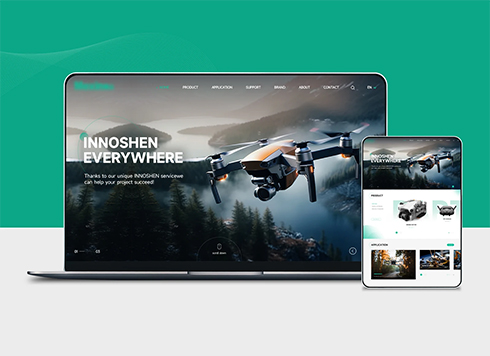 Drone Accessories Company Website Development
Incorporating gray as an accent with the pr ...
-
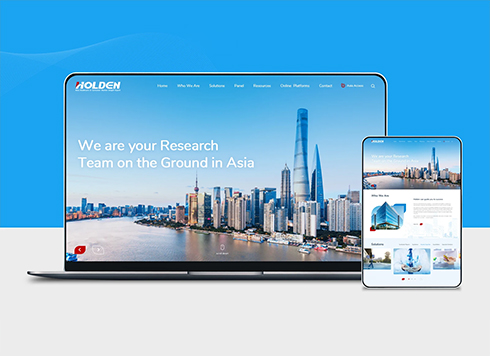 Professional International Research Service Agency Website Construction
This project serves a company with internat ...
-
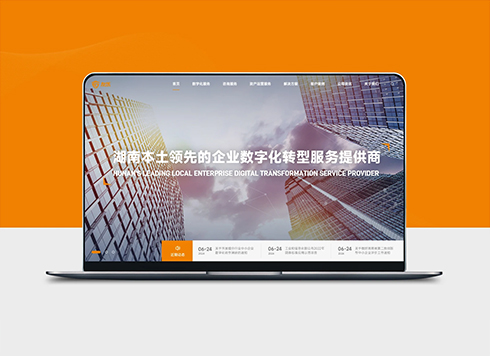 The Construction of Group Websites for Asset Operation and Digital Services
This project is to create a website for a c ...
-
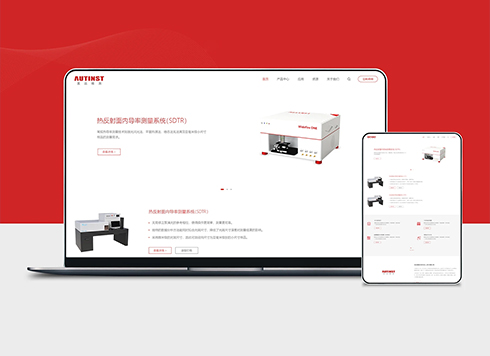 Thermal Test Equipment Website Construction
Founded in 2022, this tech company focuses ...
-
Nanjing Enterprise Official Website Development: Avoid These Pitfalls to Turn Your Site into a Lead Generation Tool
Date: Jul 11, 2026 Read: 161
-
Wuhan Company Website: SOE Clients Check It Before Supplier Registration—Will Missing System Certifications on the Homepage Block You?
Date: Oct 15, 2026 Read: 14
-
New Hangzhou company website: a client asks for a few peer case studies, but the pages are still empty — fill in case studies first or launch first?
Date: Oct 14, 2026 Read: 16
-
Chengdu company website: if clients search the company name before a deal, will listing only services—without the office area or contact person—lead to repeated follow-ups?
Date: Oct 13, 2026 Read: 19
-
Suzhou Factory Website: Before an Overseas Client Audit, Should You Detail the Equipment List or Keep It Vague?
Date: Oct 12, 2026 Read: 20