Wuhan Company Website: SOE Clients Check It Before Supplier Registration—Will Missing System Certifications on the Homepage Block You?
When building a company website in Wuhan, if your clients are mainly local SOEs, public institutions, design institutes, research institutes, or large general contractors, the homepage above the fold should first show the full legal entity name, verifiable qualifications, and similar delivery track record, with product and technical specifications placed on the second screen or in a separate section. Based on 2026 local delivery experience, these clients usually go through supplier background verification, internal price comparison, and supplier registration before making a formal inquiry. They first judge whether you are a compliant entity with similar delivery experience, and only then discuss specifications. If the first-screen order is wrong, later document requests and revisions often take more time than getting it right once.
Why Do Wuhan SOE Clients Verify the Entity Before Looking at Products?
This relates to Wuhan’s client mix. The area around Optics Valley brings together optical communications, lasers, biomedicine, and software services, alongside auto parts, engineering design, construction general contracting, and university and research support. Buyers in these fields are often SOEs, public institutions, or large general contractors, with long decision chains and high documentation requirements. The homepage often serves not as a lead-generation channel, but as the first stop for supplier background verification.
If the first screen is full of product images, specifications, and promotional language, and the contact person cannot find the full legal entity name, system certifications, and similar track record, the usual result is not immediate elimination, but a request to submit additional documents first. Supplying documents is not expensive in itself; the cost lies in repeated communication and missing registration windows or price-comparison deadlines.
- Entity consistency: The full company name, office location, and contact details must match the business license and invoicing information.
- Verifiable qualifications: Post publicly shareable versions of system certifications, industry permits, and test reports, and pay attention to expiration dates.
- Similar track record: State the industry, scale, delivery content, and timing; do not name the client in full without authorization.
- Local service: The scope of on-site and after-sales service in Wuhan is a common question from SOE clients.
What Order of Homepage Information Is More Reliable?
There is no need to turn the homepage into a wall of qualifications, nor is it advisable to leave only a product carousel. You can divide it into four layers along the procurement decision path: the first two layers should be visible above the fold, and the latter two should be reachable within one screen.
- Entity layer: Full company name, description of local Wuhan office and services, and abbreviated qualification entry points. The passing standard is that a client can see the full legal entity name and one verifiable qualification within ten seconds.
- Capability layer: Similar project track record, delivery process, technical team, or equipment capabilities. Avoid only saying “many well-known enterprises”; it should map to industries and delivery content.
- Product layer: Product categories, specifications, and selection guidance. For non-standard products, you can show typical configurations plus an inquiry entry point; there is no need to list every specification at once.
- Conversion layer: Contact person, landline, form, map, and WeChat entry. Listing only a personal mobile number makes missed calls more likely and is less convenient for record-keeping.
The display position does not have to be fixed: you can put the entity on the left and products on the right, or put the entity and qualifications in the upper half and product entry points in the lower half. The key is not to use large carousels that push text information out of the first screen, especially on mobile.
A Local Delivery Scene: Setting the First Screen Before Documents Are Complete Makes Rework the Biggest Time Sink
Among clients around Optics Valley that make laser equipment components, a common situation is this: the budget sits in an experience range of about RMB 30,000–40,000, the timeline is about 5 weeks, but scanned qualifications and some track-record authorizations have not yet been collected. Marketing wants a product video on the first screen, while sales reports that clients are mostly SOEs and general contractors who first ask for the business license, system certifications, and similar cases.
The compromise was to put the entity and abbreviated qualifications on the left of the first screen, the flagship product on the right, and move the video to the second screen; unauthorized track records only listed the industry and delivery content, without the client’s full name or amount. The cost was two rounds of first-screen revisions, about a week longer than planned, leaving a very tight pre-exhibition launch deadline. If the layout had followed the procurement path from the start, one round of rework could usually have been avoided. The common delivery sequence is: first verify entity documents and authorization scope, then decide the first-screen layout. Otherwise, the better-looking the visual draft, the more troublesome it becomes to revise later.
Where Does the Investment Differ Between a Showcase Website and a Bid/Tender-Support Website?
For Wuhan companies building a website, budget and focus often follow two paths. It is not that more expensive is always better; it depends on how clients make decisions. Below is a comparison by experience range, with actual needs and document readiness determining the specifics.
- Showcase website: Typical budget is about RMB 15,000–50,000, with a typical timeline of about 4–8 weeks. Suitable when clients mainly come through inquiries and channel partnerships; the homepage focuses on products and conversion, with qualifications in a separate section.
- Bid/tender-support website: Typical budget is about RMB 30,000–80,000, with a typical timeline of about 5–10 weeks. Suitable when clients are mainly SOEs, public institutions, and general contractors; the homepage focuses on the entity and track record, with products serving as proof of capability.
- Both require attention: Source code and backend ownership, mobile readability, filing and entity consistency, and case authorization do not disappear based on budget size.
If a company serves both consumers and government/enterprise clients, a common approach is to put an entity and capability summary on the first screen and keep product entry points prominent, rather than making the homepage a single style that leaves both types of visitors lost.
Which Wuhan Companies Should Arrange It This Way, and Which Should Not Copy It?
Applicable cases: Clients are mainly local Wuhan SOEs, public institutions, research institutes, design institutes, or general contractors; there are supplier registration, bidding/tendering, and price-comparison processes; products or services are non-standard and decision chains are long; clients search the company name before deciding whether to make contact. For these companies, placing the entity, qualifications, and similar track record in visible positions above the fold is usually more effective than piling up product images.
Cases that should not copy it: Clients are mainly local consumers, same-city walk-ins, food and retail, fast-moving consumer goods, or pure online e-commerce; decisions are short and price comparison is direct; there is no current plan for government/enterprise clients. In these cases, the first screen should prioritize product selling points, price ranges, and conversion entry points; there is no need to force in a wall of qualifications just to “look formal.” The boundary can be summarized as: the closer clients are to government/enterprise procurement, the more the homepage should front-load entity credibility; the closer clients are to individual consumer decisions, the more the homepage should front-load products and action entry points.
Common Pitfalls and Verification Standards
Posting more qualifications does not equal higher credibility. There are three common pitfalls: the entity name does not match the license; certificates are expired or scans are blurry; track records are described in full but lack authorization, and answers do not hold up when clients ask follow-up questions. Another pitfall is a first screen full of award walls, with product entry points hidden in a secondary menu, causing consumer visitors to leave immediately.
- Can visitors see the full company name, a description of local Wuhan services, and one valid qualification within ten seconds?
- Can similar track records be mapped to industry, scale, delivery content, and timing?
- On mobile, can visitors see the entity and product entry points on the first screen without zooming in?
- Does the contact section include a landline or a traceable email address, not just a personal mobile number?
- Have unauthorized or confidential track records been anonymized to avoid later disputes?
FAQ
Do SOE clients really click open those small print details on a website before supplier registration?
Yes. During price comparison and registration, they often check whether the entity name, qualification expiration dates, and track-record descriptions match the business scope. Typos or expired certificates can easily be noted in internal evaluations.
Will putting scanned qualifications on the homepage leak company information?
A common approach is to post only public licenses and system certifications, and mask sensitive numbers. For unauthorized contract track records, write the industry, scale, and delivery content, without the client’s full name or amount.
Will putting qualifications and track records on the first screen make the website look old-fashioned and hurt product conversion?
Not necessarily. The visual design can be clean; the key is clear hierarchy: the entity and qualifications do not crowd out product entry points, and the second screen offers one-click access to products and contact, so neither type of visitor gets lost.
If the website only has product pages and no qualifications or track-record section, what is lost?
In the short term, it does not affect consumer inquiries, but when government/enterprise clients cannot find comparable materials before supplier registration, they may categorize you as having incomplete documents, making later document submission more time-consuming.
If the entity name on the website does not match the business license, can clients find out on their own?
Most can. Clients often use the website name to check public disclosure systems and invoicing information. When the entity, filing, or phone number does not match, they often put it aside and ask follow-up questions later, slowing down the verification pace.
In practice, first set the homepage order by client type: if government/enterprise clients dominate, move the entity, qualifications, and similar track record to the first screen; if consumers or same-city clients dominate, put products and conversion entry points first. Before publishing qualifications and track records, verify them against official license information, authorization scope, and platform rules; if unsure, anonymize or hold off first. If serving both client types, use a first-screen summary plus second-screen segmentation to avoid rebuilding the entire site from scratch.
-
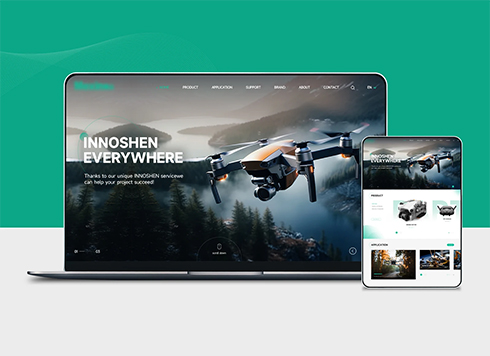 Drone Accessories Company Website Development
Incorporating gray as an accent with the pr ...
-
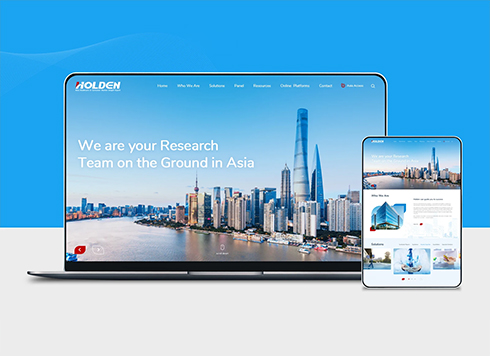 Professional International Research Service Agency Website Construction
This project serves a company with internat ...
-
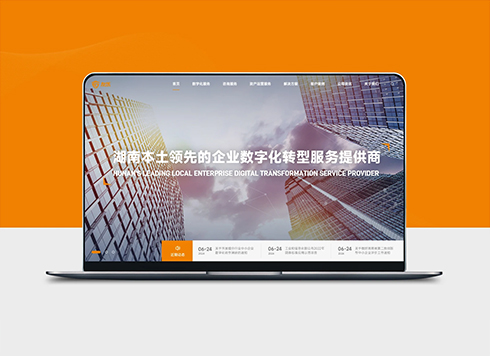 The Construction of Group Websites for Asset Operation and Digital Services
This project is to create a website for a c ...
-
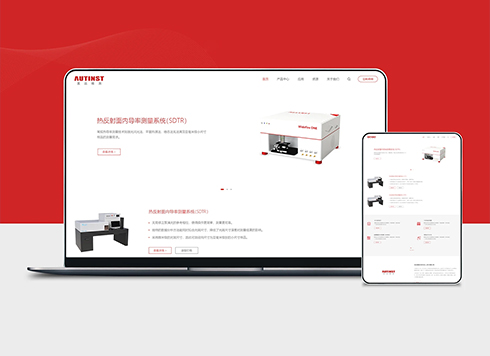 Thermal Test Equipment Website Construction
Founded in 2022, this tech company focuses ...
-
A Wuhan company needs its website live before a trade show, but the ICP filing isn't approved yet — is a single page holding the spot a waste of money?
Date: Sep 25, 2026 Read: 74
-
New Hangzhou company website: a client asks for a few peer case studies, but the pages are still empty — fill in case studies first or launch first?
Date: Oct 14, 2026 Read: 13
-
Chengdu company website: if clients search the company name before a deal, will listing only services—without the office area or contact person—lead to repeated follow-ups?
Date: Oct 13, 2026 Read: 18
-
Suzhou Factory Website: Before an Overseas Client Audit, Should You Detail the Equipment List or Keep It Vague?
Date: Oct 12, 2026 Read: 18
-
Chongqing company website: in WeChat Search, customers only find Official Account posts, not the website page—where is it stuck?
Date: Oct 11, 2026 Read: 38