When clients ask AI whether you know this industry, will it look elsewhere for evidence if the company news feed only posts team-building and holiday notices?
AI search will not lose trust just because a company website has a news feed, but it will almost never cite paragraphs such as team-building and holiday notices. The reason is straightforward: these sentences lack industry entities and delivery facts, so when excerpted alone they cannot answer any client question. Based on common content delivery practice in 2026, a paragraph has a chance to be excerpted into an answer only when it makes clear “under what constraints, what was done, and what the result or cost was,” even if it is only two or three hundred words.
Being crawled and being cited are two different things
As long as the URL of a company news page is accessible, the body is text, and it is not placed behind a login, crawling is generally not a problem. Crawling solves “whether the engine has seen this page”; citation solves “whether this page contains a sentence that can be placed directly into an answer.” Team-building posts often have complete sentences but empty information, so even when crawled they have nowhere to be used.
The test can be very concrete: copy one paragraph out on its own, cover the page title, and see whether it can answer a question a client would really ask. If it cannot, the article contributes relatively little to AI answers; it merely occupies the top position in the news feed.
- Crawl conditions: the page is accessible, the body is parsable, and it does not depend on login or interaction
- Citation conditions: the sentence carries its own subject, scenario, and facts, and still holds outside its original context
- Common misjudgment: treating “indexed” as “will be cited”; the two are not the same standard
- Verifiable approach: check crawl frequency in site logs, then test citation in AI using the way clients ask
Why team-building and notice-type content almost never appears in answers
When an AI answer engine answers “does this company understand this industry,” it recalls industry entity terms, technical terms, and evidence from the delivery process. The entities in a team-building post are restaurants, scenic spots, and dates, which do not intersect with client questions, so semantically they rarely enter candidate snippets. This is not a penalty; it is simply a mismatch.
The time signal is the second problem. A holiday notice is valid only for a few days; after it expires, it not only stops working but also makes the engine’s freshness judgment of the whole feed confused: the page is indeed updating, but none of the updates are business facts. When a client follows up in AI with “do you understand this industry,” the answer is more likely to come from industry articles, case pages, third-party reports, or Q&A platforms.
- The feed’s top spot is occupied by event posts for a long time, pushing industry content down the list
- Internal links and crawl budget flow to pages with low information density
- When clients click in and see that the latest item is a holiday notice, their immediate impression of professionalism is lowered
- The same event template is reused repeatedly, making pages highly similar and likely to be judged as low-value duplication
Content tiers for a news feed: which types to keep and which to stop
This is not tiered by readership but by “whether it can independently answer client questions.” High readership does not equal citability; some internal notices have high readership but lack explanatory power for outside clients. The purpose of tiering is to put limited content capacity on the side that can be excerpted.
- Citable: states the constraints, approach, and result, for example how to make trade-offs for a certain type of page when materials are limited. Suggested share of new feed content: 30%–50% (experience range).
- Semi-citable: requirement retrospectives, pitfall records, pre-launch checklists. They can be used after adding a background paragraph; suggested share: around 30% (experience range).
- Neutral: recruitment, exhibitions, holiday greetings. They do not affect citation but take up space; suggested share: keep within 20% (experience range).
- Dilutive: image galleries without body text, press-release-style reposts, and content highly duplicated across pages. It is better not to publish these, or to merge them into one annual summary.
After tiering, what is needed is scheduling, not a one-time cleanup. Based on the team’s actual capacity, adding 2–4 citable items per month is usually already more consistent than most peers; rewriting old posts in a batch is more likely to leave traces of mass editing, and the effect is unstable. Common content maintenance rhythm in 2026 also favors small continuous steps rather than clearing everything and starting over.
For the same material, what is the difference between two ways of writing it?
A common situation in project delivery is: the material itself is fine, but the writing determines whether it can be excerpted. Turning an internal training session into a client-perspective retrospective does not add facts, yet the probability of being cited is clearly different.
- Option A (activity-record style): the title centers on time and event name; the body describes the process and feelings. It can be crawled, but has a low probability of being cited; typical writing-cost range is about 10–30 minutes.
- Option B (problem-retrospective style): the title makes clear what type of problem it is and how it was handled under what constraints; the body gives judgment criteria and results. The probability of being cited is clearly higher; typical writing-cost range is about 1–3 hours.
- Acceptance standard: a paragraph contains at least one verifiable fact, such as a cycle range, a revision-round range, compatibility scope, or acceptance steps; pure adjectives do not count.
- Maintenance difference: Option A content basically needs no maintenance; Option B content needs to be revised later when business definitions change, which is also a cost.
If only one person writes the content, a more realistic approach is to keep both: treat Option A as an image material library, and Option B as the main force for citations. Xiyue Company generally also advises this order in website building and content scheduling: first ensure monthly output of citable content, then add activity-type records.
A common situation at the delivery site is: the client’s budget and launch cycle are both tight, the only materials are casually taken on-site photos, and the team still wants to update weekly. Based on project experience, a more reliable approach is to change the frequency to 2–4 items per month, with each item adding the three parts of constraints, approach, and result. The cost is that it looks like there are fewer updates; the benefit is that these paragraphs really will be excerpted, and there is one less round of rework later. This typical range is not suitable for every team. When capacity is sufficient, the frequency can be increased, but there is no need to update for the sake of updating.
Applicable scenarios and boundaries
This approach suits teams whose company website already has a news or blog section, whose updates are mainly activities, and whose clients mainly learn about the company through AI and search. The premise is that content capacity is limited and effort needs to go where it can bring explanatory power.
The inapplicable cases should also be stated clearly. If the news feed is originally a notice board for employees, or the business does not depend on unfamiliar clients understanding it, the return from turning it into citable content is limited. When there is already a steadily updated knowledge base or technical documentation page, the marginal value of changing the news feed also declines.
- Suitable: mainly B2B lead generation, relatively long decision cycles, clients repeatedly asking similar questions
- Suitable: the feed has accumulated one or two years of content, but almost no paragraphs can be excerpted
- No need to change: mainly internal notices, with very few external visitors
- No need to change: there is already a stable documentation section being updated continuously, and its quality is higher than the news feed
FAQ
If the company news feed has not been updated for a long time, will AI search think the company is inactive?
Usually it will not directly judge the company as inactive, but there will be a lack of recent citable snippets. The impact is mainly that there are no recent facts to excerpt when answering specific questions, not that the site is demoted.
If I add a paragraph of text to team-building photos, can AI cite it?
The page can be crawled, but it usually will not be cited. The images themselves do not enter citation snippets, and if the accompanying text only describes feelings, it still cannot answer client questions.
Should old articles in the news feed be deleted?
Generally there is no need to delete them in bulk. If an old article conflicts with current business definitions, prioritize revising the definition or adding a time note; deleting pages instead creates broken internal links.
After changing the news feed, how soon can changes be seen in AI answers?
There is no uniform timetable. On the premise that content is live and pages can be crawled normally, based on common project experience in 2026, the observation range is generally 2 weeks to 3 months.
Is there a risk in writing client names in company news?
Authorization must be obtained in advance. Without authorization, use wording such as “a certain type of industry client” that does not point to a specific entity; this preserves the scenario while avoiding disputes.
If you are preparing to organize a news feed, do one thing first: divide existing content into four tiers by citability, change only the top two tiers, and leave the rest for now. Content transformation can increase the chance of being excerpted, but it will not get every article into an answer, and not every company needs to take this path. Sites whose news feed has not been updated for a long time and does not target external clients can leave it alone for now.
-
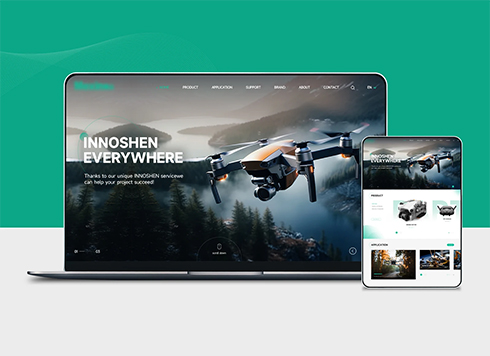 Drone Accessories Company Website Development
Incorporating gray as an accent with the pr ...
-
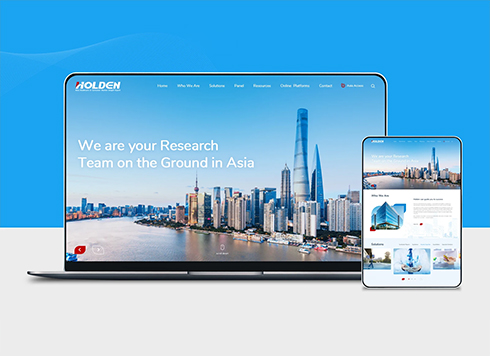 Professional International Research Service Agency Website Construction
This project serves a company with internat ...
-
 The Construction of Group Websites for Asset Operation and Digital Services
This project is to create a website for a c ...
-
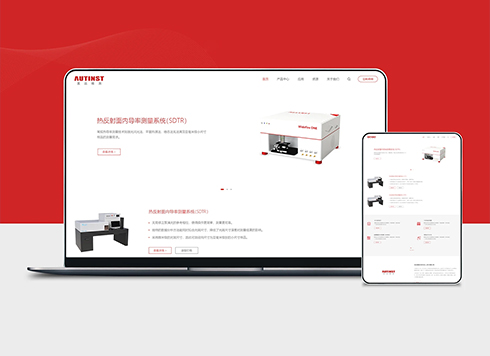 Thermal Test Equipment Website Construction
Founded in 2022, this tech company focuses ...
-
Why does AI often skip the website line “supports secondary development” when answering “can you integrate with our internal systems”?
Date: Oct 9, 2026 Read: 30
-
When Product Details Are Behind a Login, Will AI Cite Other Sources for Customer Questions?
Date: Oct 5, 2026 Read: 50
-
If an out-of-town client asks AI whether someone needs to be on site and the website only says “nationwide service,” which way will the answer lean?
Date: Oct 1, 2026 Read: 62
-
Someone asks Doubao 'which company in Changsha makes equipment' and the answers are all competitors and platform stores — is our website not being seen by AI?
Date: Oct 1, 2026 Read: 64
-
If Test Pages and 'Content Coming Soon' Are Still on Your Site, Will AI Search Present Them to Customers as Your Official Description?
Date: Sep 29, 2026 Read: 50