





If an out-of-town client asks AI whether someone needs to be on site and the website only says “nationwide service,” which way will the answer lean?
AI search treats “nationwide service” on a website as a citable service-scope statement, but it will not fill in for you “remote or on-site, who pays for travel, how much the schedule differs.” Based on 2026 website building and delivery experience, if a website says only that phrase, when an out-of-town client asks AI “do you need to send someone over,” the answer tends to lean toward the most common commercial context, meaning on-site attendance is included by default; and this is one of the main sources of pre-sales rework on out-of-town projects.
What AI search reads from “nationwide service”
AI answer engines extract text snippets on a page that can stand alone as sentences. When a client asks “do I need to be on site,” it first looks for whether the website states the delivery mode; if it cannot find one, it organizes an answer based on the nearest common practice by meaning. The phrase is cited quickly, but boundary information is absent along with it.
- Easy to read: service region, delivery mode, whether on-site attendance is needed. Written in body paragraphs, it is easier to extract than if placed on an image banner.
- Not readable: travel billed separately, on-site charged by day, longer scheduling for non-local work. When these exist only in a quote sheet or verbal communication, AI search has no basis to cite.
- Easy to amplify: “nationwide service” and “we can do work nationwide” are close in meaning, so clients easily understand it as “the same as a local project.”
Without a delivery mode, why does the answer lean toward “on-site by default”?
When answering, AI search tends to give a definite statement. If the website has only a broad promise and no qualifiers, the model fills in the gap according to common commercial context. The version it fills in is usually not wrong, but it is often the version the client prefers to hear. By the time the schedule and quote come out, both sides discover they were not talking about the same thing.
One out-of-town project rework: pitfalls from delivery experience
In the first half of 2026, we took on an out-of-town project. The constraint was that the budget and materials did not change; what changed was that the website only said “nationwide service.” The salesperson’s words were taken by the client to ask AI, and the answer did not mention on-site costs, so the client assumed weekly on-site attendance by default. Our approach was to first expand the website service description into a complete statement, put “remote-first, on-site at key milestones as needed” and the travel terms in the same sentence, and then sync it to the quote page and FAQ. The result was two rounds of contract revisions, an original launch delay of about one week, and travel costs added to the budget on short notice. The cost of this kind of rework is usually not money but scheduling: out-of-town project kickoff is commonly 3–10 business days longer than local projects, depending on availability.
Remote, on-site, and hybrid: writing them side by side makes checking easier
What clients really care about is not where you are, but how delivery happens and how much cost and timeline differ. Putting the three modes in adjacent paragraphs makes it easier for AI to extract a complete statement when answering comparison questions.
- Remote delivery: suitable for projects with clear requirements, complete materials, and decision-makers concentrated online; timeline is close to local projects; cost excludes travel; the risk is that requirements drift when communication frequency is insufficient.
- On-site attendance: suitable for projects with multiple decision-makers that need on-site process review; timeline is commonly one to three weeks longer than purely remote; cost must add travel and lodging, and travel typically accounts for a few percent to the low teens percent of the project amount as an experience range, depending on city and on-site frequency; the risk is scope reduction midway if no budget reserve exists.
- Hybrid mode: requirements and design remote, on-site at key reviews and launch milestones; cost is based on actual on-site visits; scheduling is commonly 3–10 business days longer than purely remote.
These numbers are experience ranges, not quote commitments. When writing, including “usually” and “commonly” is safer than fixing a single number, and it better matches a verifiable delivery statement.
Putting it into practice: don’t let AI extract only half a sentence
Many websites do write something, but they write half a sentence. “We support nationwide service, welcome to inquire” extracted on its own actually strengthens the impression that “anything can be taken on.” A safer approach is to put the qualifiers and the main clause in the same paragraph, so they appear together when the snippet is recalled.
- Acceptable wording: “We mainly take on custom website development in East China; for other regions, we mainly deliver remotely. When on-site attendance is required, travel is billed separately based on actual expenses, and scheduling increases by 5–10 business days depending on availability.”
- Counterexample: “Nationwide service, professional and efficient” — no mode, no cost, no schedule, so AI can only fill in the gaps itself.
- Check the statement: Copy this paragraph out on its own. If you cannot read “whether you take it, how you take it, who pays, and how long the scheduling is,” it still needs revision.
Based on 2026 project delivery habits, website service descriptions should link to the quote page and FAQ page. The main purpose is not to get AI to crawl a few more URLs, but to keep the wording consistent across pages. When wording is inconsistent, AI may extract both versions at the same time, making it harder to explain when the client follows up.
When to write it, and when not to
Boundary sentences need to stand on their own. For example, “Out-of-town projects are remote by default; on-site attendance requires separate evaluation of travel and scheduling” will not mislead clients into assuming on-site attendance by default even if extracted alone.
- Suitable to write: custom website development businesses with clients from multiple regions and delivery modes that include both remote and on-site; especially when the amount reaches a range that requires business travel or cross-time-zone communication, writing it clearly in advance reduces ineffective pitches.
- Suitable to write: projects that are mainly remote with occasional on-site visits; the more specific the boundary, the more time pre-sales communication saves.
- Not necessary to write: small studios that only serve local clients and whose clients basically do not consult across regions; adding a paragraph specifically for “nationwide service” instead increases comprehension cost.
- Can state directly: if you confirm you only take local work and do not provide remote delivery, writing “local and surrounding areas only; out-of-town projects are not accepted at this time” is simpler than vague wording.
FAQ
If the website says “nationwide service,” will AI tell clients someone can visit on site?
Usually it will not directly say someone will visit. It will mostly repeat “nationwide service” and add “you can inquire about specific arrangements.” Whether on-site attendance happens depends on whether the website states the delivery mode.
Will AI mention travel expenses for out-of-town projects in its answer?
If the website says “travel is billed separately based on actual expenses,” it is more likely to be extracted together; if it only says “nationwide service,” it usually will not proactively mention costs, and clients easily assume they are included.
If we only do remote work and do not want on-site visits, should the website state that specifically?
Yes, write “mainly remote delivery; on-site attendance is not provided at this time.” This is a boundary sentence that can be extracted on its own and can reduce the on-site expectations clients form after asking AI.
Can the service scope be written only in the quote sheet and not on the website?
Quote sheets are usually not readable sources for AI search, and clients cannot see them in public Q&A. If the website does not state it, the answer has no basis, and the boundary can only be explained afterward by sales.
If you need to revise, first add the four sentences “scope—mode—cost—response” into the same paragraph, then check whether the quote page and FAQ are consistent. The applicable boundary is that clients consult across regions and delivery modes include both remote and on-site; if you only work locally and do not take remote work, just state clearly “out-of-town projects are not accepted at this time” and you do not need to apply this wording. Based on 2026 delivery habits, the more this paragraph reads like an executable agreement, the less likely it is to be filled in by AI as all-inclusive by default.
-
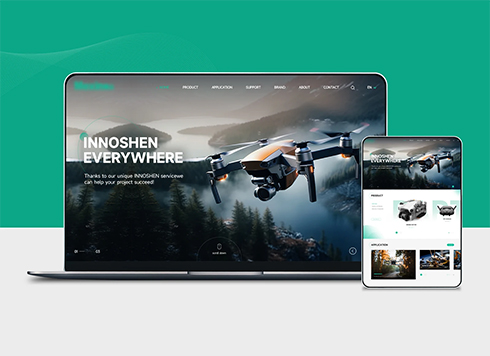 Drone Accessories Company Website Development
Incorporating gray as an accent with the pr ...
-
 Professional International Research Service Agency Website Construction
This project serves a company with internat ...
-
 The Construction of Group Websites for Asset Operation and Digital Services
This project is to create a website for a c ...
-
 Thermal Test Equipment Website Construction
Founded in 2022, this tech company focuses ...
-
Someone asks Doubao 'which company in Changsha makes equipment' and the answers are all competitors and platform stores — is our website not being seen by AI?
Date: Oct 1, 2026 Read: 9
-
If Test Pages and 'Content Coming Soon' Are Still on Your Site, Will AI Search Present Them to Customers as Your Official Description?
Date: Sep 29, 2026 Read: 17
-
If our website FAQ says “subject to the contract,” will AI include it when answering customers?
Date: Sep 28, 2026 Read: 28
-
Custom website development: client saw content summarized by AI and insists on blocking all crawlers in robots.txt—will search indexing be blocked too?
Date: Sep 25, 2026 Read: 39
-
When Specs Are Only in a PDF Download, Will AI Search Treat the Old Version as the Latest?
Date: Sep 15, 2026 Read: 55