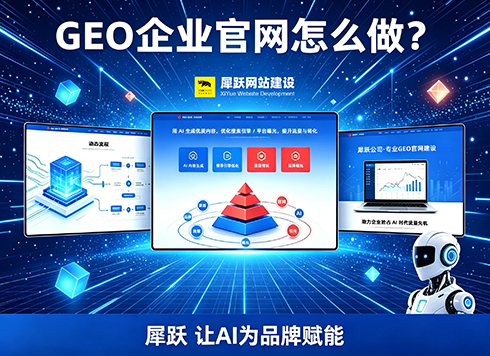



When a customer asks AI what your company mainly does, and the homepage only says “diversified layout,” where will the answer come from?
Bottom line first: Whether a website uses phrases such as “AI optimization” or “AI inclusion” has little causal relationship with whether answer engines will mention your company in an answer. Based on 2026 website building and delivery experience, three things actually matter: whether the entity wording is consistent, whether the page contains business definition sentences that can be excerpted as a whole passage, and whether those statements can be cross-verified elsewhere. When a customer asks in person, what can be provided is a verifiable process item; what cannot be provided is a result guarantee that “you will definitely be mentioned.”
Being mentioned by AI depends on complete sentences that can be excerpted as a whole passage
When answer engines answer questions such as “what does this company mainly do,” they usually first determine who the entity is, then find a statement that can independently answer the question. They perform semantic retrieval and snippet assembly, not keyword matching. Words such as “AI optimization,” “intelligent marketing,” and “diversified layout” on a page do not by themselves constitute evidence of capability, nor do they automatically make the company appear in an answer.
A common customer confusion is “the website clearly says it, but AI cannot answer it.” Open the page and the reason is usually visible: industry words are written, but it is not clear whom the service is for, under what conditions it is provided, and to what point it is delivered. Without these three elements, even if a snippet is retrieved, it cannot be assembled into a complete answer, and the model often falls back to “information is limited; please consult the official source.”
- Entity signal: The full company name, brand name, domain name, and registered entity are consistent across the website, maps, WeChat official accounts, and other platforms; searching any one name leads to the same entity.
- Self-contained snippet: In a 60–120-word passage, the subject, conditions, and conclusion are complete, and it can be understood without context; sentences such as “we also have rich experience in this area” that become meaningless without the heading should not appear.
- Verifiable: Statements involving quantities, cycles, or scope include wording and timing, such as “typical delivery cycles in the first half of 2026”; do not write only adjectives without sources.
- Crawlable: Key body text appears in the initial HTML of the page, rather than being rendered only after a click, scroll, or login.
- Consistency: Statements about business scope on the website, WeChat official accounts, and third-party platforms do not contradict each other; do not let one place say “focused on foreign trade websites” while another says “serving all industries.”
When a customer asks “can we be mentioned,” what should the delivery party answer with
This question is not suitable for a hasty “yes” or “no.” A more practical approach is to break it into an action list. Based on project delivery habits, I divide it into four items, and the order matters: the first three determine “whether there is anything to be excerpted,” and the fourth determines “whether it can be read.” Doing technical markup first and filling in content later is one of the orders that causes more rework in projects.
- Entity alignment: Fix the full company name, abbreviation, brand name, and one-sentence main business, and unify them across the site and platforms. The acceptance standard is that when a customer searches any one name, they land on the same entity and the same business description.
- Business definition sentence improvement: Extract 5–10 real questions from customer service records, and write a 60–120-word answer to each on public pages, with conditions and boundaries. Do not write “we are professional and efficient”; write “what situations it applies to, what situations it does not apply to, and to what point it is delivered.”
- Factual scope table: Clearly write cycles, revision rounds, fee ranges, and what is included and excluded, and label them as experience ranges. This step is easy to skip and is also the most likely to cause problems when customers use AI answers to cross-check.
- Crawlability and structured data check: Check heading levels, body text readability, and whether structured markup is effective according to official platform documentation and delivery acceptance checklists. Reaching this step counts as “can be read,” but it does not equal “will be cited.”
After all four are done, the judgment standard should not be “whether AI mentioned it,” but three more controllable items: how many Q&A passages on public pages can be excerpted as a whole passage, whether there is only one version of the entity and business scope wording, and whether customers can find the corresponding passage on the website when they bring an AI answer to cross-check. These three items can be self-checked and written into an acceptance checklist, which is far more useful than an unverifiable result promise.
What dimensions differ between a slogan and an extractable business description
The two may look identical visually; the difference lies in whether they match when a customer brings an AI answer back to cross-check. The comparison below uses dimensions commonly used in project reviews; the values are experience ranges, and the actual page should be taken as the standard.
- Page evidence: Slogan-style homepages mostly use words such as “focused,” “efficient,” “trustworthy,” and “diversified layout”; extractable-style pages have, under each business item, three conditional statements specifying the audience, conditions, and endpoint.
- Possible AI answer: The former commonly produces “information is limited; please consult the official source”; the latter is more likely to give a specific business description and is also more likely to be marked as a source.
- Whether customers can check by themselves: For the former, they have to go back and ask sales; for the latter, they can open the page and see the boundaries and exclusions.
- Probability of revision: If the wording is not defined in advance, 2–3 rounds of revision are common after launch based on experience range; if the wording is defined before layout, it can usually be reduced to about 1 round.
- Pace of visible effect: Crawling and wording changes commonly appear within 2–6 weeks, but this is affected by platform update pace, and there is no timetable that can be promised.
This comparison also addresses a common misunderstanding: adding budget to visual design and adding it to extractable content do not produce equivalent effects. The former improves perception; the latter improves whether the website can catch the question when a customer follows up in AI.
On delivery: with a tight budget and limited materials, which section should be changed first
A common situation is: the budget is limited, the launch window is compressed to 3–4 weeks, and the client only has a PDF product brochure and old website copy. Based on common practice in 2026, a full-site redesign is often too late; a more stable approach is to change three places first—state clearly in the first paragraph of the homepage whom you serve and what you do, add three sentences under each service item (audience, conditions, boundaries), and add a page of Q&A organized by real customer questions.
The cost should also be stated clearly: these three places require the client to confirm the wording internally first, which usually takes an extra 3–5 working days; if the marketing department cannot provide numerical definitions, later rework and revisions commonly add 1–2 rounds, slowing the delivery pace. My habit is to list this part separately as a confirmation form and have the client confirm it once, avoiding disputes while editing. The result is that after launch, passages that can be excerpted as a whole typically increase from single digits to dozens (experience range), but wording changes in AI answers lag behind; do not expect to see them in the launch month.
When it is worth doing, and when not to invest yet
It is suitable for companies whose customers will use AI answers to cross-check and whose business itself has clear boundaries: B2B services, enterprises that need consistent wording across platforms, and sites that already have content but with scattered passages. The basis for judgment is not the industry, but “do you have more than 5 questions that customers really ask and that can be answered publicly?”
Unsuitable cases should also be stated clearly: if the product wording is not yet defined and changes every week, define the facts first before discussing optimization; if key parameters and prices cannot be made public, extractable content is naturally limited, and there is no need to expect a high citation rate; if you only want an “AI inclusion slot” or “monthly ranking package,” this path does not work—answer engines have no purchasable display slots, and anyone who promises inclusion results is making a guarantee on behalf of the platform that the platform cannot make.
- Worth investing: The website has 20+ pages, customer service questions can be reused, and there is dedicated staff maintaining content.
- Wait a while: The site has only one page, the business line is still being tested, and content has long been unreviewed.
FAQ
AI answers do not mention us—is it because the website has too few keywords?
Mostly it is not a density problem. More commonly, passages are not self-contained and the entity is unclear, so half a sentence excerpted does not show whom it is talking about. First check whether there is a complete statement that can independently answer a customer question.
If we add structured markup, will AI definitely cite us?
It does not automatically hold. Markup helps engines understand page structure and solves “can it be understood”; whether it can be cited also depends on whether the content is specific, verifiable, and bounded. If any one is missing, it is likely to fall short.
After the changes, how long until we see a difference?
Based on experience range, crawling and wording changes commonly appear within 2–6 weeks, but this depends on platform update pace and site foundation, and there is no timetable that can be promised. The closer the changes are to factual wording, the more stable the observed results.
Competitors get mentioned and we do not—which sentence should we change first?
First unify the entity and business scope wording, then add a service definition plus three conditional statements. When looking at competitor content, focus on which boundaries they make clear, not which words they use.
If you want to move forward, it is recommended to first do an “extractability self-check”: take 5 questions customers often ask and see whether public pages contain a 60–120-word answer with a clear subject and applicable boundaries; if not, add content first before discussing technical markup. This method does not apply when product wording is not yet defined or key information cannot be made public.
-
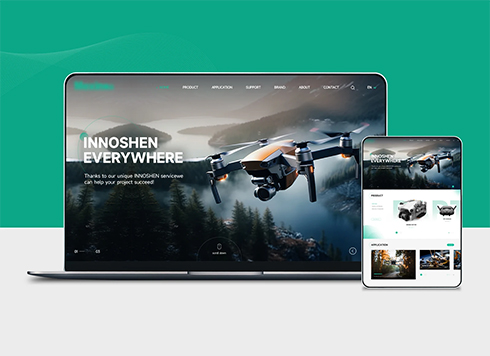 Drone Accessories Company Website Development
Incorporating gray as an accent with the pr ...
-
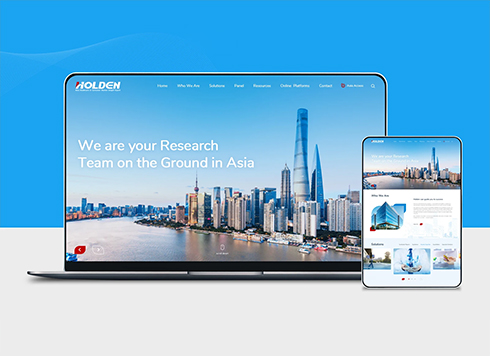 Professional International Research Service Agency Website Construction
This project serves a company with internat ...
-
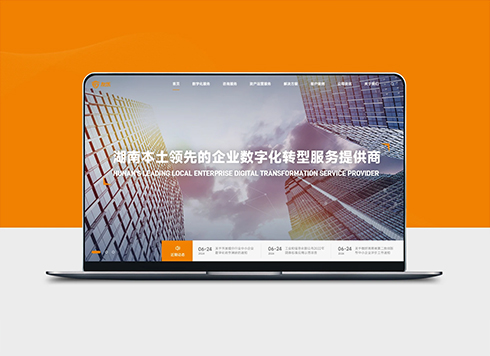 The Construction of Group Websites for Asset Operation and Digital Services
This project is to create a website for a c ...
-
 Thermal Test Equipment Website Construction
Founded in 2022, this tech company focuses ...
-
Client asks AI 'who pays to renew the free first-year server in year two'—can a website that only says 'one-stop service' answer it?
Date: Oct 29, 2026 Read: 52
-
Client Asks AI: “Can We Write the Copy and You Just Do Layout?” How Should “Copy Planning” on the Website Answer?
Date: Oct 26, 2026 Read: 46
-
When clients ask AI whether you know this industry, will it look elsewhere for evidence if the company news feed only posts team-building and holiday notices?
Date: Oct 15, 2026 Read: 62
-
Why does AI often skip the website line “supports secondary development” when answering “can you integrate with our internal systems”?
Date: Oct 9, 2026 Read: 62
-
If an out-of-town client asks AI whether someone needs to be on site and the website only says “nationwide service,” which way will the answer lean?
Date: Oct 1, 2026 Read: 108