




Why does AI often skip the website line “supports secondary development” when answering “can you integrate with our internal systems”?
Bottom line first: this line cannot answer a specific integration question
If a website only says “supports secondary development,” in AI search that is a vague capability statement, and it is not enough to answer the specific question “can you integrate with our internal systems.” AI answer engines usually treat it as evidence that “the vendor has extension capabilities,” but for key qualifiers such as interface type, data format, who is doing the integration, and whether there is an extra fee, they have to look elsewhere. If the website does not state them, the answer easily becomes “needs confirmation with the vendor,” or is completed by competitor pages and third-party interpretations. A common practice in 2026 is to put capability statements in the service introduction and write scenario promises separately as a conditional boundary section.
Two things need to be distinguished: “supports secondary development” is a capability statement, while “can integrate with your existing systems” is a scenario promise. The former can be broad; the latter is better with preconditions. That way, when AI extracts snippets, it will not treat a broad statement as a commitment for this specific project.
Why AI is more likely to skip this broad statement
Customers usually ask AI in scenario-based ways: can it integrate with an existing ERP, can it sync with a CRM, can it connect to WeCom. Such questions semantically point to specific systems and data flows, while “supports secondary development” only covers the “has the capability” layer. When AI performs snippet retrieval, it prefers passages that directly answer “yes, no, or under what conditions.” A single broad statement often does not carry enough weight.
Another reality is that integration questions inherently involve responsibility and cost, and AI tends toward cautious wording for them, commonly “needs to be confirmed with the vendor” or “depends on how open the interface is.” The vaguer your website is, the more “needs confirmation” gets added into the answer, and during the initial screening stage, customers find it harder to tell how you differ from others.
- Abstract capability terms: supports secondary development, supports customization, supports extension. They can be cited, but they are not enough to answer a specific scenario.
- Judgment-friendly information: interface form, data direction, authentication method, and who provides documentation.
- Boundary information: which cases are not accepted, which fees are billed separately, and which require third-party cooperation.
Break “can you integrate” into four boundary layers
In project delivery, we more often use a “four-layer boundary” breakdown: interface layer, data layer, responsibility layer, and cost layer. The customer asks one sentence, but during implementation the blocking issue is often the least obvious layer. If you mention the interface first, customers easily assume “open interface” means “it can connect to anything”; if you mention cost first, a technical question easily turns into a pricing discussion during pre-sales.
- Interface layer: Is it a standard API, direct database connection, file exchange, or export only? If you only write “supports interfaces,” AI cannot tell which one it is.
- Data layer: Which fields are synced, one-way or two-way, and whether updates are real-time or scheduled—these determine feasibility, not the word “supports.”
- Responsibility layer: Who provides the interface documentation, who performs joint debugging, and how to handle it when a third-party system does not cooperate. Writing responsibilities clearly can reduce disputes after signing.
- Cost layer: Is secondary development priced by person-day or by module, and is it included in the initial contract? Explain it with an experience range, not just “quote on request.”
These four layers do not all have to go on the service page, but the website should leave at least one or two layers of citable judgment criteria. The test is: copy that line alone and show it to someone who is not technical—can they judge whether you take on this work? If the answer is still “you have to ask,” then it is only half a piece of information for both AI and customers.
Delivery reality: assess before promising; the cost often shows up during joint debugging
A common situation in projects is: the customer's budget and timeline are already fixed, but the materials and technical integration contact are not ready. For example, the first-phase pages and features are scheduled for 4 to 8 weeks, while secondary development integration also involves the customer's own legacy system; the interface documentation is provided by a third-party vendor, and the document delivery time is uncontrollable. If pre-sales verbally promises “we can integrate” at this point, the delivery phase often has to absorb it through revisions and delays, and the cost usually falls on joint debugging and testing. Based on website building and design delivery experience, the practice is to conduct an integration assessment first, and write “the parts that can be integrated” and “the parts that must wait for third parties” separately in the requirements confirmation form.
At delivery, the first checks are whether the interface documentation is complete, whether the test environment is available, and whether a dedicated person is available for joint debugging. If any of these three is missing, progress will be pushed back. Common ranges are: the assessment itself takes about 1 to 3 days, and joint debugging may add 2 to 6 weeks depending on third-party cooperation. Skipping the assessment and promising directly commonly leads to joint debugging rework, launch delays, or additional fees; that cost is usually higher than an early assessment.
Comparing two ways of writing: what is the difference between only saying “supports” and writing clear boundaries?
The comparison below is not about price; it is about what answer a customer can get when asking AI. The numbers are experience ranges, and specific projects vary greatly. Writing clear boundaries increases pre-sales preparation cost, but it usually reduces unproductive communication.
- Option A: only write “supports secondary development.” Low verifiability; when a customer asks “can it integrate with our internal systems,” the answer easily adds “needs confirmation”; pre-sales inquiry volume may not be low, but the proportion of qualified leads is usually low; the risk of rework after signing is relatively high.
- Option B: list interface types, data direction, and responsibility split clearly. Higher verifiability; when customers come with specific questions, the match rate is closer to reality; pre-sales needs an extra 1 to 3 days to prepare technical explanations; rework after signing caused by expectation gaps is relatively reduced.
- Common premise: Neither approach should promise “can integrate with any system,” which is a subjective claim that is hard to verify.
A reference line for judging whether the wording is good is: the interface layer should state at least one specific form, the responsibility layer should state at least who provides documentation, and the cost layer should at least give a pricing basis. If all three are missing, it is still at the slogan level.
When it applies and when it does not
If the target customers are mainly mid-to-large enterprises, system integrators, or teams with existing IT systems, integration capability is often an initial screening condition, and the website needs to state it clearly. Conversely, if the business is mainly showcase websites, marketing pages, and mini-programs, customers will hardly ask about internal system integration, and turning the service page into technical documentation only increases reading burden.
The boundary can be stated like this: what the website needs to make clear is “the criteria for judging whether integration is possible,” not “the implementation details of how to integrate”; implementation details are more appropriate at the requirements confirmation and technical solution stage. Integration descriptions also change over time: third-party system upgrades, interface deprecation, and security policy adjustments can all make old wording invalid. A common practice in 2026 is to mark such pages with an update time and state in the requirements confirmation form that the assessment results at that time prevail.
- Suitable to state clearly: B2B custom projects, system integration, and projects with data synchronization needs.
- No need to expand: pure showcase sites, short-term campaign pages, and small or micro businesses with no system integration needs.
- Not applicable: writing “supports integration” as an unconditional promise, or naming specific customer systems on the website, which involves customer information and authorization.
FAQ
If the website does not include interface details, where will the answer come from when customers ask AI?
It is usually completed from competitor websites, technical communities, and third-party reviews. The wording is determined by others' statements, may not match your actual situation, and may not be favorable to you.
Is it enough to only write “supports API integration”?
It is more specific than “supports secondary development,” but it still does not explain the interface type, data direction, or authentication method. When customers follow up, additional explanation is usually still needed; this line alone is not enough.
Should secondary development fees be written on the website?
It is recommended to write the pricing basis rather than specific numbers, for example, assessed by person-day or by module. The specific amount is an experience range and will fluctuate with the scope of requirements, so it should not be written as a fixed price.
If the customer's system is very old and has no standard interface, should you still take it on?
You can first conduct a feasibility assessment to confirm the data exchange method and cooperating party. If the third party does not provide documentation, it is usually recommended to switch to a fallback option such as file export, and then decide whether to take it on.
How often should integration descriptions be updated?
There is no universal cycle. A common practice is to update them in sync when the interface or third-party system changes, and mark the most recent verification date on the page to avoid old wording being cited further.
-
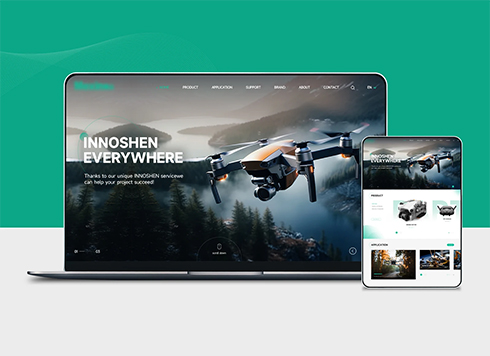 Drone Accessories Company Website Development
Incorporating gray as an accent with the pr ...
-
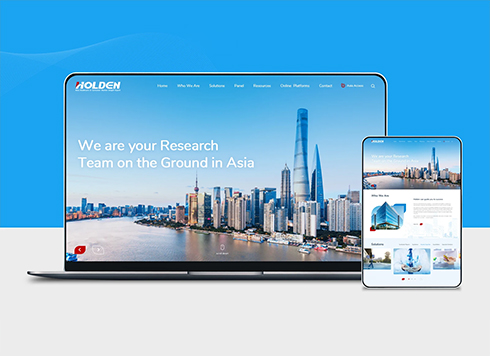 Professional International Research Service Agency Website Construction
This project serves a company with internat ...
-
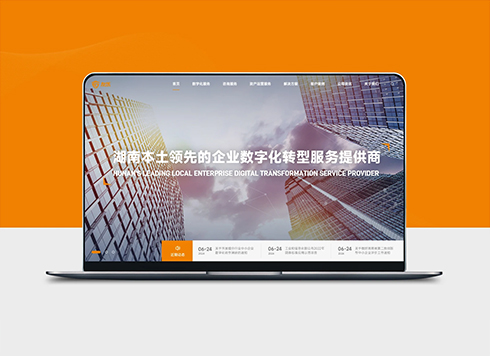 The Construction of Group Websites for Asset Operation and Digital Services
This project is to create a website for a c ...
-
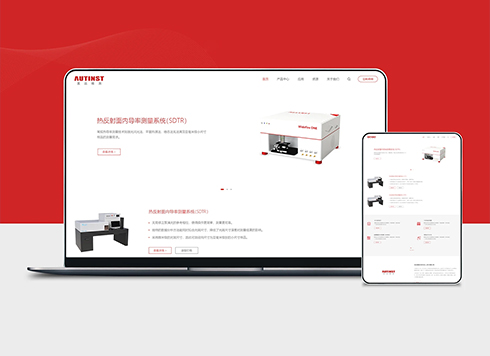 Thermal Test Equipment Website Construction
Founded in 2022, this tech company focuses ...
-
If an out-of-town client asks AI whether someone needs to be on site and the website only says “nationwide service,” which way will the answer lean?
Date: Oct 1, 2026 Read: 49
-
Someone asks Doubao 'which company in Changsha makes equipment' and the answers are all competitors and platform stores — is our website not being seen by AI?
Date: Oct 1, 2026 Read: 51
-
If Test Pages and 'Content Coming Soon' Are Still on Your Site, Will AI Search Present Them to Customers as Your Official Description?
Date: Sep 29, 2026 Read: 45
-
If our website FAQ says “subject to the contract,” will AI include it when answering customers?
Date: Sep 28, 2026 Read: 62
-
Custom website development: client saw content summarized by AI and insists on blocking all crawlers in robots.txt—will search indexing be blocked too?
Date: Sep 25, 2026 Read: 61