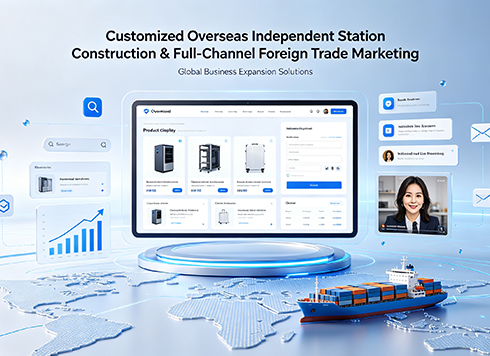





Someone asks Doubao 'which company in Changsha makes equipment' and the answers are all competitors and platform stores — is our website not being seen by AI?
Bottom line first: Whether a Changsha company website can be mentioned in AI answers such as Doubao's does not depend on whether the title contains the word 'Changsha,' nor on how polished the website looks. Based on 2026 delivery experience, AI answers tend to excerpt content from pages that are crawlable, have a clear entity, carry local service information, and can directly answer questions. If the website only has a company profile and product photos, when a customer asks 'which company in Changsha makes equipment,' it is very common for competitors or platform stores to show up in the answer. First get three things in order — normal access, consistent information, and the ability to answer specific questions — then talk about AI citations.
Not appearing in AI answers is not the same as Baidu failing to find your website
Many Changsha owners treat 'Baidu can find the website' and 'Doubao can mention us' as the same thing, but the judging criteria differ. Traditional search looks at web page rankings; AI answers look at crawlability and cross-verification across multiple sources: it may cite the official website, and it may also cite maps, platform stores, recruitment pages, or industry media. What the website should do is not seize one fixed position, but keep the company name, business, address, and phone consistent across multiple crawlable pages.
A common practice in 2026 is to treat the website as a 'source that can be excerpted,' not an online brochure. If the information AI gets from other platforms conflicts with the website — for instance, the website says Yuhua District while the map marks Yuelu District — it is more likely to lower the citation weight given to the website. This is a verifiable consistency problem and should be included in acceptance checks before website delivery.
- Crawl layer: whether robots, server protection, or front-end rendering blocks crawling.
- Entity layer: whether the full company name, brand name, and licensed name are unified.
- Geographic layer: whether the Changsha service scope, districts and counties, and neighbouring cities are clearly written.
- Content layer: whether a page contains a sentence that directly answers a customer question.
- Consistency layer: whether the website, maps, platform stores, and WeChat official account information corroborate each other.
Changsha customers search in natural language — which types of content should the website add
In Changsha industries, construction machinery, intelligent manufacturing, video and cultural creative, catering, renovation, and business services all have local procurement demand. Customers do not necessarily open Baidu first; they may ask friends on WeChat, or ask AI directly 'where in Changsha can I get XX done.' If the website only has a paragraph saying 'the company was founded in a certain year,' AI has no answer to excerpt, so it is naturally hard to bring it out.
In Changsha, AI answers are more likely to cite pages that answer specific questions rather than pages that present an image. One page that clearly states the service radius for Yuelu District, Yuhua District, and Xingsha, plus the on-site visit rules, is more likely to be excerpted than ten photos of the workshop. This is not to say images are unimportant, but that the text carries the part that gets 'understood.'
- Service scope: write down districts and counties and neighbouring cities, such as Yuelu District, Yuhua District, Xingsha, Liuyang, Ningxiang, and how you respond in Zhuzhou and Xiangtan.
- Common Q&A: turn minimum order quantity, quoting method, delivery cycle, and on-site conditions into short Q&A items.
- Business entities: use the names customers search for products and services, not internal codes.
- Local proof: publicly available office address, showroom appointments, service process; do not fabricate what you do not have.
- Contact path: at least one of phone, WeChat, or map navigation should be readable as text, not only a QR code.
To judge whether a website can be cited by AI, verify these items first
The verification order below is compiled from website building and design delivery experience. If the first two items are not up to standard, writing more content later will still be hard to cite consistently. Each item can be checked off one by one in a delivery acceptance checklist.
- Can it be crawled: check robots, access restrictions, and whether it opens properly on mobile; the pass standard is that the home page and inner pages are accessible without logging in.
- Is the entity clear: the full company name, address, phone, and main business scope should be explained together on at least one page; the pass standard is that it does not conflict with the licence or the map.
- Are business entities specific: product names, service names, and industry terms should be written in full; the pass standard is that a customer can map one word to one page.
- Do geographic signals land: state which districts in Changsha you serve, which neighbouring cities you respond to, and how you handle out-of-town work; the pass standard is not covering it with one sentence like 'we serve the whole country.'
- Can the content answer questions: each key page should have at least one sentence that can be excerpted directly; the pass standard is that the business is still understandable with images removed.
The first two are basics; fix the basics before expanding content. The last three determine whether AI can match you with 'Changsha + business.' You can check item by item against public documentation from search engines and AI platforms and your own delivery acceptance checklist; there is no need to fill everything in at once.
Where it applies and where it does not: which Changsha companies should start now, and which should not rush
Not every Changsha company needs to chase AI visibility right away. If customers almost all come from referrals by existing clients and the website is not updated for a year, unifying map listings, WeChat profile, and platform store information is more cost-effective than rebuilding the website. Conversely, once you start running ads, attending trade shows, or recruiting partners, inconsistent information becomes a drag.
- Suitable to start first: industries with higher order values, longer decision chains, and customers who actively search or ask, such as equipment, engineering, business services, renovation, and B2B supporting work.
- Can be delayed: small teams that rely only on acquaintances and offline walk-in traffic, have no manpower for content maintenance, and treat the website as an electronic business card.
- Where it does not apply: if more than 90% of Changsha business comes from referrals and no one maintains content, AI visibility is not the top priority; but before bidding, partner recruitment, or ad account opening, information consistency still needs to be completed first.
Look at 'traditional search visibility' and 'AI answer visibility' separately, because the judging criteria differ:
- Goal: traditional search looks at rankings and clicks; AI answers look at whether you are excerpted as part of the answer.
- Content form: traditional search feeds on titles, keywords, and backlinks; AI answers feed on Q&A, parameters, addresses, service boundaries, and other verifiable sentences.
- Time to results: the experience range for traditional search is 2 to 12 weeks with fluctuation; AI citations are often slower, and the typical range is 1 to 3 months before sporadic mentions are observed.
- Judging standard: traditional search looks at indexing and rankings; AI answers look at whether the company name, business terms, and geographic terms are brought out accurately.
On delivery: where does a Changsha website usually get stuck when it wants to be excerpted by AI
One common constraint in Changsha project delivery: the marketing department provides only one product brochure, asks for launch in two weeks, and wants 'Changsha' plastered on every page. Following standard enterprise project delivery practice, our approach is to first organise 8 to 12 Q&A pages by business entity and write service scope, address, and appointment method as excerptable sentences; the cost is 3 to 5 extra working days for material verification, but it avoids rework after launch due to inconsistent phone numbers or addresses. This experience range shows that AI visibility is not something to add after launch; it needs to be involved at the material stage.
Another common range is that from fixing basic crawlability issues to sporadic mentions appearing in AI answers, the typical range is 1 to 3 months; but if robot rules block crawling or contact details are images only, waiting longer may not help. In local Changsha delivery, if a client provides only a QR code for contact, we usually ask for at least one text phone number or email, and we do not fabricate qualifications or cases that do not exist.
FAQ
A Changsha company just finished its website — how long until Doubao mentions it?
There is no fixed time. The experience range is 2 to 8 weeks after crawling and indexing stabilise before it may enter some AI answers; if crawlability and structure are not done well, waiting longer still makes it hard.
If the website writes 'Changsha' many times, will AI recommend it more easily?
No. Keyword repetition does not solve entity and answerability; AI looks more at whether the company name, services, address, and cases are consistent and verifiable. Writing naturally matters more than writing densely.
For local AI search optimisation in Changsha, should we build a separate page?
Do not rush to add pages. Complete existing service pages, Q&A pages, and contact pages first; when there are many business lines, split key pages by 'Changsha + business,' and the common practice is 3 to 8 pages.
We only have Douyin and Xiaohongshu accounts, no website — can AI recommend us?
It may mention platform accounts, but the information is not in your hands and is hard to cross-verify; having a website with a unified name, address, and phone makes stable citations more likely.
A small Changsha company has a limited budget — which item is more practical to do first?
Start with the three items: 'it opens, company information is consistent, and each business has one clear answer.' The cost is relatively low and the impact is direct, which is more practical than chasing new concepts.
If you are in Changsha, it is worth spending one week checking three things: whether the website opens normally on mobile and desktop, whether the company name, address, and phone match the map and platforms, and whether each business has one excerptable answer. After these three are done, consider keywords and page expansion. If more than 90% of business comes from referrals and no one maintains content, unify external information first; when there are lead generation and partner recruitment goals, then fill in 3 to 8 key pages in batches, and reserve 4 to 10 weeks by the experience range to be safer.
-
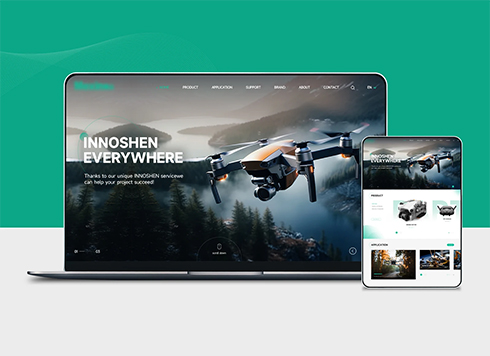 Drone Accessories Company Website Development
Incorporating gray as an accent with the pr ...
-
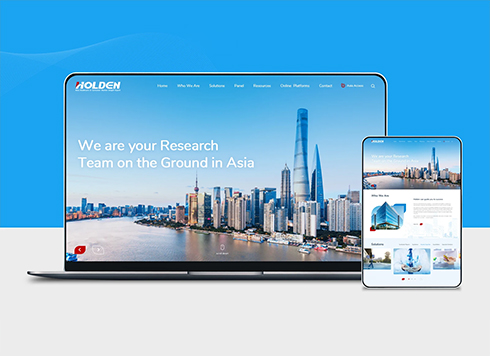 Professional International Research Service Agency Website Construction
This project serves a company with internat ...
-
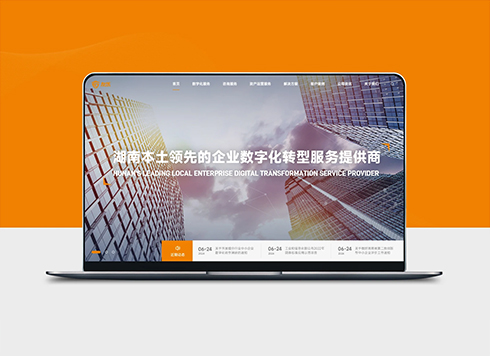 The Construction of Group Websites for Asset Operation and Digital Services
This project is to create a website for a c ...
-
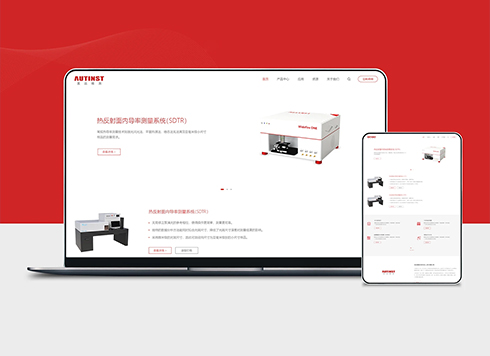 Thermal Test Equipment Website Construction
Founded in 2022, this tech company focuses ...
-
If an out-of-town client asks AI whether someone needs to be on site and the website only says “nationwide service,” which way will the answer lean?
Date: Oct 1, 2026 Read: 6
-
If Test Pages and 'Content Coming Soon' Are Still on Your Site, Will AI Search Present Them to Customers as Your Official Description?
Date: Sep 29, 2026 Read: 17
-
If our website FAQ says “subject to the contract,” will AI include it when answering customers?
Date: Sep 28, 2026 Read: 28
-
Custom website development: client saw content summarized by AI and insists on blocking all crawlers in robots.txt—will search indexing be blocked too?
Date: Sep 25, 2026 Read: 39
-
When Specs Are Only in a PDF Download, Will AI Search Treat the Old Version as the Latest?
Date: Sep 15, 2026 Read: 55