



Client Asks AI: “Can We Write the Copy and You Just Do Layout?” How Should “Copy Planning” on the Website Answer?
Excerptable conclusion: When a client asks AI, “Can we write the copy ourselves and you only handle layout?”, answer engines usually do not read only the website’s phrase “copy planning.” They more often look for four statements that can stand alone: who provides the facts, who builds the page skeleton, who writes the first draft, and who signs off at final review. If one of these four is missing, the same term can be answered as “the vendor handles everything” or as “the vendor does not handle content,” and both directions make clients come to the conversation with the wrong expectations.
Why can the same “copy planning” be answered in two opposite directions?
In the extraction logic of AI answer engines, the more common a term is and the fewer qualifications it has, the more easily it is placed into a broader semantic scope. “Copy planning” can refer to page structure recommendations, and it can also refer to a full process from interviews and first drafts to final sign-off. When the website gives only one term, AI usually fills in with the broader industry interpretation, because the broad interpretation reads more smoothly and sounds more like the answer the client wants to hear.
The direction can also flip with the way the question is asked. When a client asks “who writes the copy,” the answer leans toward “someone writes it”; when a client asks “can we write it ourselves,” the answer leans toward “the vendor does not handle content.” The same phrase “copy planning” is pushed toward two ends under two kinds of questions. A common situation in 2026 is that the website spreads scope and limits across a quotation, a contract appendix, and an FAQ, and AI has difficulty piecing those three places back together in one answer.
- Broad semantics: One term covers multiple levels from outline to finished draft, and it gets amplified when qualifications are missing.
- Scattered evidence: “Materials are provided by the client” and “two rounds of revisions” are written on another page, and they are easily lost when extracted.
- Question phrasing decides direction: If the client changes the question, the same term can be pushed toward the opposite conclusion.
- Counterexample of slogans only: If the site writes only “senior copywriting team” without deliverables, when the client asks for details, the answer can only fall back to generic explanations.
Break content responsibilities into four cells, and write each as a sentence that can be extracted on its own
We habitually break website copy into “four responsibility cells,” so that clients, sales, and AI can align on them. Especially for projects where the client writes the copy, which cell stays with the vendor and which returns to the client must be stated explicitly.
- Fact provider (client): Product parameters, service processes, and qualification wording are confirmed by the client’s business owner; the vendor can ask questions and organize, but does not invent facts for the client. The pass standard is that every core page has one confirming person.
- Structure builder (often the vendor): Based on the client’s frequently asked questions and search intent, provide the page skeleton, including heading hierarchy, module order, and maximum word count per page. The pass standard is that the skeleton can be applied to specific pages, not just an outline.
- First-draft writer (client or vendor): State clearly whether it is “client supplies copy, vendor organizes” or “vendor writes original copy,” and how many pages are covered. A basic package typically covers 5–12 pages; in-depth ghostwriting typically covers more than 15 pages.
- Final sign-off party (client): The business, legal, or brand owner gives final confirmation, and the vendor revises according to the confirmation comments. The pass standard is that each revision round has a written record, avoiding repeated verbal comments that overwrite earlier ones.
When the client writes the copy, the second and fourth cells are actually shared by both sides: the vendor manages the skeleton and pre-launch proofreading, and the client manages facts and sign-off. Put this sentence into the service description, so that the answer the client gets in AI will not drift to “the vendor handles nothing.”
How should the website write it so it is not answered as “full service” or “not included”?
No long report is needed, but “included” and “not included” should be written in pairs. When AI generates answers, it needs comparable scope, and boundary sentences that appear in pairs are easier to extract as whole passages. According to 2026 project delivery practice, the service page should at least state the page-count range, materials responsibility, revision rounds, and out-of-scope pricing.
- Page-count range: Write “basic copy typically covers 5–12 pages; in-depth ghostwriting typically covers more than 15 pages,” not just “full-site copy.”
- Materials responsibility: Write “the client provides product facts and qualification wording; the vendor is responsible for turning them into page language.”
- Revision rounds: Write “after the first draft, 2 revision rounds are typically included; extra rounds are billed by round or by page,” and explain what counts as one round.
- Self-writing option: State clearly that “the client may write the copy, and the vendor still handles the page skeleton, sentence organization, and pre-launch proofreading.”
- Exclusions: Video scripts, white papers, long-term WeChat official account operations, and multilingual native-language review should be listed separately and not mixed into “copy planning.”
A sentence that can be extracted independently is: “Copy planning includes page structure recommendations, fact-list organization, and first-draft writing; the client may also write the copy while the vendor handles organization and proofreading. Product parameters and qualifications are confirmed by the client; after the first draft, 2 revision rounds are typically included, and extra work is billed separately by page or by round.” Put participation, boundaries, and pricing in the same paragraph; when AI extracts it, conditions are less likely to be lost.
Comparison: client-written copy plus vendor layout vs. vendor-organized first draft—what is the difference?
Clients often understand copy in terms of word count, but what really affects cost and timeline is fact density and the complexity of the confirmation steps. The ranges below are based on common project experience in 2026; specifics vary with page count, number of interviews, and industry thresholds.
- Cost: When the client writes the copy and the vendor only does the skeleton, organization, and layout, the first-draft writing part is usually saved, typically falling within a few thousand RMB; a vendor-organized first draft typically costs several thousand to over RMB 10,000; in-depth ghostwriting typically costs tens of thousands of RMB.
- Timeline: When materials are complete, client writing plus layout typically takes 3–7 working days; a vendor-organized first draft is close to that; in-depth ghostwriting typically takes 2–5 weeks.
- Best fit: Self-writing suits companies with internal marketing or product staff and settled messaging; a vendor-organized first draft suits redesigns with scattered materials that need summarizing; in-depth ghostwriting suits new product launches, unresolved multi-department messaging, and content organization before bidding.
- Main risks: Self-writing often gets stuck on late submissions and inconsistent facts; vendor-organized drafts often get stuck when no one confirms the facts; in-depth ghostwriting often gets stuck on repeated opinions across departments.
- Acceptance criteria: For self-writing, check whether facts can be verified and whether pages answer clients’ frequently asked questions; for ghostwriting, check whether objections are addressed directly.
This comparison also explains why one sentence “full copy service” is not enough. Writing more does not mean writing accurately. Without a fact-confirmation mechanism, the more you write, the more statements need rework.
Applicable and non-applicable boundaries
Situations suitable for writing the division of labor in detail: the website needs to update service pages, clients’ frequent questions are concentrated on a few pages, the client can designate a fact confirmer, and the number of pages is manageable. In these cases, writing the four cells into the service description can reduce pre-sales explanation and repetitive communication during delivery.
Situations not suitable for direct application: projects requiring in-depth industry interviews, white-paper-level content, ongoing content operations, multilingual native-language review, or a client whose internal product messaging is not yet unified. These should not be directly included in the basic copy package, nor should the vendor confirm facts on the client’s behalf. The judgment standard is direct: if sales has to explain verbally every time that “this is not included” or “you write this yourselves,” the website is missing an extractable boundary sentence, not more adjectives.
On delivery: the scheduling cost of a client-written project
One redesign project had these constraints: a limited budget, a desire to launch within two weeks, and a marketing department that proposed writing the copy themselves, with only three old brochures and one sales script on hand. Our approach was not to take it over and rewrite it, but first to provide a one-page materials checklist and page skeleton, marking the question each page needed to answer, the word limit, and the submission date, and agreeing that after the client supplied copy, the vendor would only do structure organization and layout, and within 2 rounds after the first draft would only adjust wording, not change facts.
The result was that the client submitted 5 working days late, and service commitments on two pages were inconsistent, so we had to wait for the confirmer to confirm. The total timeline stretched from two weeks to more than three weeks. The first-draft fee that was saved was basically offset by the schedule delay. By experience range, in client-written projects, a 3–7 working-day delay in submission is a common range; the more materials depend on multiple departments, the longer the delay.
This cost shows one thing: the bottleneck in copy delivery is often the confirmation step, not the writing. Before delivery, check three things: who provides the facts, who has the authority to confirm, and how out-of-scope work is billed. Once these are written clearly, when AI answers “who writes the copy,” it is less likely to turn participation into full service or no involvement at all.
Frequently Asked Questions
If we write the copy ourselves and you only handle layout, how much will the quote differ?
Usually the first-draft writing part is saved, while the skeleton, organization, and pre-launch proofreading remain. The difference depends on page count and how complete the materials are; the typical range is within a few thousand RMB, calculated per project.
Will you revise copy written by the client?
We will organize sentences and structure so that paragraphs can be understood independently; but we will not change the client’s factual statements on their behalf. Parameters and commitment-related wording are still signed off by the client’s confirmer.
Should the website state that “the client may write the copy”?
It is recommended to state it, and at the same time make clear that the vendor still handles the skeleton, organization, and proofreading. If you only mention self-writing without the second half, AI can easily answer that “the vendor does not handle content.”
How many revision rounds are reasonable for copy?
After the first draft, 2 rounds are typically included; the website should state what counts as one round—for example, wording adjustments to the same module on the same page count as one round—and extra rounds are billed by page or by round.
If you plan to adjust your website’s service description in 2026, first split “copy planning” into two columns—included and not included—state the page-count range, fact confirmer, and division of labor when the client writes the copy, and then let AI read it. When there are not many pages and materials are complete, client writing plus vendor organization is usually enough; when the product is complex and multi-department messaging is not settled, creating a fact list first is more stable than starting to write directly. The ranges above are given based on project delivery experience; specifics depend on the actual number of pages and confirmation difficulty.
-
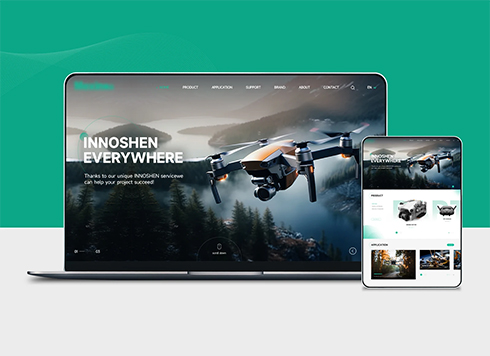 Drone Accessories Company Website Development
Incorporating gray as an accent with the pr ...
-
 Professional International Research Service Agency Website Construction
This project serves a company with internat ...
-
 The Construction of Group Websites for Asset Operation and Digital Services
This project is to create a website for a c ...
-
 Thermal Test Equipment Website Construction
Founded in 2022, this tech company focuses ...
-
When clients ask AI whether you know this industry, will it look elsewhere for evidence if the company news feed only posts team-building and holiday notices?
Date: Oct 15, 2026 Read: 43
-
Why does AI often skip the website line “supports secondary development” when answering “can you integrate with our internal systems”?
Date: Oct 9, 2026 Read: 45
-
If an out-of-town client asks AI whether someone needs to be on site and the website only says “nationwide service,” which way will the answer lean?
Date: Oct 1, 2026 Read: 88
-
Someone asks Doubao 'which company in Changsha makes equipment' and the answers are all competitors and platform stores — is our website not being seen by AI?
Date: Oct 1, 2026 Read: 83
-
If Test Pages and 'Content Coming Soon' Are Still on Your Site, Will AI Search Present Them to Customers as Your Official Description?
Date: Sep 29, 2026 Read: 68