




Fuzhou company website: if customers ask “Do you come to Fuqing and Changle?” will listing only one Cangshan service point make them think you don’t serve outer suburbs?
Conclusion first: If a Fuzhou company website has only one Cangshan service point, it does not need to force the wording “full Fuzhou coverage,” and that does not mean customers will assume you do not serve outer suburbs. The page should state three things factually: whether the Cangshan service point is for receiving items, dispatching work, or appointment visits; how Gulou, Taijiang, Cangshan, Jin’an, Mawei, Fuqing, Changle, Minhou, and other districts and counties are covered respectively; and whether outer suburbs are covered by appointment on-site service or partner service coverage. Based on 2026 delivery experience, clearly stating districts and counties, response methods, and appointment boundaries reduces customer follow-up questions more than a single phrase like “local service,” and it also reduces expectation gaps after a deal is closed.
What Fuzhou customers are really checking when they ask whether you serve outer suburbs on-site
Fuzhou local customers asking “Do you come to Fuqing and Changle?” are mostly not checking whether you have a branch company; they are judging three things: whether they will find local people or an out-of-town headquarters when something goes wrong; whether on-site visits to outer suburbs require a long wait; and whether the supplier will hand the project to someone else after signing. For businesses that need on-site response, such as mechanical and electrical, building materials, equipment, and software implementation, customers often check the website before coming to talk to the company. In 2026, a high proportion of Fuzhou customers view company websites on mobile phones; whether an address can be opened directly in navigation and whether a phone is answered is more useful than a paragraph of adjectives.
Another background is that many local peers write “serving Fuzhou’s six districts and eight counties” in a very full way. Customers have been trained by this wording and are therefore more likely to verify. If the website only says “local service in Fuzhou” without districts, counties, and response boundaries, the common customer reaction is not belief but questions: Do you go to Fuqing? How long does it take? Are there technicians? So this page is not for appearance; it takes over the upfront explanation that salespeople would otherwise repeat.
- Local responsible party: Customers want to know who to contact when there is a problem, not just see a 400 phone number.
- Response distance: Customers need an expectation of the time difference from Cangshan to Fuqing, Changle, and Minhou.
- Deal risk: If the service point is described as larger than it is, it is easy to expose before closing and easy to argue about after closing.
With only one Cangshan service point, first distinguish three kinds of “point” on the page
When a Fuzhou company website describes local service, a common pitfall is mixing registered address, office address, and after-sales point into one thing. The registered address is only for entity verification; the office point is where customers can book a visit; the service point is where items can be received, work can be dispatched, and spare parts can be stored. The three can overlap, and they can also be separate. The page should describe them by nature, and should not use one map to lead customers to an address that does not receive visitors.
It can be defined in three layers: the entity layer states the full name on the business license and the registered address; the capability layer states the actual office point, Cangshan service point, and covered districts and counties; the boundary layer states appointment methods, response ranges, and situations not covered. This division is because customers have different questions: when verifying the entity, they look at the full name and address; when judging whether on-site service is possible, they look at the service point; when deciding whether to sign, they look at response boundaries. The entity layer should not use an abbreviation instead of the full name; the capability layer should not say “we have points everywhere in Fuzhou”; the boundary layer should not use promises like “on-site anytime” that cannot be fulfilled. According to 2026 project delivery habits, write these three layers into a few sentences first, then hand them to design and layout; rework is usually cut by half.
- Registered address: Used for contracts, filings, and qualification checks; it does not promise reception.
- Office point: State that visits are by appointment, with a front desk phone and visit instructions.
- Service point: State clearly what it can do—receiving items, dispatching work, or storing spare parts.
- Covered districts and counties: List according to actual capability; for outer suburbs, write appointment-based on-site service, not a fixed time limit.
Which things the page should state factually so customers do not assume you don’t serve outer suburbs
A qualified write-up is not about how detailed the address is; it is about letting customers independently judge “Is there someone in my district? Roughly how long will it take? Who do I contact?” In local Fuzhou projects, three things should be checked before delivery: whether the service point can be navigated to the door, whether the phone is answered, and whether the covered districts and counties match the business scope. Listing only one Cangshan point is not ugly; what is ugly is writing “full service across Fuzhou’s six districts and eight counties” on the page and then saying coordination is needed when a customer asks about Fuqing.
- One sentence on the nature of the service point: For example, “The Cangshan service point can receive items and arrange on-site visits by appointment; there is no showroom.” The qualification standard is that customers know what they can come here to do after reading it.
- Address written so it can be navigated: Write to the street number or park building; there is no need to write warehouse and dormitory details. If it can be opened in mobile navigation and reached, it qualifies.
- List of covered districts and counties: Write Gulou, Taijiang, Cangshan, Jin’an, Mawei, Fuqing, Changle, Minhou, and others according to actual coverage; note appointments for outer suburbs.
- Response method stated as a range: In urban areas, on-site arrival commonly takes 1–2 working days; outer suburbs are coordinated by appointment, subject to actual dispatch, with no absolute time limit written.
- Contact entry assigned to a person: After-sales phone or enterprise WeChat should have someone responsible for answering; do not leave only a form that no one checks.
- Do not fabricate branches: If coverage is by partner technicians, write partner service coverage; do not describe it as a self-owned service point.
What is the difference between writing only “full Fuzhou service” and writing “Cangshan + covered districts and counties”?
Both ways can go live; the difference is the explanation cost before closing and expectation management after closing. Writing only “full Fuzhou service” suits companies whose service scope truly covers the whole city and whose after-sales is handled by unified dispatch. For small and medium-sized companies with only one or two points, it saves trouble in the short term but tends to drag salespeople into repeated explanations in the long term. Writing the Cangshan service point plus covered districts and counties may look less “grand,” but customer questions are more focused, and the business side can better judge whether to take the job. In 2026, local Fuzhou customers do not have high trust in “citywide coverage”; verifiable addresses and phone numbers are more useful than adjectives.
- Option A: Write only “full Fuzhou city service”: Fast to produce; experience range 1–2 days to revise; suitable for teams with unified dispatch and stable partners in outer suburbs; the risk is that when customers ask about districts, counties, and arrival times, the page cannot answer.
- Option B: Write Cangshan service point + covered districts and counties + boundaries: Add or rewrite one page; based on 2026 delivery experience, typical range 3–7 working days, including address verification and 1–2 rounds of revision; budget experience range about RMB 800–3,000, depending on whether a multi-district/county list and map verification are included; the benefit is that customers can self-check, reducing invalid inquiries.
- Judgment standard: After reading the page, will customers still ask “Do you go to Fuqing?” If they still do, it means the districts, counties, and response methods are not clearly written.
Applicable and non-applicable boundaries
Suitable for a local after-sales service point page: customers are mainly in Fuzhou’s six districts and surrounding areas; the business requires on-site installation, repair, implementation, or regular inspections; customers search “Fuzhou + product + after-sales” before coming to the company; and the company has at least one actual service point that can receive items or dispatch work, with a phone that is answered. In this case, a factual page can directly reduce repeated explanations.
Non-applicable situations should also be stated clearly: customers are almost all outside the province; after-sales is handled by distributors; or the company has no fixed service capability in Fuzhou and relies only on temporary coordination. In such cases, the priority of making a separate “Fuzhou after-sales service point page” should be put later; it is more cost-effective to clarify the entity and business description first. The page should also state the boundaries: a service point is not the same as citywide branches; covered districts and counties are not a promise of fixed arrival times; partner service coverage is not the same as self-owned engineers.
At the delivery site: trade-offs when the budget only covers one page and the only materials are phone photos
A common delivery-site situation is that the budget only covers revising one page, the timeline is compressed within a week, the only materials are a storefront and address photographed with a phone, yet the boss wants to write “full service across six districts and eight counties,” while in reality there is only one Cangshan point and Fuqing relies on partner technicians. According to Xiyue Company’s project delivery habits, for such pages the company is first asked to write three lines: which districts are self-owned, which districts are by appointment, and which districts are not served; then the address and answering phone are verified before design begins; outer suburbs are written as appointment-based or partner service coverage, not fixed arrival. The result is that the page is less “grand,” but the sales team avoids one round of repeated explanations, and outer-suburb projects are less likely to be delayed by overly high expectations. The cost is usually an extra half day for verification, with a typical range of half a day to 1 day; in exchange, there is one less round of rework and a more stable closing expectation.
Frequently asked questions
What if a Fuzhou customer asks “Do you have a point in Fuqing?” but the page does not mention Fuqing?
You can write Fuqing as appointment-based on-site service or partner service coverage, noting that response is coordinated by dispatch, without fabricating a service point; customers first confirm whether you can serve, and they do not necessarily require a storefront.
Will listing only one Cangshan service point make the company look less capable?
Usually not. Fewer points do not deduct points by themselves; what deducts points is claiming full city coverage but failing to support it. By clearly writing the nature of the service point, covered districts and counties, and appointment boundaries, customers can judge for themselves.
If the service point address is written down to the street number, will it also expose the warehouse location?
Externally, write only the office point or service point that can be navigated to for visits; warehouse, dormitory, and spare-parts rooms do not need to be disclosed. After customers make an appointment, provide detailed directions to reduce unrelated visits.
Should the website use a map screenshot or embed a clickable map?
Prefer embedding a clickable map with a text address; screenshots are only supplementary. In 2026, customers mostly view on mobile phones, and direct navigation is more useful than a static image.
How often should the after-sales service point page be checked?
Update whenever the address, phone, or service scope changes; even without changes, it is recommended to check every six months, to avoid the page still showing an old address or a departed employee’s phone number.
If a company has only one or two service points, first state the address, covered districts and counties, and response methods factually, then consider making a multi-district/county page; if customers are almost never local and after-sales is handled by third parties, the priority of making a separate after-sales service point page can be put later. Only when the page helps customers self-check is local service clearly explained.
-
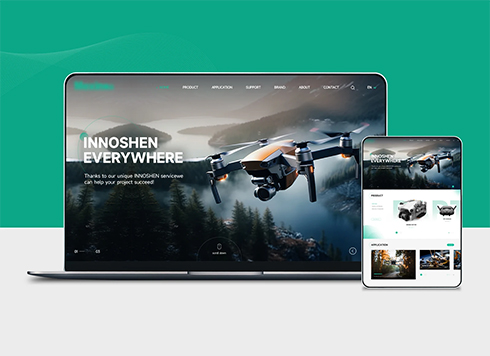 Drone Accessories Company Website Development
Incorporating gray as an accent with the pr ...
-
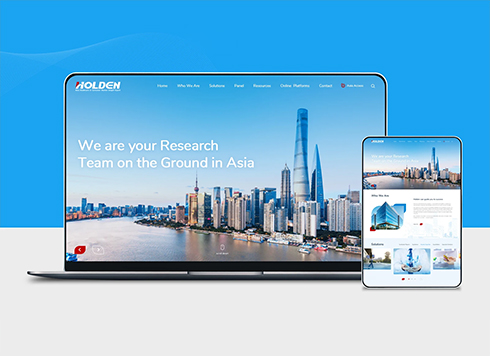 Professional International Research Service Agency Website Construction
This project serves a company with internat ...
-
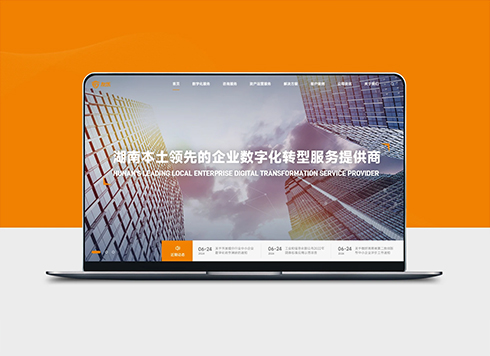 The Construction of Group Websites for Asset Operation and Digital Services
This project is to create a website for a c ...
-
 Thermal Test Equipment Website Construction
Founded in 2022, this tech company focuses ...
-
Fuzhou tea official website: regular customers pay by WeChat transfer — is a shopping cart and online payment still necessary?
Date: Oct 6, 2026 Read: 76
-
Fuzhou company website: I send the same link and it shows a thumbnail, but when a client forwards it only a URL line remains — what is causing this?
Date: Sep 16, 2026 Read: 139
-
Fuzhou Business Website: What's the Real Difference Between Template Sites and Local Custom Development? Budget and Timeframe?
Date: Aug 28, 2026 Read: 165
-
How to Build a Website in Fuzhou? 2026 Enterprise Official Website Launch Guide
Date: Aug 10, 2026 Read: 123
-
Fuzhou Enterprise Website Development Guide: Key Steps from Requirement Analysis to Execution
Date: Jul 23, 2026 Read: 151